Namibia

Tailor-made trip


Best Time to Visit:
April – October

Accommodation:
Hotels, Camps, Lodges

Main Highlights:
Desert, Wilderness, Solitude

Price Level:
$$$$

One fifth of Namibia is made up of community reserves known as conservancies, which have been managed since 1998 by the rural residents themselves and which make tourism a source of income and jobs. The result can be seen outside the national parks too. On the unfenced land of the Kunene region live desert elephants and the only free-ranging population of black rhinos in the world, guarded by rangers paid by the conservancies themselves. The word "desert" is no exaggeration here. The Namib Desert has been dry for at least 55 million years, the coast receives only a few millimetres of rain a year, and moisture comes not as rain but as fog, born over the coast from the cold Benguela Current. At the opposite end of the country, water is abundant. In the north-east, between Angola, Zambia and Botswana, stretches the narrow Zambezi Region, where rivers spill into floodplains and wetlands in the flood season. When the Zambezi rises, it pushes water into its tributary, the Chobe, and the Chobe's flow reverses.
What to see and do in Namibia

Climb the Big Daddy dune, about 325 metres high, and descend into the Deadvlei pan among black acacia trunks that died here hundreds of years ago. In Etosha, watch the floodlit waterhole at Okaukuejo Camp even after dark, best from May to October. Hike the 85-kilometre trek through the Fish River Canyon, open only in the cooler winter months. At Twyfelfontein, explore more than two thousand rock engravings on the UNESCO list. At Cape Cross, up to two hundred thousand fur seals crowd together in November and December. In Windhoek, try kapana, beef grilled right at the market in Katutura.


Places with soul
Sandwich Harbour

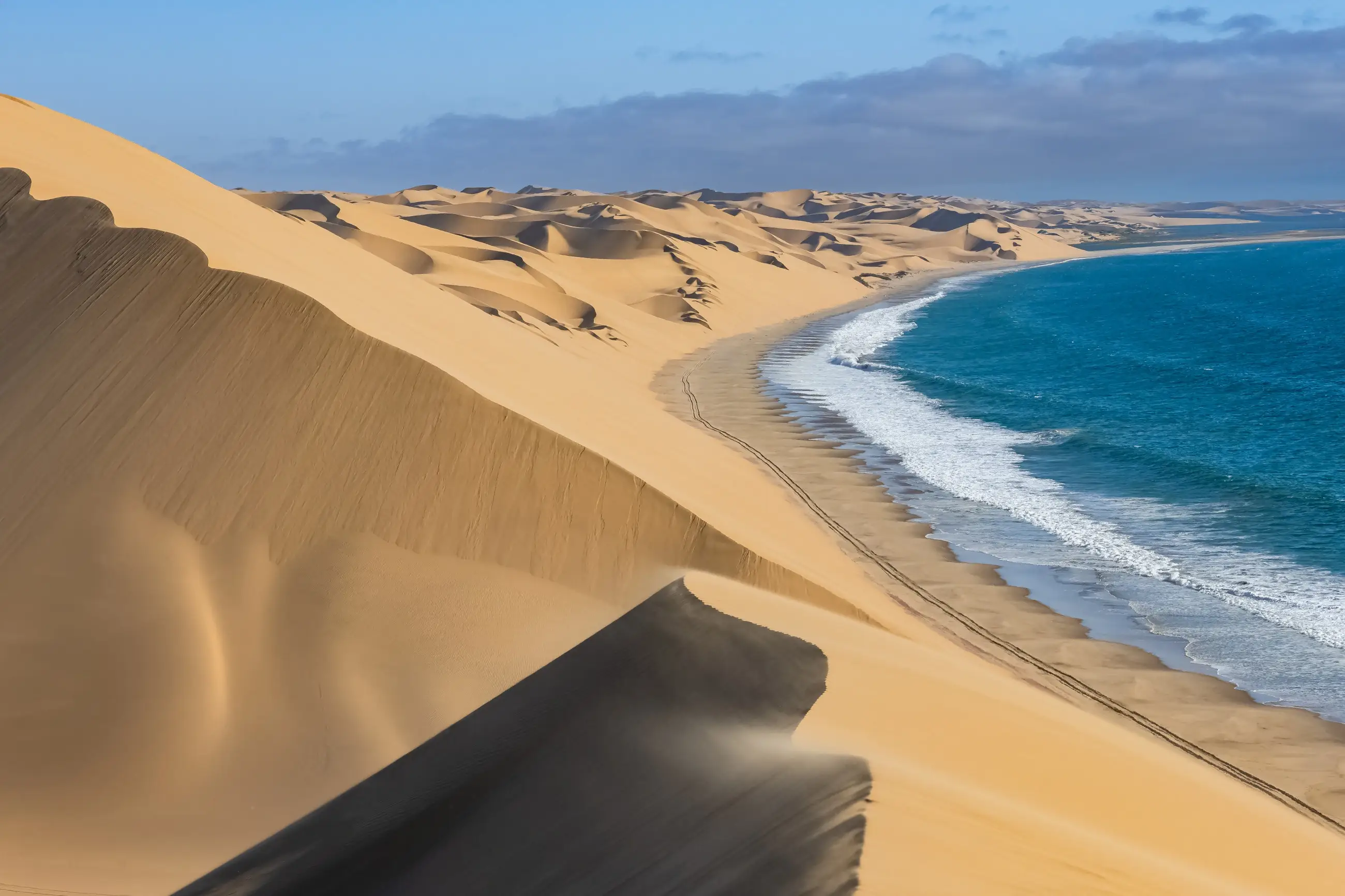
At Sandwich Harbour on the Namibian coast, sand dunes more than one hundred metres high fall straight into the Atlantic, and right next to them lies a shallow lagoon with reeds and brackish water, protected as a wetland of international importance. There is no road access. The only route is by off-road vehicle along the beach at low tide, so the guide watches the tide and then takes you up onto the steep dune ridges. From there you can see the ocean, the desert and the lagoon all at once, while flamingos, pelicans, cormorants and terns gather on the water. On the way back you stop at the pink salt lakes. In a single trip you get to know the coast where the desert ends in the waves, and a bird wetland that clings to its very edge.

Twyfelfontein

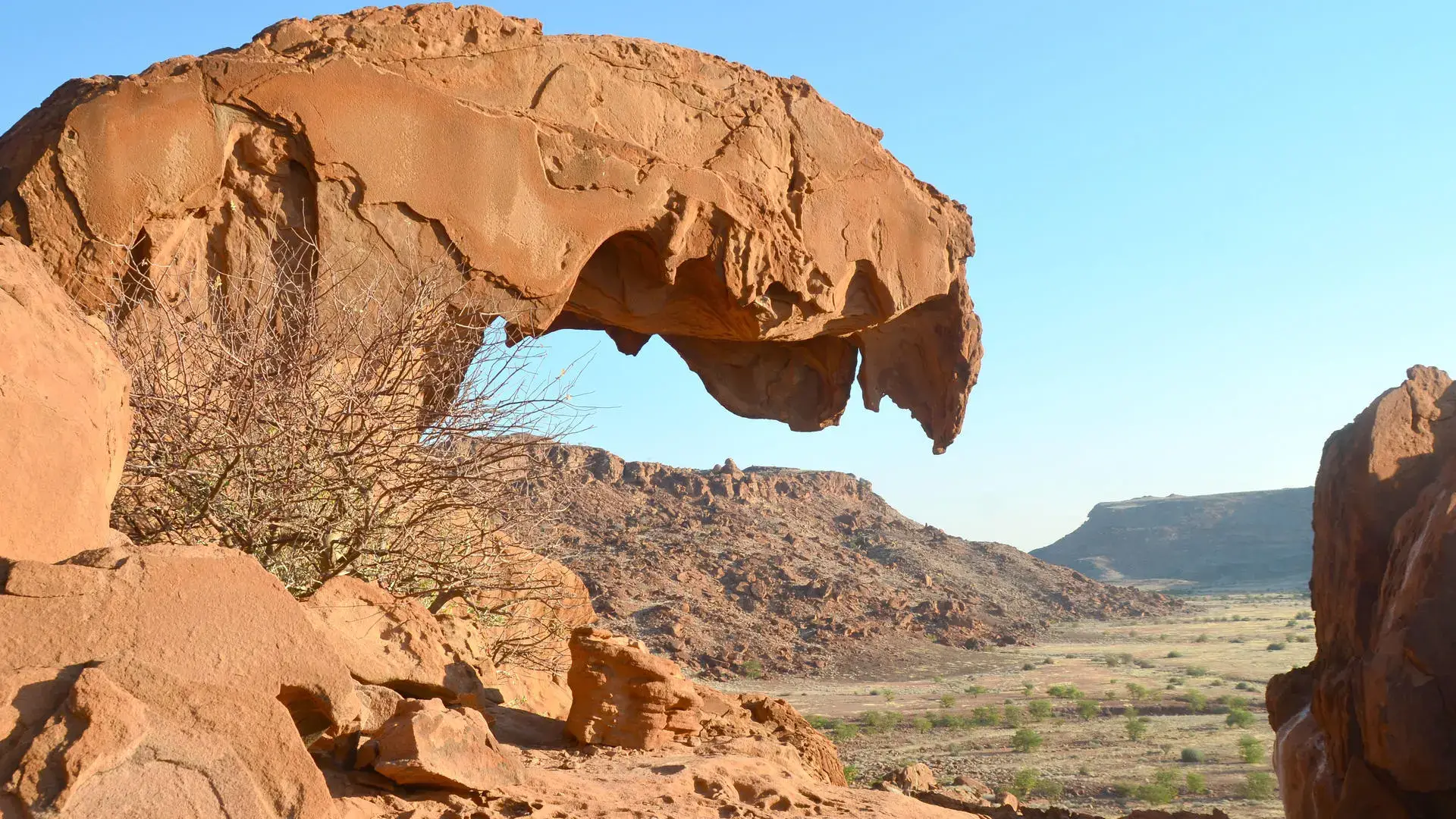
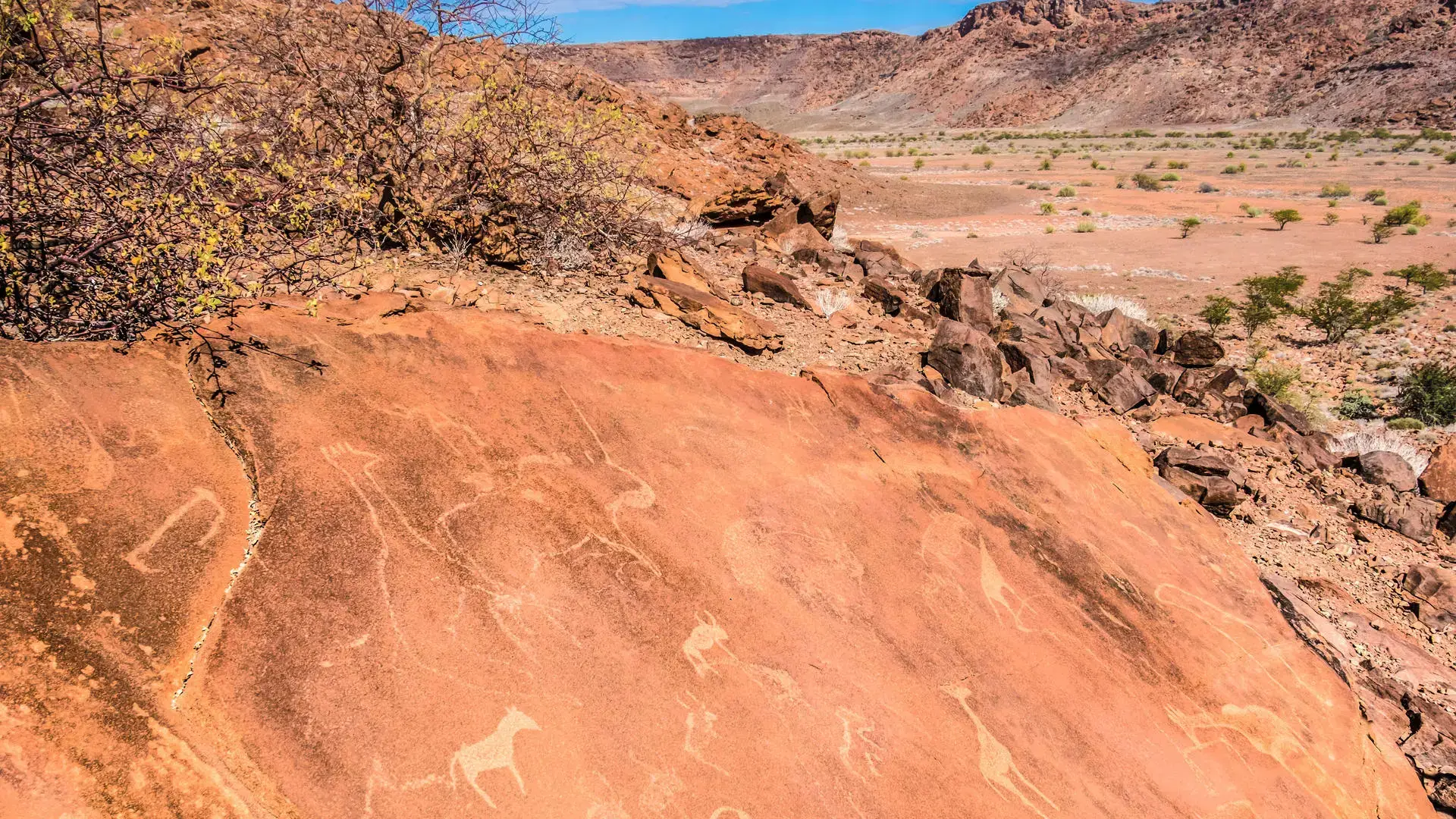
About 2,500 animals and figures are engraved on the red sandstone rocks under the open sky, and thanks to them Twyfelfontein became the first site in Namibia to be inscribed on the UNESCO list. A local guide will lead you along a path between the rock blocks and show you giraffes, rhinos, elephants and even a seal, which the hunter-gatherers engraved although the ocean lies about one hundred kilometres away. Ten kilometres to the north stands the Damara Living Museum, where a blacksmith, a tanner and women making jewellery demonstrate how the Damara people used to live. You will walk through an open-air gallery of rock art on which people worked for at least two thousand years, and you will also learn about a culture that colonisation almost erased.

Etosha National Park

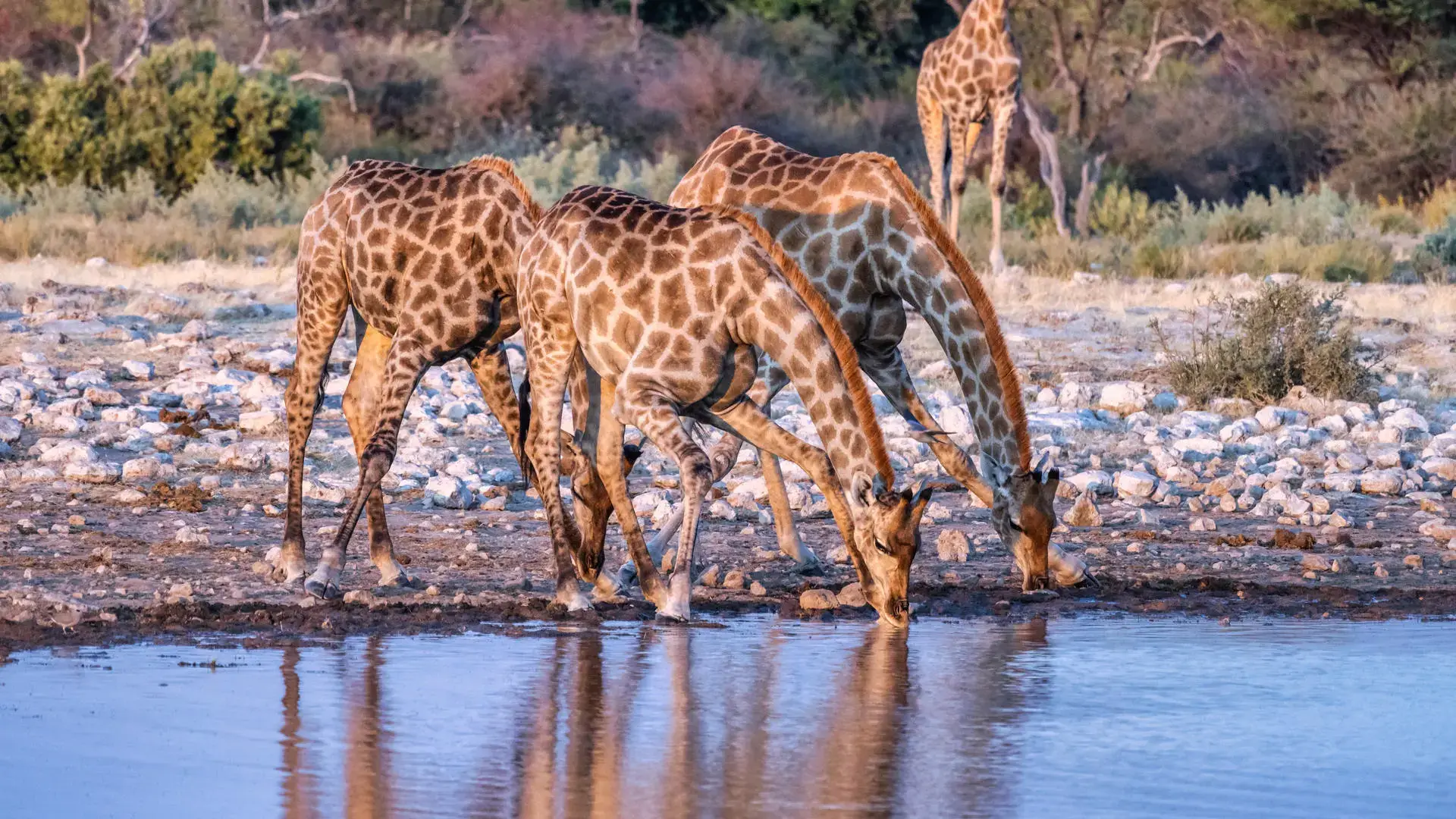
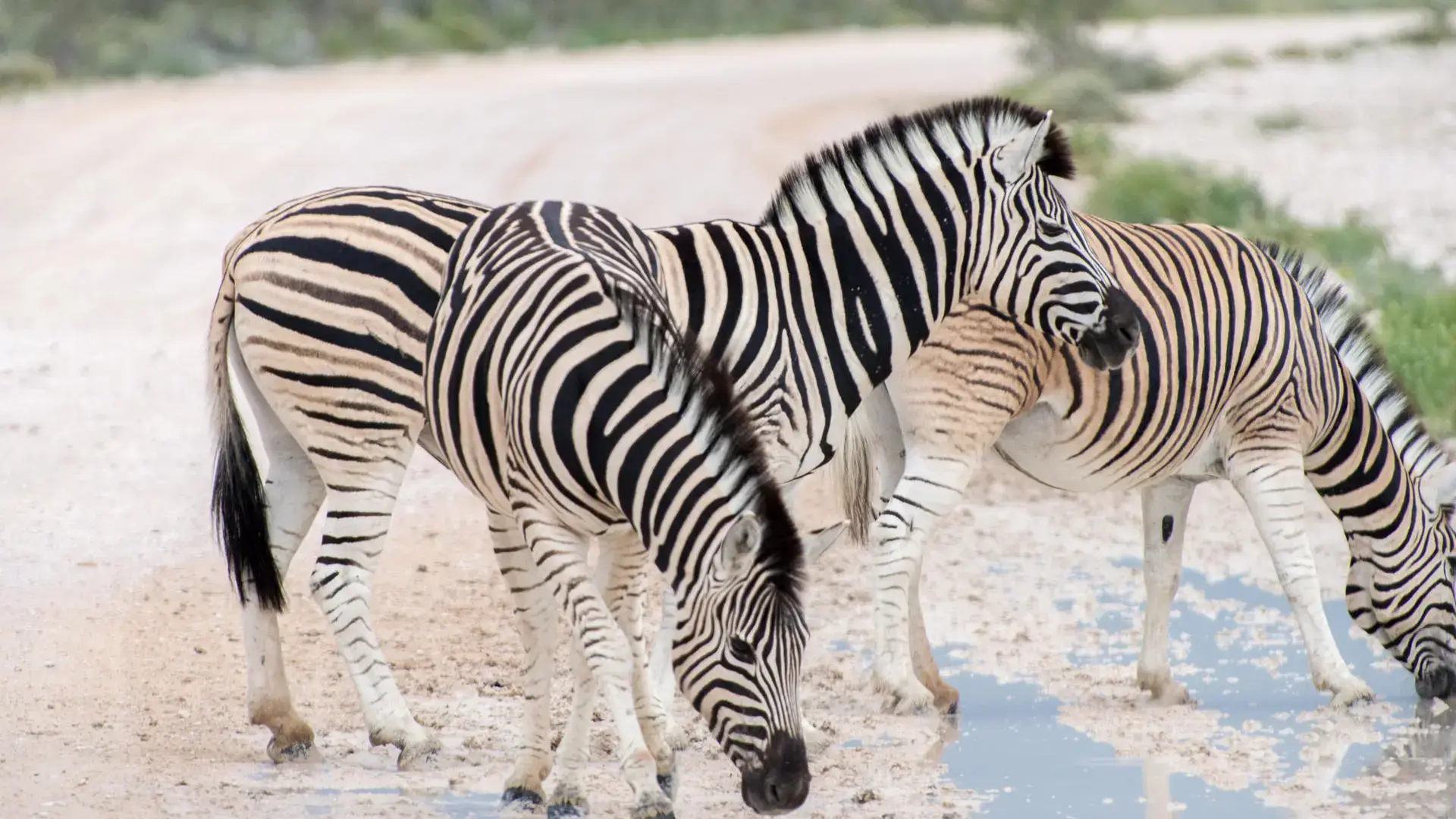
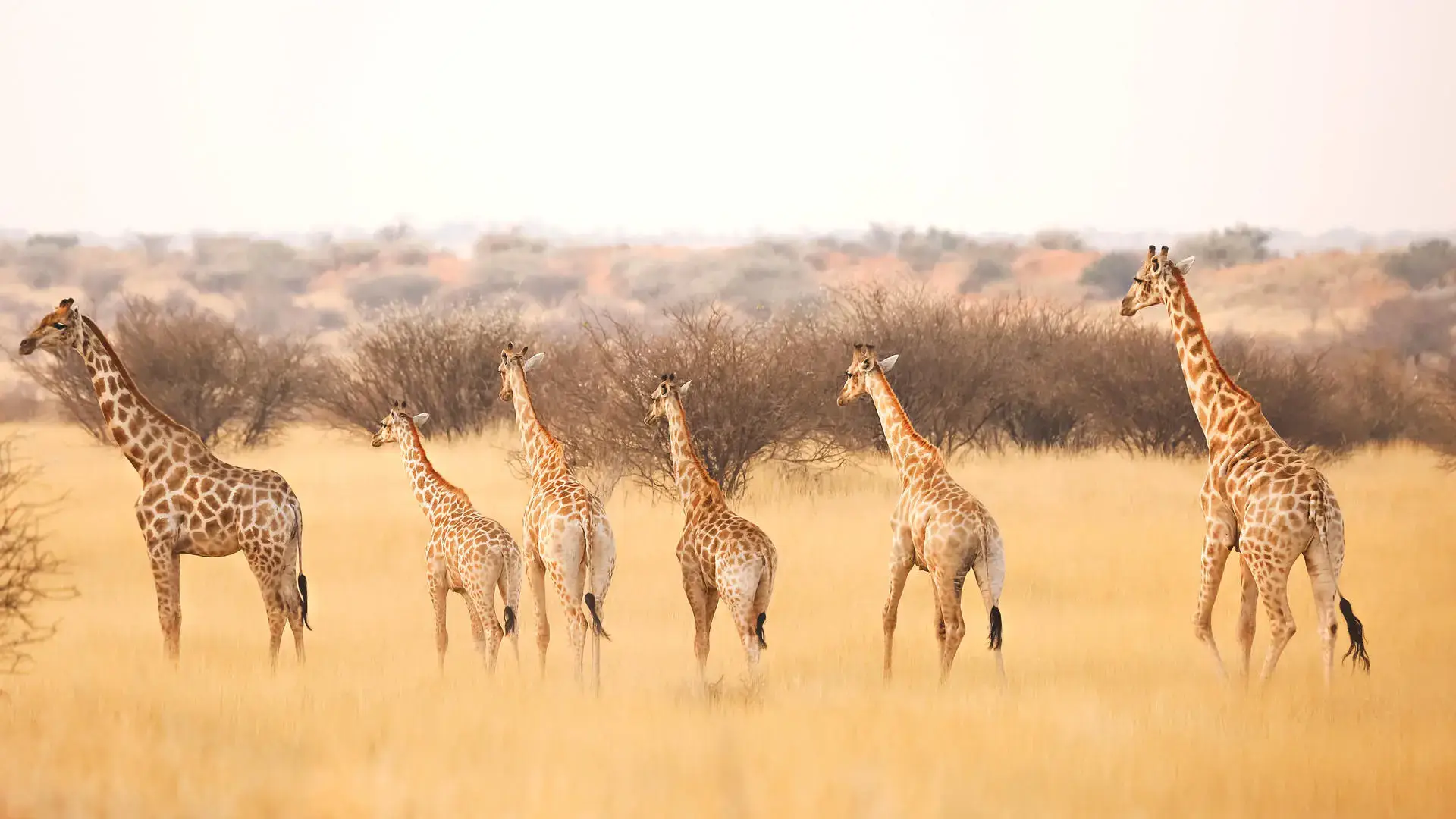
Etosha is a salt pan about 130 kilometres long, whose name in the Oshindonga language means Great White Place. It covers almost a quarter of the park and after heavy rains sometimes turns for a few days into a shallow lake with flamingos. The surrounding savannah is dotted with waterholes, to which elephants, lions, giraffes and zebras come in the dry season, roughly from May to October, and all you need to do is park by the water and wait to see who arrives. At Okaukuejo Camp, one of the waterholes is lit by floodlights, so you can see the animals after dark, and black rhinos and elephants often come to the water here. From one place you can see the savannah by day and by night, and you do not need to travel far to find wildlife.

Kalahari near Mariental

The Kalahari near Mariental begins where the rocky plateau turns into sand coloured red by iron oxide, about 270 kilometres south-east of Windhoek. Grassy valleys with centuries-old acacias, where oryx graze, stretch between the dunes, and in the morning San trackers take you out for a walk. They show you how to read tracks in the sand, which plants heal, and how to survive in dry conditions, and they speak a language with click sounds. On some farms there is also a reconstructed village where jewellery is made from porcupine quills and ostrich eggshells. You will stop seeing the Kalahari as an empty landscape, because you will get to know it through the eyes of the people who have lived in it for thousands of years.


Experiences that make sesnse

Spitzkoppe Trek

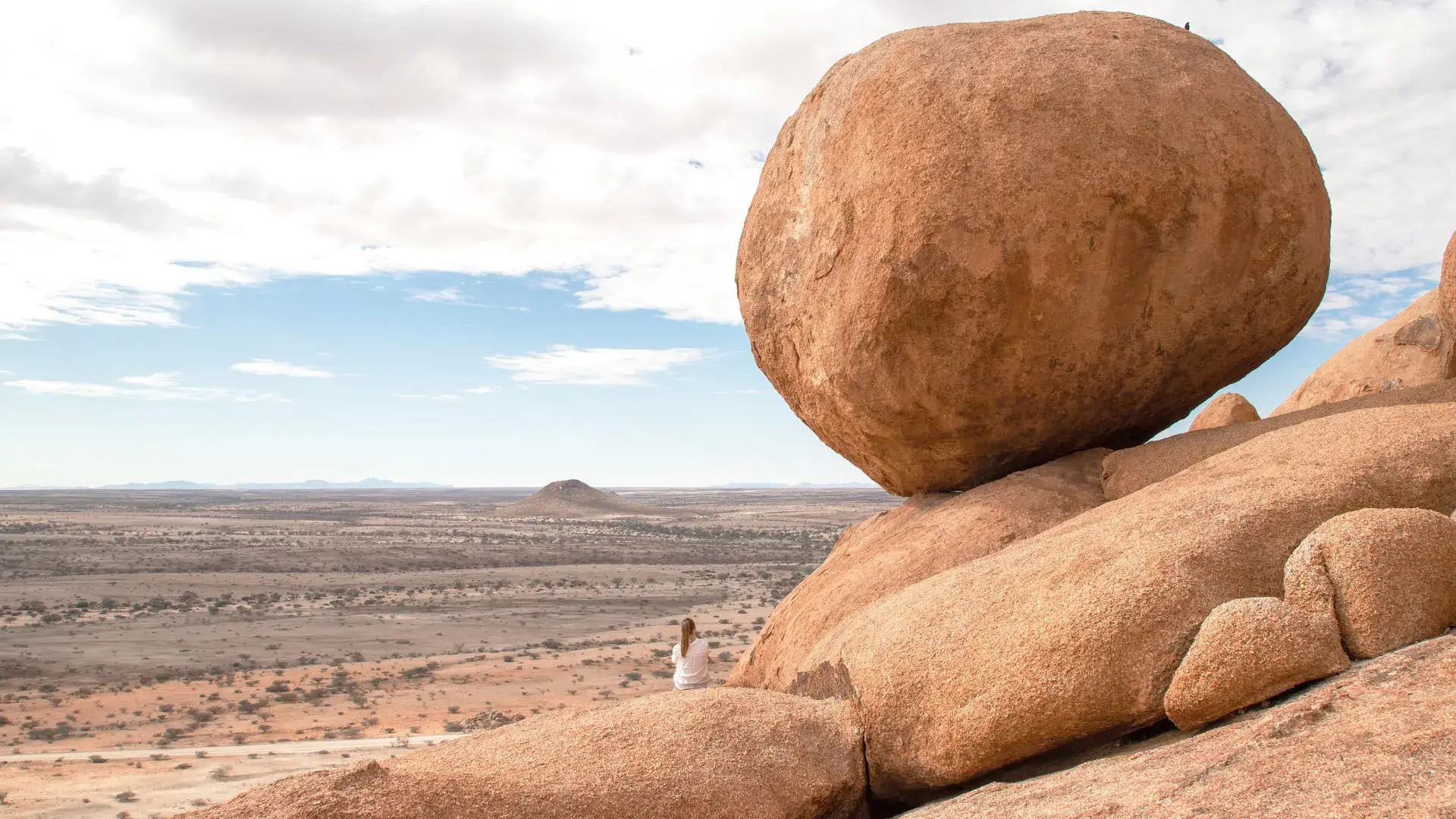
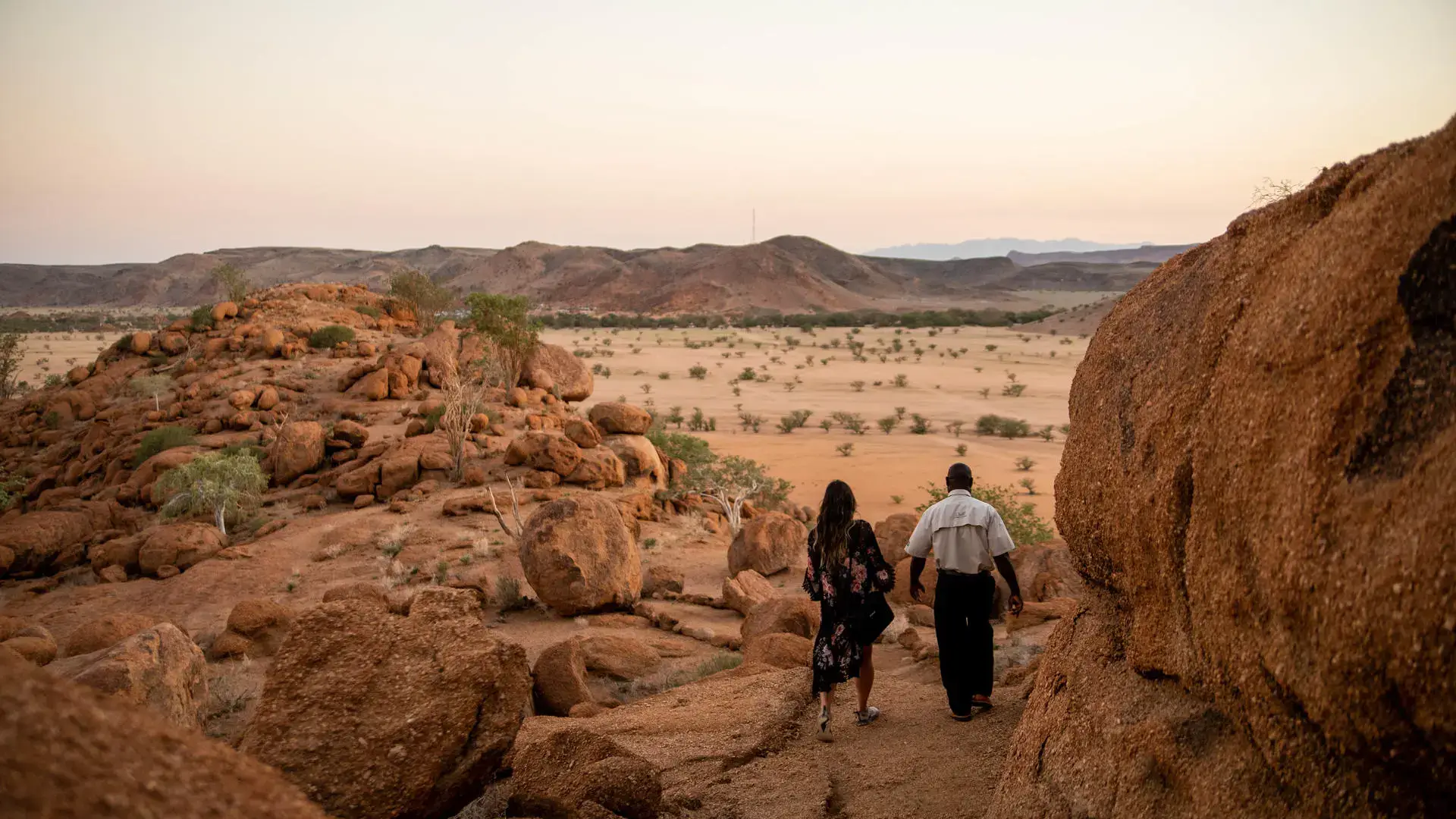
Spitzkoppe rises about 700 metres above the surrounding plain from the flat desert, stands 1,728 metres tall and, because of its pointed shape, is called the Matterhorn of Namibia. The trek leads with local guides past smooth granite domes, under a natural rock arch and into caves with San paintings, whose motifs include rhinos. At sunrise and sunset the rocks turn pink and orange, and after dark the stars appear above them without the interference of city lights. On a longer route you may meet zebras, springbok and hyraxes. You can choose a two-hour walk or a full-day trip to six painting sites, and you will see the desert at the hours when it is at its most beautiful.

Oyster Lunch in the Dunes, Sandwich Harbour

Lunch is served here on a dune ridge or on the beach where the Namib meets the Atlantic: the guide sets out freshly opened oysters from Walvis Bay and pours a glass of sparkling wine. Sandwich Harbour is a wetland listed under the Ramsar Convention and can be reached only by off-road vehicle with a licensed guide. The route leads past the lagoon at Walvis Bay, where flamingos feed in the shallows, past the pink salt lakes, and then over dunes about one hundred metres high. The spot is chosen according to the tide and the wind: either the top of a dune with a view of the ocean, or a sheltered beach. From one place you taste the ocean and at the same time see the desert that drops into it.

Catamaran in Walvis Bay and Pelican Point

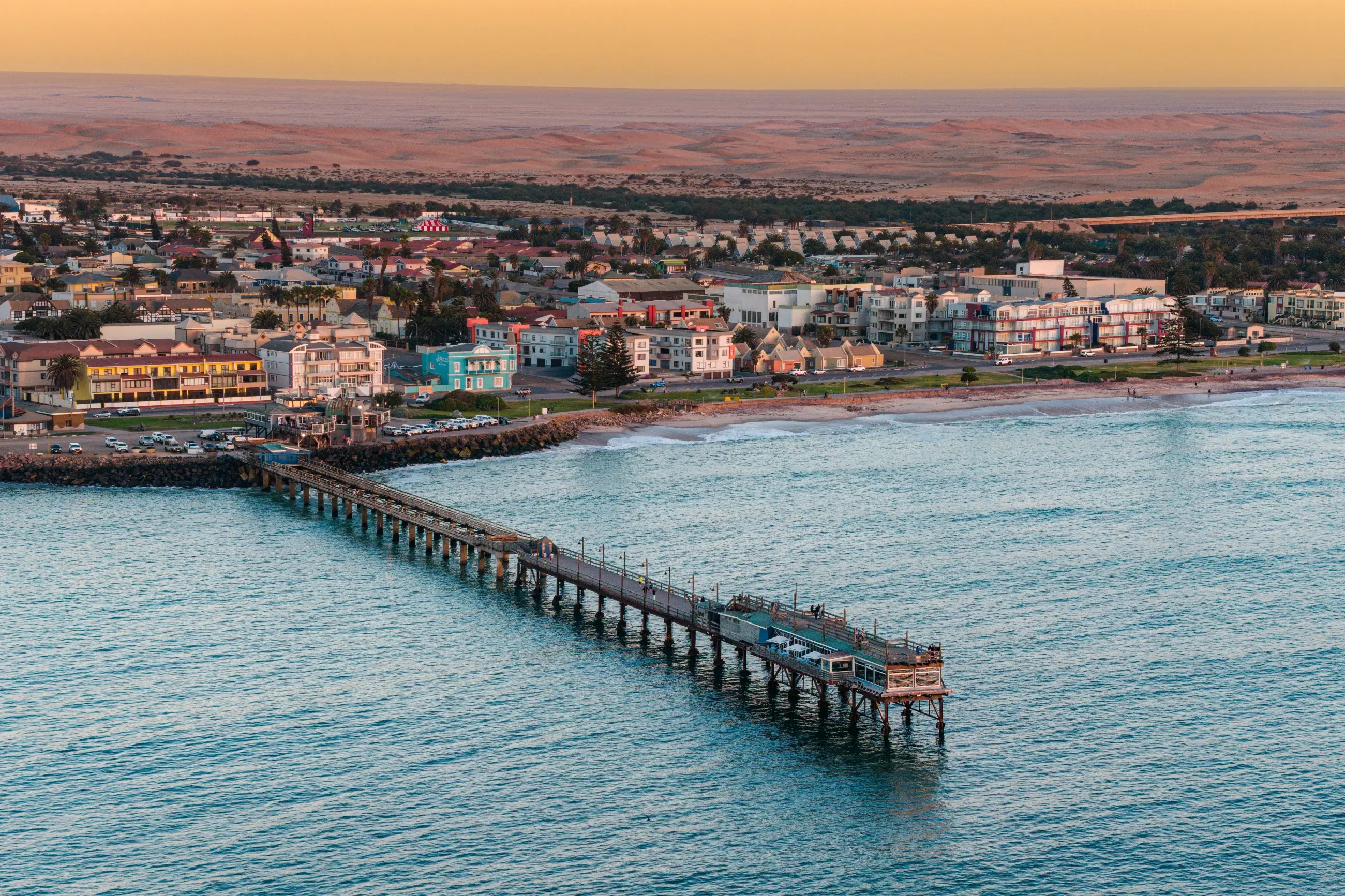
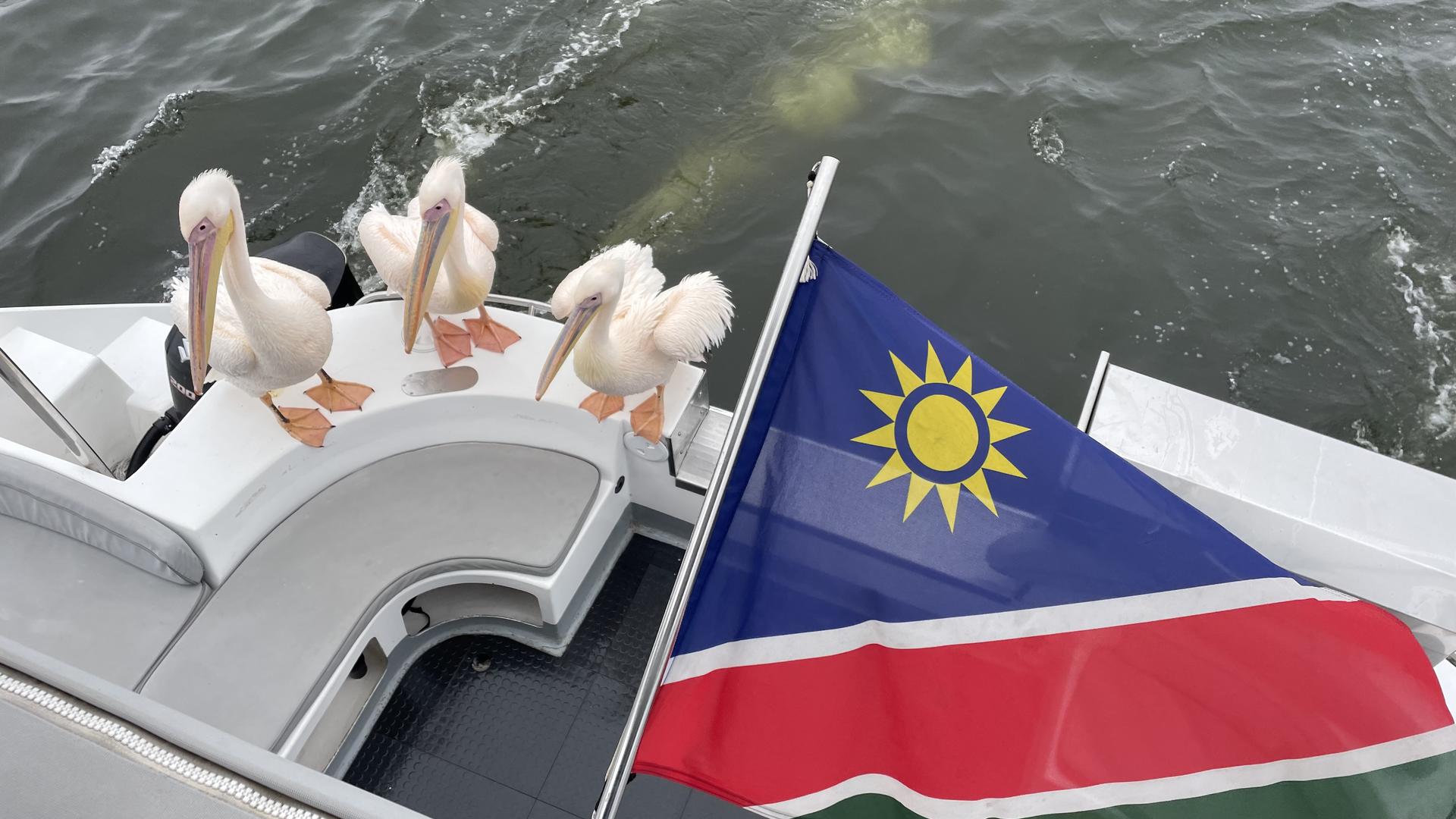
The catamaran sails from the Walvis Bay waterfront past oyster farms to Pelican Point, a sand spit about ten kilometres long that shelters the bay from the Atlantic. At its end stands a lighthouse from the early 1930s and a colony of tens of thousands of Cape fur seals, whose barking you can hear from far away. Curious seals often approach the boat, and some even climb on board, while Heaviside's dolphins and bottlenose dolphins ride the bow wave. From July to October, humpback whales and southern right whales also appear in the bay, and in the lagoon flamingos wade in season. In a single morning you can see from the deck how the desert coast meets an ocean full of life.


Vybrané prémiové ubytování

XXX

xxx

XXX

xxx

XXX

xxx


Namibia Awaits. Shall We Go?

Every journey is different, just as every one of our clients is different. At Meraki, we know that well, which is why we approach every enquiry individually, with a single goal: to meet your expectations down to the last detail.

Plan your trip

Let's plan your dream holiday together!

We would be happy to meet with you to design and fine-tune every detail of your itinerary to suit your wishes, destination or season.

  • Individual tour
  • Group tour

By submitting the form you agree to the processing of your personal data for the purpose of responding to your enquiry. More about GDPR here.