
Normandy

Tailor-made Trip


Best time to visit:
April – October

Accommodation:
Guesthouses and small chateaux

Highlights:
History, beaches and cliffs

Price level:
€€€€

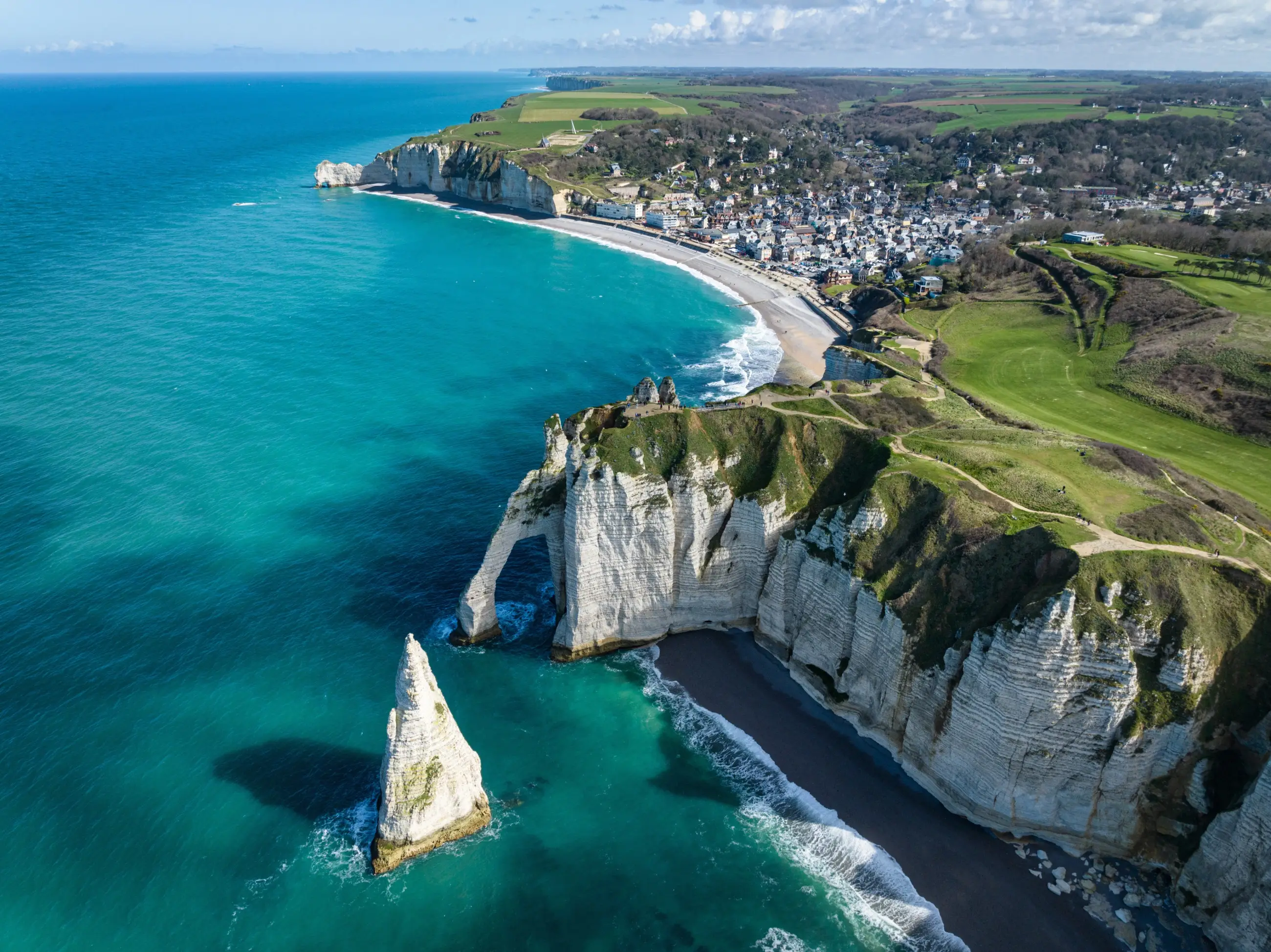
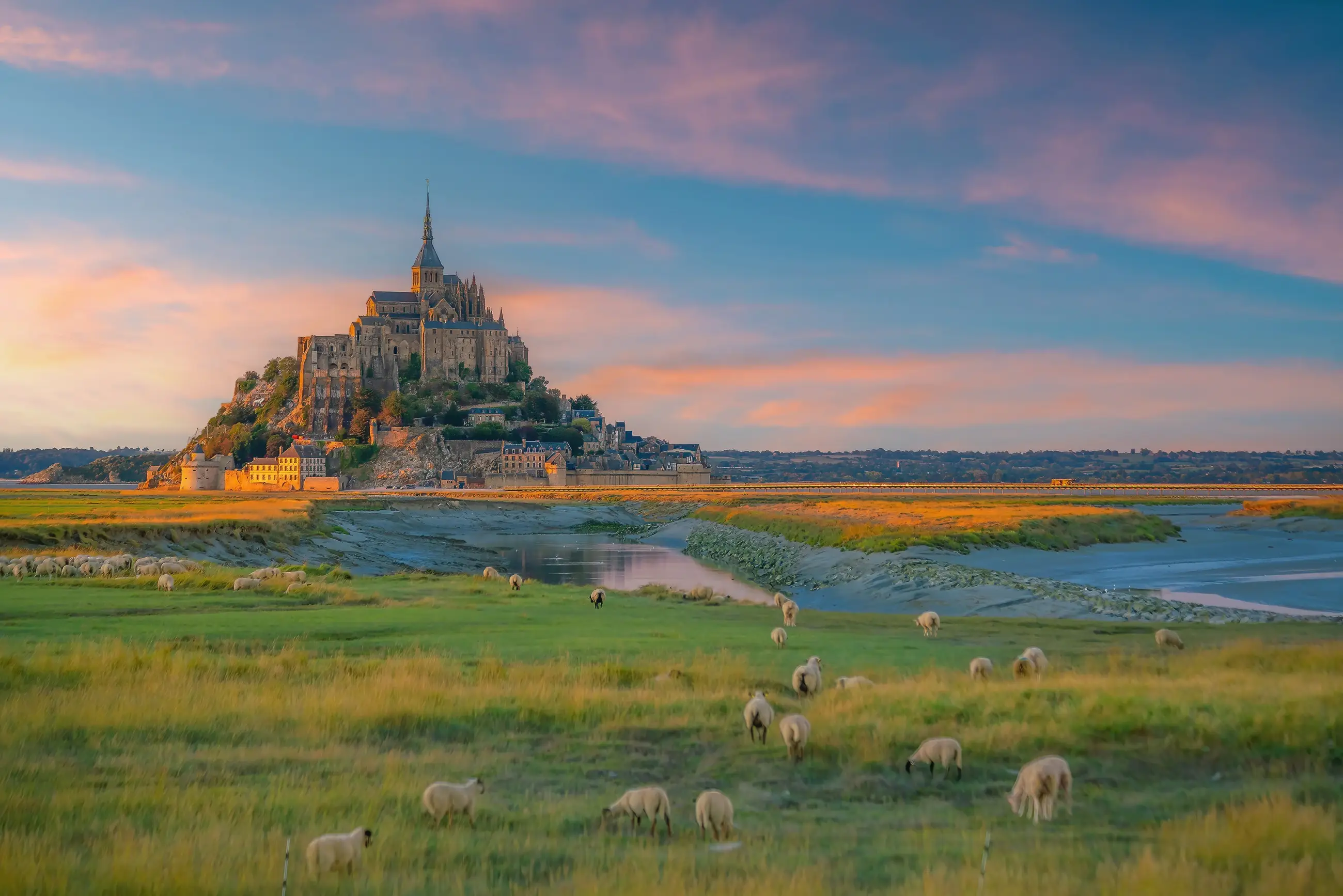
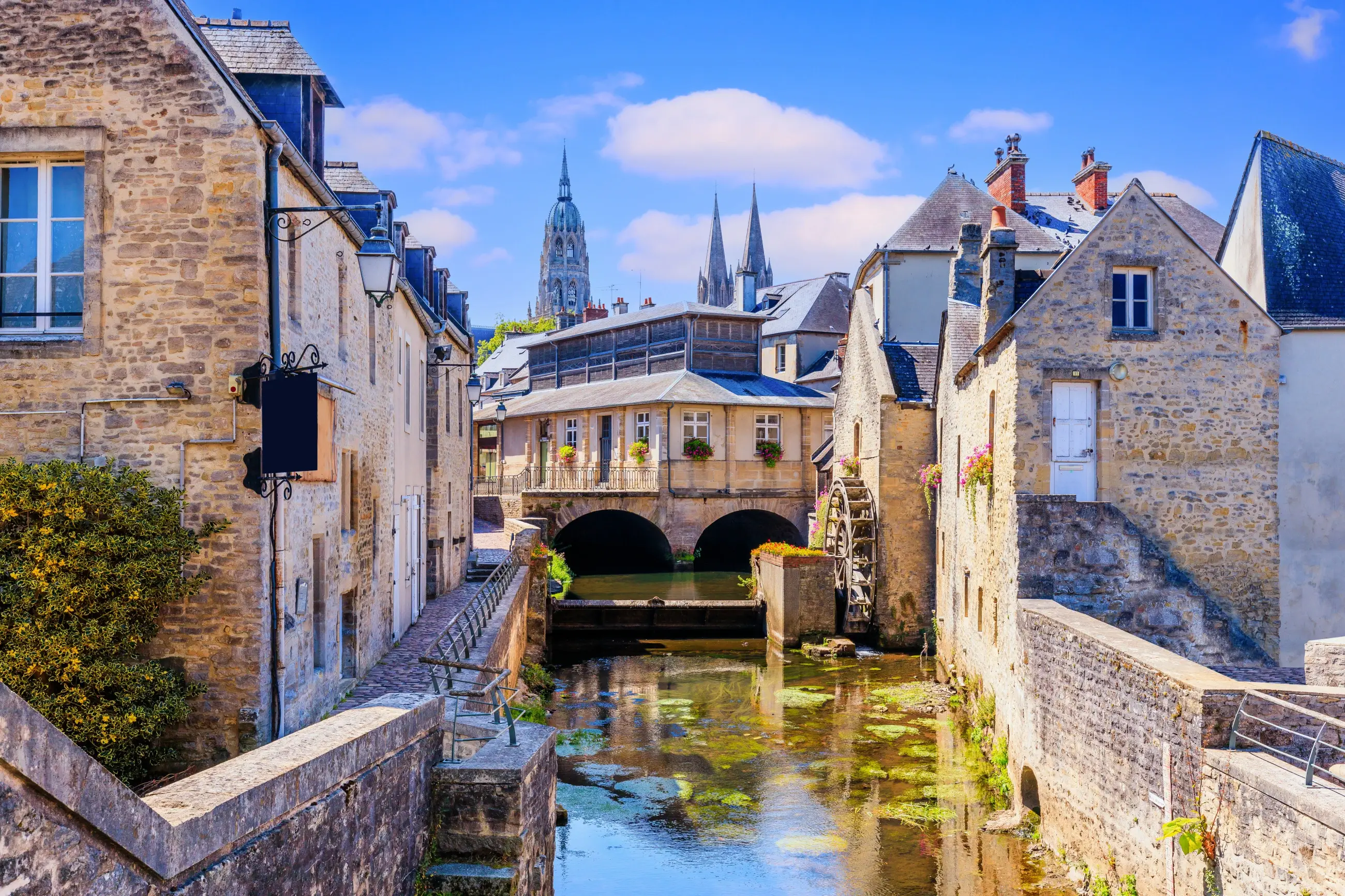
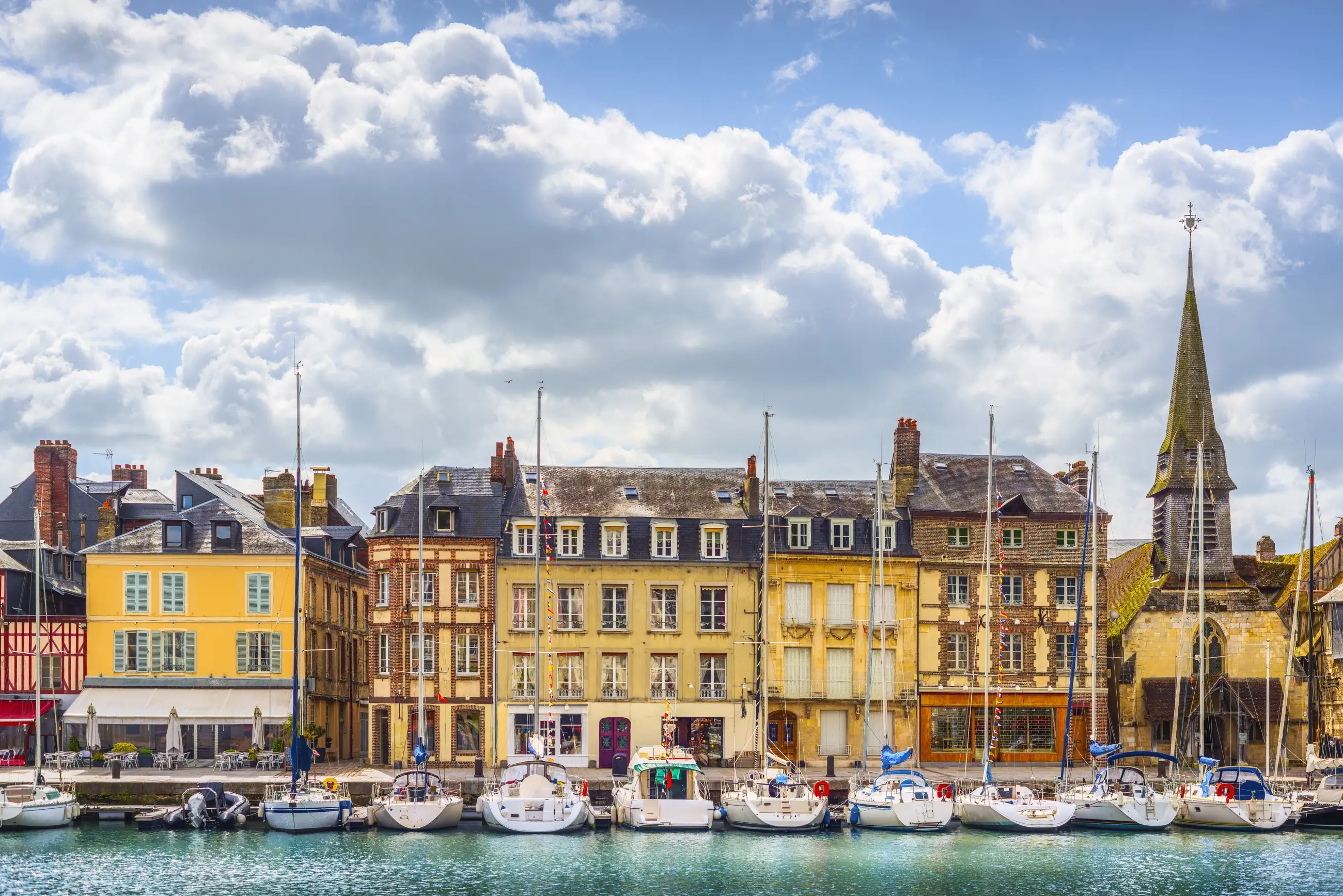
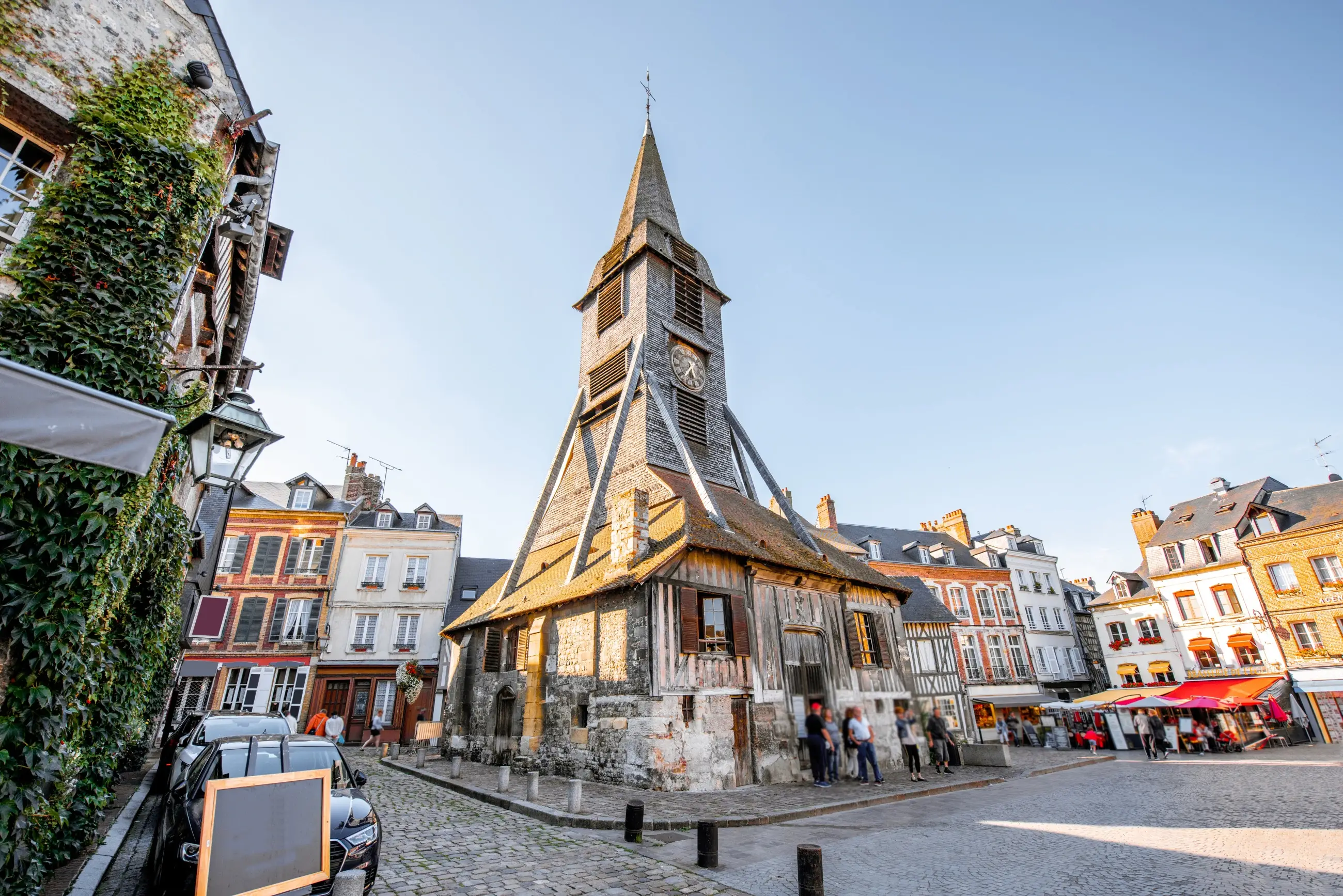
Impressionism took its name from a canvas Claude Monet painted in the harbour at Le Havre. The light over the water changes here every hour, which is why painters kept coming back. The chalk cliffs at Étretat curve out into the sea in the arches Monet painted again and again. Le Havre's post-war centre, built in exposed concrete by Auguste Perret, is on the UNESCO list, and Monet's garden with its water-lily pond remains in Giverny. Inland from the coast, the land turns into bocage, a patchwork of pastures and hedgerows. At Roche d'Oëtre, the River Rouvre cuts into the rock of Norman Switzerland. Day trips from Paris head to Mont-Saint-Michel, but Normandy starts much earlier. Walk the cliffs of the Alabaster Coast, stop at the old harbour in Honfleur, drive the invasion coast from Utah Beach to the cliffs of Pointe du Hoc, and taste camembert right in the Pays d'Auge.
What to see and do in Normandy

Climb the chalk cliffs of Étretat to the needle-shaped Aiguille rock, or head out to the tidal island of Mont-Saint-Michel and its Benedictine abbey. See the Bayeux tapestry depicting the Norman conquest of England in 1066, walk the half-timbered streets of Rouen around Notre-Dame Cathedral, or visit the American cemetery above Omaha Beach, marking the Allied landings on D-Day 1944. Stop by the water-lily pond in Monet's Garden in Giverny, sail through the old harbour of Honfleur, or taste calvados and cidre on the Route du Cidre in the Pays d'Auge.


Places with soul
Cap de la Hague

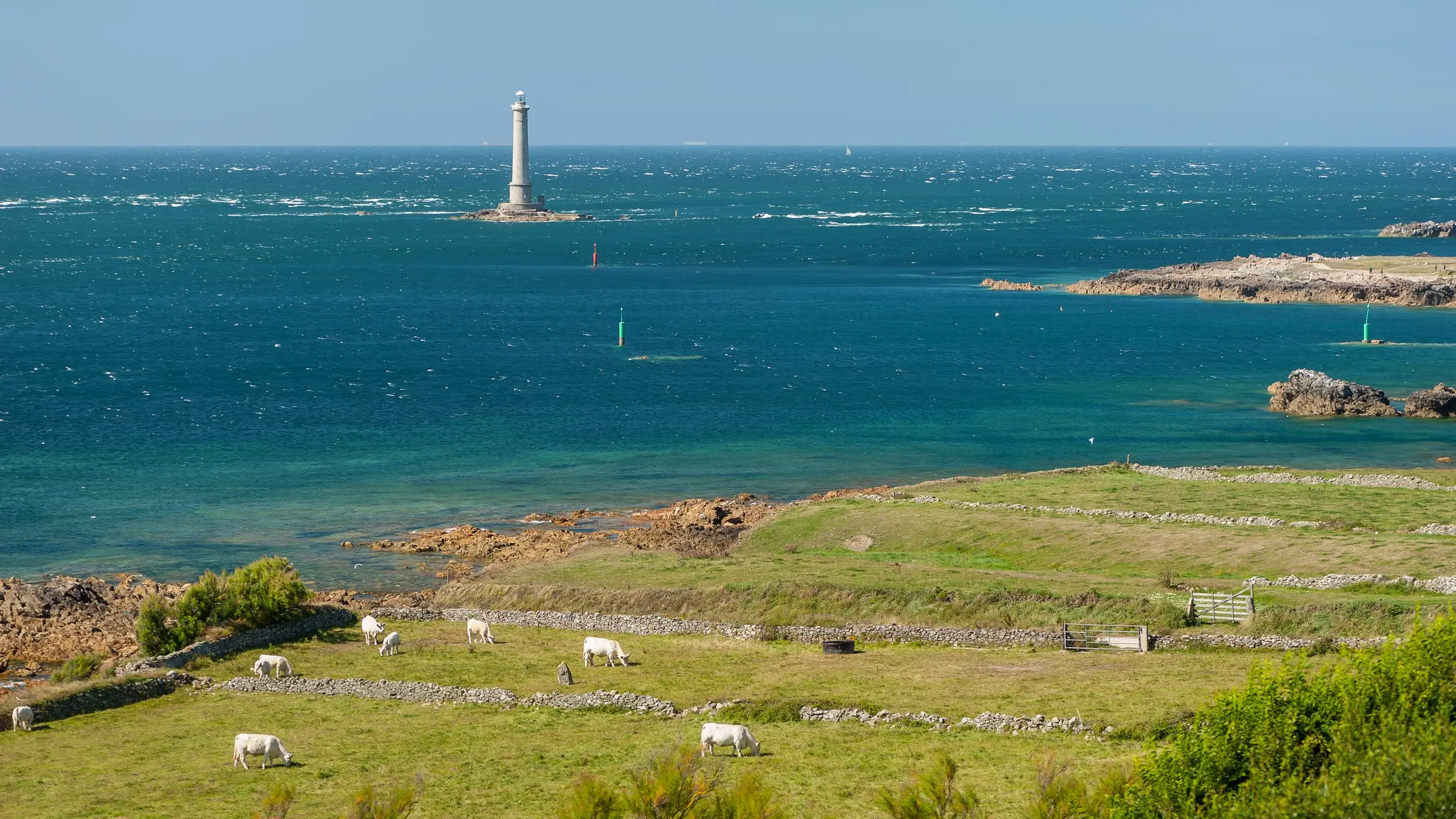
At the far tip of the Cotentin Peninsula stands the Orano plant, operating since 1966, with capacity covering close to half of the world's reprocessing of spent nuclear fuel. Gneiss cliffs over two billion years old, among the oldest on Earth, line the headland, backed by heathland with stone-walled sheep pastures. Between the headland and the island of Alderney runs the Raz Blanchard, one of Europe's strongest tidal currents, reaching speeds of up to 22 km/h. The sentier des douaniers (customs path) takes you from the cliffs of Nez de Jobourg along the coast to the Goury lighthouse on the Gros du Raz rock, right in the current. An SNSM lifeboat is moored in the harbour, able to launch within fifteen minutes of an alert.

Cap de la Hague

At the far tip of the Cotentin Peninsula stands the Orano plant, operating since 1966, with capacity covering close to half of the world's reprocessing of spent nuclear fuel. Gneiss cliffs over two billion years old, among the oldest on Earth, line the headland, backed by heathland with stone-walled sheep pastures. Between the headland and the island of Alderney runs the Raz Blanchard, one of Europe's strongest tidal currents, reaching speeds of up to 22 km/h. The sentier des douaniers (customs path) takes you from the cliffs of Nez de Jobourg along the coast to the Goury lighthouse on the Gros du Raz rock, right in the current. An SNSM lifeboat is moored in the harbour, able to launch within fifteen minutes of an alert.

Rouen

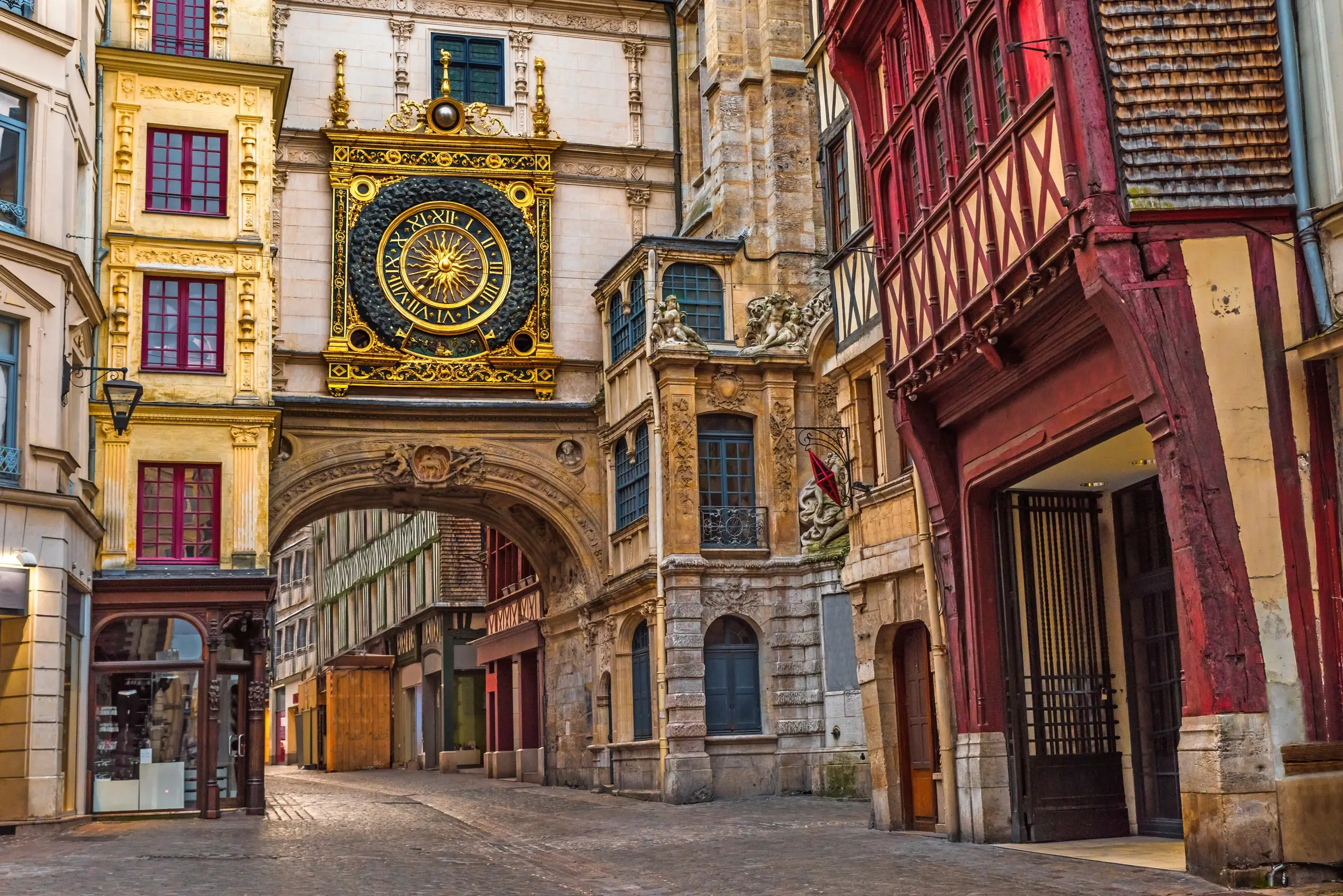
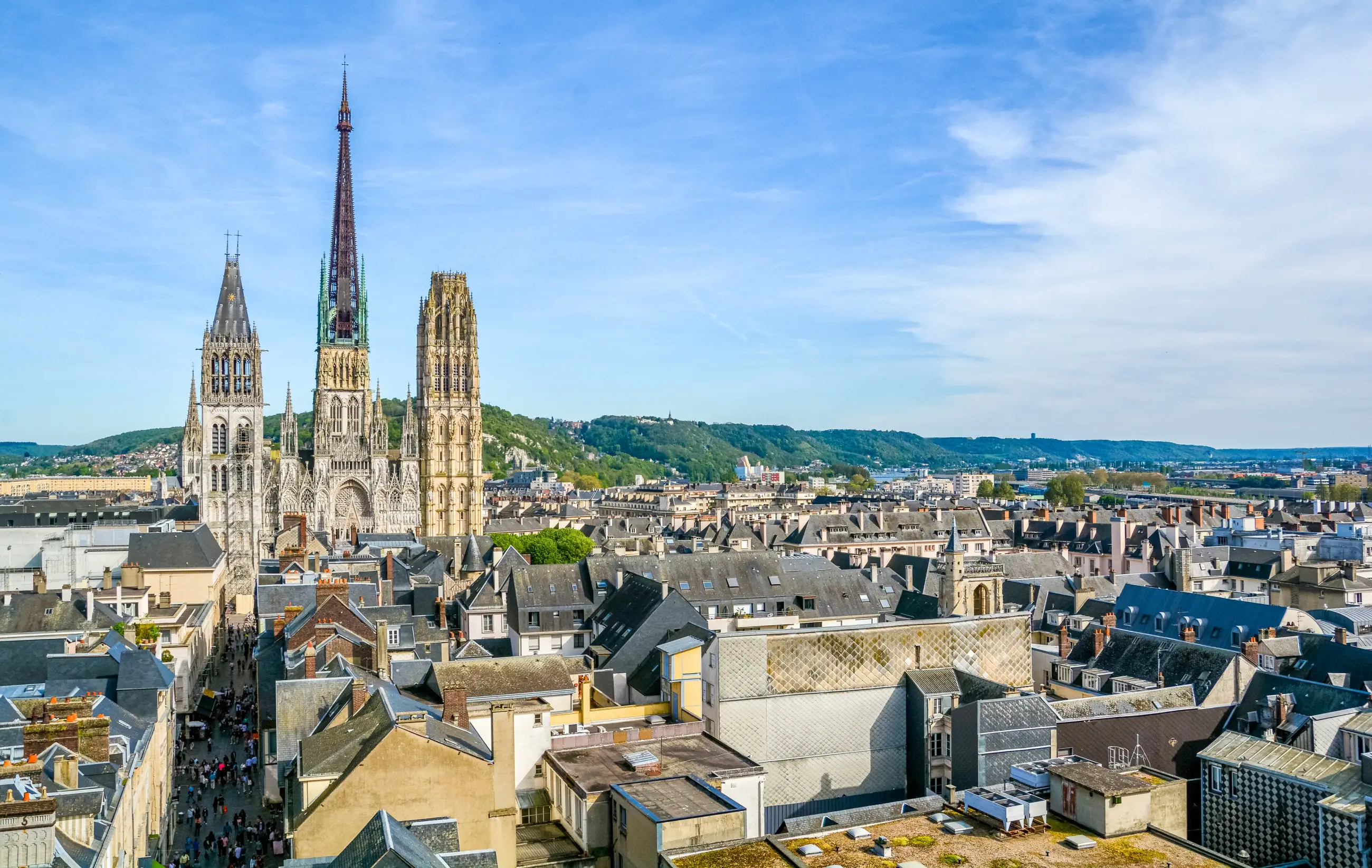
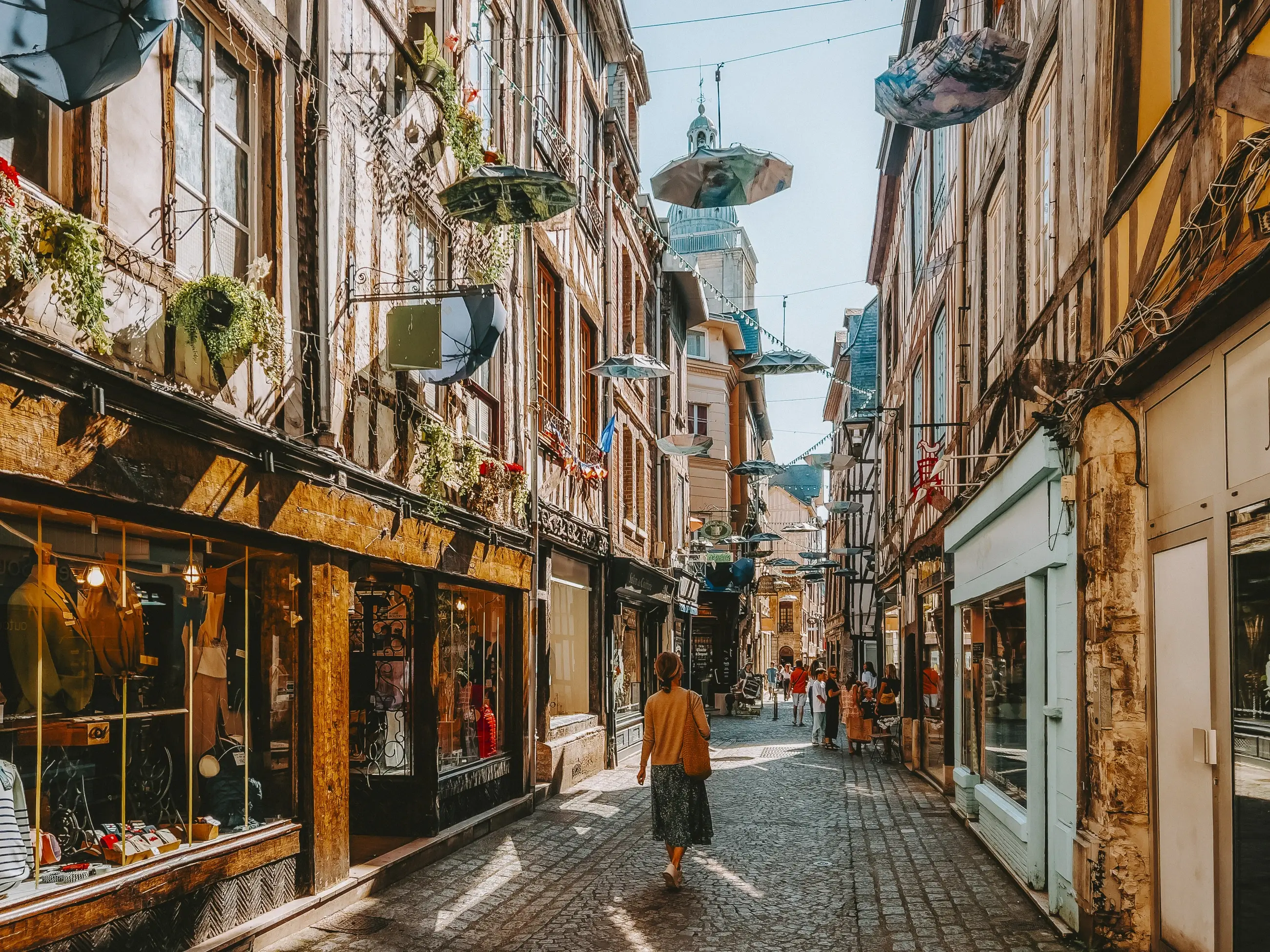
Rouen Cathedral is topped by a cast-iron spire that held the title of the world's tallest structure from 1876 to 1880, before being overtaken by Cologne Cathedral. On Place du Vieux-Marché, Joan of Arc was burned at the stake on 30 May 1431 following a trial by an English court. Rue du Gros-Horloge takes you under a Renaissance archway from 1527, where the street's namesake astronomical clock has ticked since 1389, with a golden sun with twenty-four rays and a single hand shaped like a ram, a symbol of the wool trade that brought the city its wealth. The street leads on to Notre-Dame Cathedral, which Claude Monet painted in thirty canvases between 1892 and 1894. One of them belongs to Rouen's Musée des Beaux-Arts, which received it as a gift from the city in 1909.

Rouen

Rouen Cathedral is topped by a cast-iron spire that held the title of the world's tallest structure from 1876 to 1880, before being overtaken by Cologne Cathedral. On Place du Vieux-Marché, Joan of Arc was burned at the stake on 30 May 1431 following a trial by an English court. Rue du Gros-Horloge takes you under a Renaissance archway from 1527, where the street's namesake astronomical clock has ticked since 1389, with a golden sun with twenty-four rays and a single hand shaped like a ram, a symbol of the wool trade that brought the city its wealth. The street leads on to Notre-Dame Cathedral, which Claude Monet painted in thirty canvases between 1892 and 1894. One of them belongs to Rouen's Musée des Beaux-Arts, which received it as a gift from the city in 1909.

Bessin, the D-Day Coast

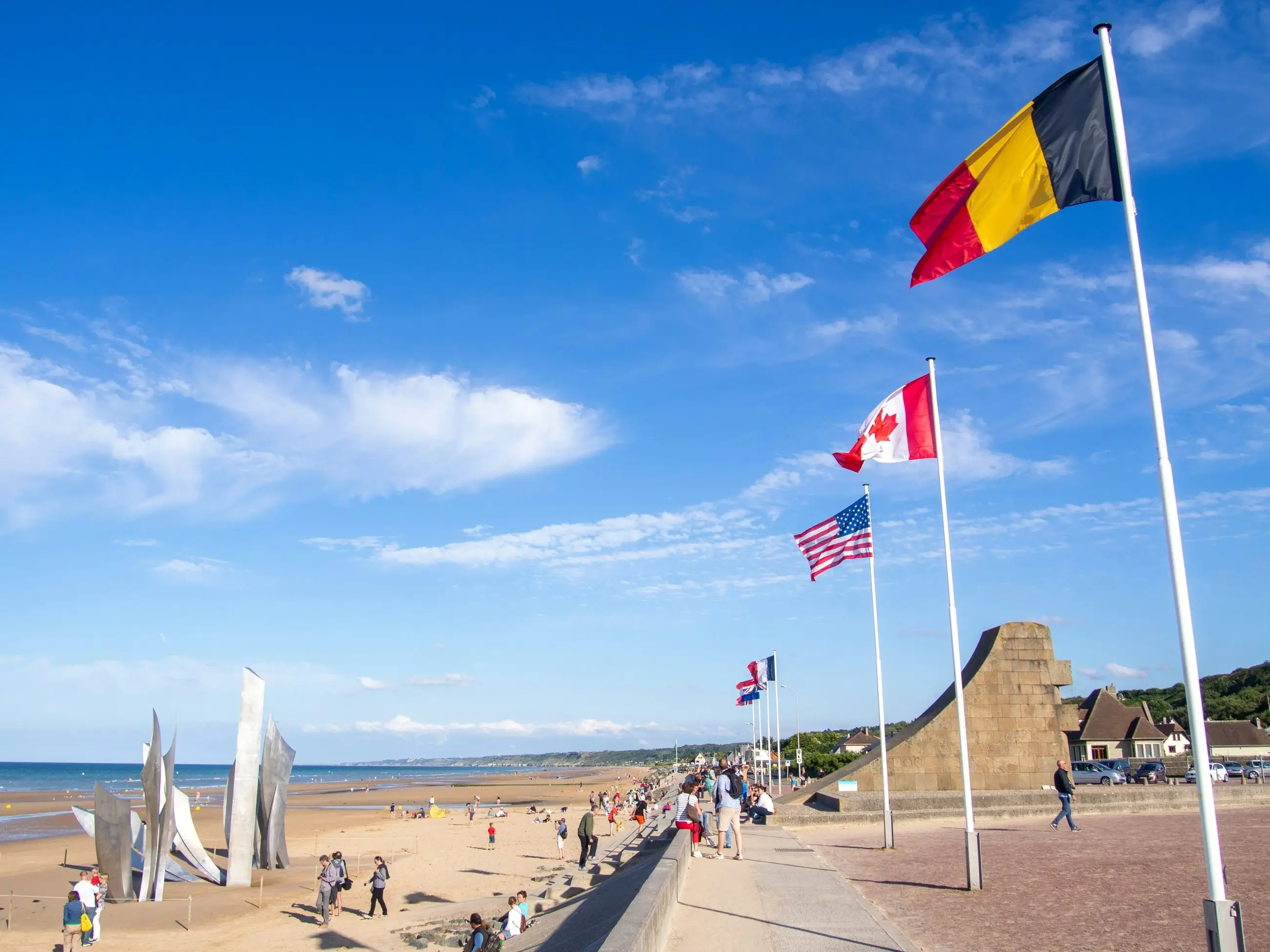
Of the five Normandy landing beaches, Omaha Beach saw the highest number of casualties, with around 2,400 men killed, wounded or missing on 6 June 1944. Seven kilometres to the west, 225 American Rangers under Lieutenant Colonel James Rudder scaled the thirty-metre cliffs of Pointe du Hoc to destroy a German battery of 155mm guns, which the Germans had moved inland before the attack; by 8 June, 81 of the Rangers had been killed. Walking the cliffs above Omaha Beach brings you to the American cemetery at Colleville-sur-Mer, established on 8 June 1944 as the first American cemetery of the Second World War in Europe. Among the 9,389 white crosses and Stars of David, facing the Atlantic towards home, stands the Wall of the Missing, inscribed with 1,557 names.

Bessin, the D-Day Coast

Of the five Normandy landing beaches, Omaha Beach saw the highest number of casualties, with around 2,400 men killed, wounded or missing on 6 June 1944. Seven kilometres to the west, 225 American Rangers under Lieutenant Colonel James Rudder scaled the thirty-metre cliffs of Pointe du Hoc to destroy a German battery of 155mm guns, which the Germans had moved inland before the attack; by 8 June, 81 of the Rangers had been killed. Walking the cliffs above Omaha Beach brings you to the American cemetery at Colleville-sur-Mer, established on 8 June 1944 as the first American cemetery of the Second World War in Europe. Among the 9,389 white crosses and Stars of David, facing the Atlantic towards home, stands the Wall of the Missing, inscribed with 1,557 names.

Pays d'Auge

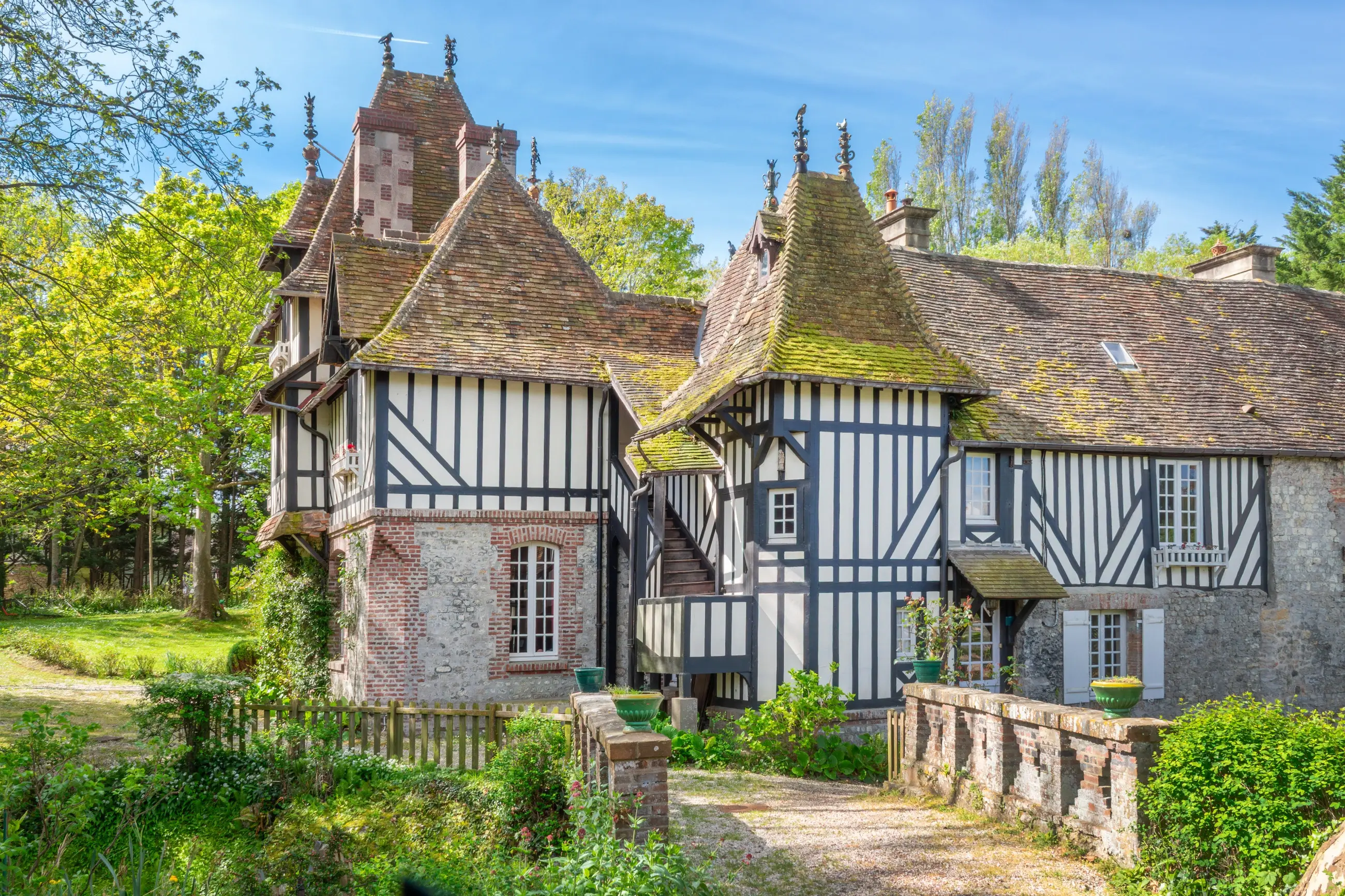
According to legend, camembert was created in 1791 at the Manoir de Beaumoncel, when farmer Marie Harel received the recipe for a soft cheese from a priest fleeing the Revolution. The Pays d'Auge, rolling countryside between Caen and Lisieux, is home to more than three hundred timber-framed manor houses and three protected cheeses, camembert alongside Livarot, nicknamed 'the colonel' after its reed-leaf bands, and Pont-l'Évêque. Along the forty-kilometre Route du Cidre, you will pass around twenty cider houses of the Cru de Cambremer, stop in Beuvron-en-Auge, one of the most beautiful villages in France, and taste Pays d'Auge calvados, twice distilled in copper stills. Around Lisieux, more than three hundred stud farms operate; locals say there are more horses here than people.

Pays d'Auge

According to legend, camembert was created in 1791 at the Manoir de Beaumoncel, when farmer Marie Harel received the recipe for a soft cheese from a priest fleeing the Revolution. The Pays d'Auge, rolling countryside between Caen and Lisieux, is home to more than three hundred timber-framed manor houses and three protected cheeses, camembert alongside Livarot, nicknamed 'the colonel' after its reed-leaf bands, and Pont-l'Évêque. Along the forty-kilometre Route du Cidre, you will pass around twenty cider houses of the Cru de Cambremer, stop in Beuvron-en-Auge, one of the most beautiful villages in France, and taste Pays d'Auge calvados, twice distilled in copper stills. Around Lisieux, more than three hundred stud farms operate; locals say there are more horses here than people.


Experiences that make sense

Degustation on the Route du Cidre

In Normandy, calvados is drunk in the middle of the meal, not after it: a glass served with apple sorbet is known as the trou normand (Norman hole), a custom introduced by Napoleon III to make room for the next course. The cider houses on the Route du Cidre pour three levels of apple distillation: four to five per cent cidre, the aperitif pommeau made from must and young calvados, and finally calvados itself, twice distilled and aged in oak. On the forty-kilometre route between Lisieux and Cambremer, you will stop at one of twenty family-run cider houses, see the wooden press, and taste cidre with local cheese. At Domaine Pierre Huet in Cambremer, distilling since 1865, a thirty-year-old Cordon d'Or calvados also ages in the cellars.

Degustation on the Route du Cidre

In Normandy, calvados is drunk in the middle of the meal, not after it: a glass served with apple sorbet is known as the trou normand (Norman hole), a custom introduced by Napoleon III to make room for the next course. The cider houses on the Route du Cidre pour three levels of apple distillation: four to five per cent cidre, the aperitif pommeau made from must and young calvados, and finally calvados itself, twice distilled and aged in oak. On the forty-kilometre route between Lisieux and Cambremer, you will stop at one of twenty family-run cider houses, see the wooden press, and taste cidre with local cheese. At Domaine Pierre Huet in Cambremer, distilling since 1865, a thirty-year-old Cordon d'Or calvados also ages in the cellars.

Linen manufacturing in the Pays de Caux

Seine-Maritime, the heart of the Pays de Caux, is France's largest flax-growing department, and France alone grows eighty per cent of the world's flax. Even so, the last Norman spinning mill has closed, and the fibre is now shipped mainly to China for spinning. Flax has been grown here since the 13th century; after a decline in the 19th century, it was revived by Flemish farmers, and the same field may only be sown with flax once every seven years to avoid exhausting the soil. In mid-June, you will drive through a countryside striped with electric-blue fields: each flower lasts only a single day and drops by noon, but the whole field stays in bloom for over two weeks, as the flowers open in succession. At the Terre de Lin cooperative, founded in the 1940s in Saint-Pierre-le-Viger, eight hundred farmers now work the land.

Linen manufacturing in the Pays de Caux

Seine-Maritime, the heart of the Pays de Caux, is France's largest flax-growing department, and France alone grows eighty per cent of the world's flax. Even so, the last Norman spinning mill has closed, and the fibre is now shipped mainly to China for spinning. Flax has been grown here since the 13th century; after a decline in the 19th century, it was revived by Flemish farmers, and the same field may only be sown with flax once every seven years to avoid exhausting the soil. In mid-June, you will drive through a countryside striped with electric-blue fields: each flower lasts only a single day and drops by noon, but the whole field stays in bloom for over two weeks, as the flowers open in succession. At the Terre de Lin cooperative, founded in the 1940s in Saint-Pierre-le-Viger, eight hundred farmers now work the land.

Visiting the Oyster Beds in the Baie des Veys

Four Normandy rivers, the Aure, Vire, Taute and Douve, flow into the Baie des Veys, and their nutrient-rich fresh water feeds oyster beds covering 170 hectares, producing up to ten thousand tons of oysters a year. The first farm here was established in 1968 by fisherman André Taillepied near Grandcamp-Maisy, between Utah Beach and Omaha Beach, where the Royale d'Isigny oyster is still farmed today. You reach the estran (tidal flat) on foot, or on Tuesdays by horse-drawn cart. You will see the full cycle from seeding to maturing, and along the way you may spot some of the two hundred seals that gather near the Isigny channel. The tour ends in an oyster workshop, where you are taught the art of opening oysters and get to taste them straight away.

Visiting the Oyster Beds in the Baie des Veys

Four Normandy rivers, the Aure, Vire, Taute and Douve, flow into the Baie des Veys, and their nutrient-rich fresh water feeds oyster beds covering 170 hectares, producing up to ten thousand tons of oysters a year. The first farm here was established in 1968 by fisherman André Taillepied near Grandcamp-Maisy, between Utah Beach and Omaha Beach, where the Royale d'Isigny oyster is still farmed today. You reach the estran (tidal flat) on foot, or on Tuesdays by horse-drawn cart. You will see the full cycle from seeding to maturing, and along the way you may spot some of the two hundred seals that gather near the Isigny channel. The tour ends in an oyster workshop, where you are taught the art of opening oysters and get to taste them straight away.


Selected premium accommodation

XXX

xxx

XXX

xxx

XXX

xxx

Normandy awaits. Shall we go?

Every journey is different, just as our clients are different. At Meraki, we know this well, which is why we approach every enquiry individually, with a single goal, to meet your expectations down to the last detail.

Plan your trip

Let's plan your dream holiday together!

We would be happy to meet with you to design and fine-tune every detail of your itinerary to suit your wishes, destination or season.

  • Individual tour
  • Group tour

By submitting the form you agree to the processing of your personal data for the purpose of responding to your enquiry. More about GDPR here.