
Bhutan

Tailor-Made Tour


Best Time to Visit:
MAR – MAY / SEP – NOV

Accommodation:
Hotels and homestays

Main Highlights:
Harmony, nature and peace

Price Level:
€€€€€

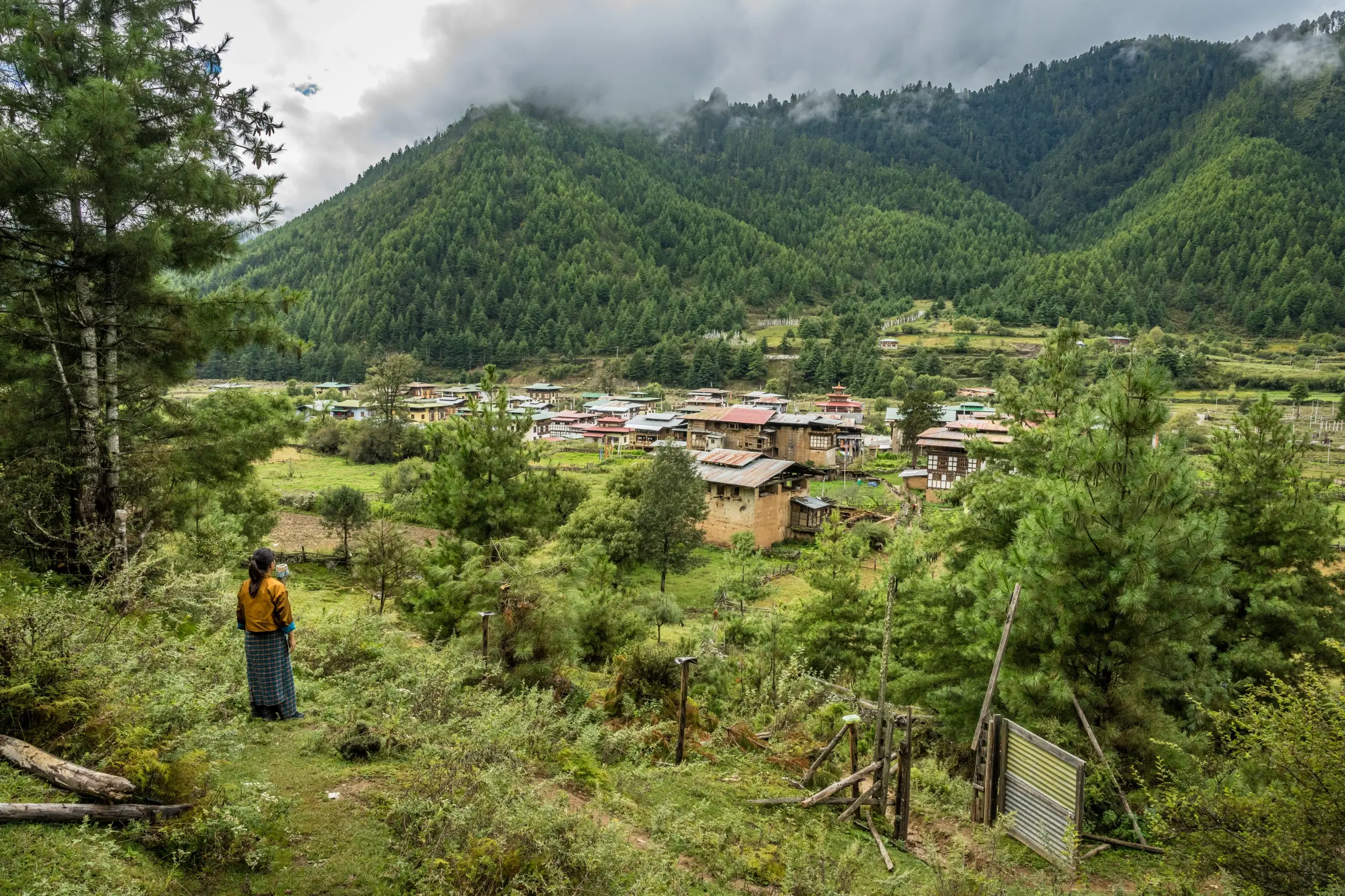
By constitution, sixty per cent of the territory must remain under forest cover forever; today forest covers roughly seventy per cent, and Bhutan is the only country in the world that absorbs more carbon than it produces. This balance is visible everywhere. Thimphu is the only capital city in the world without traffic lights. Traffic is directed by police officers wearing white gloves. The road from there climbs over the Dochula Pass, with its 108 chortens, up to Punakha, where Punakha Dzong stands at the confluence of the Pho Chhu and Mo Chhu rivers. The landscape stretches from subtropical lowlands in the south to snow-capped peaks in the north, where Gangkhar Puensum rises, the world's highest unclimbed mountain. Trek up to the cliffside monastery of Paro Taktsang, 900 metres above the valley. Walk through the Phobjikha Valley, where every winter black-necked cranes fly in from the Tibetan plateau and circle Gangtey Monastery three times. Taste ema datshi, the national dish of chilli and cheese.
What to see and do in Bhutan

You will climb up to Taktsang above the Paro valley, walk through the fortress of Punakha Dzong at the confluence of the Pho Chhu and Mo Chhu rivers, watch the masked dances of the Paro Tshechu festival in spring, and in winter observe black-necked cranes arriving from the Tibetan plateau in the Phobjikha valley. You will set off on the multi-day Druk Path Trek among rhododendrons and mountain lakes, try a traditional hot-stone dotsho bath, or shoot a bow, the national sport of Bhutan.


Places with soul
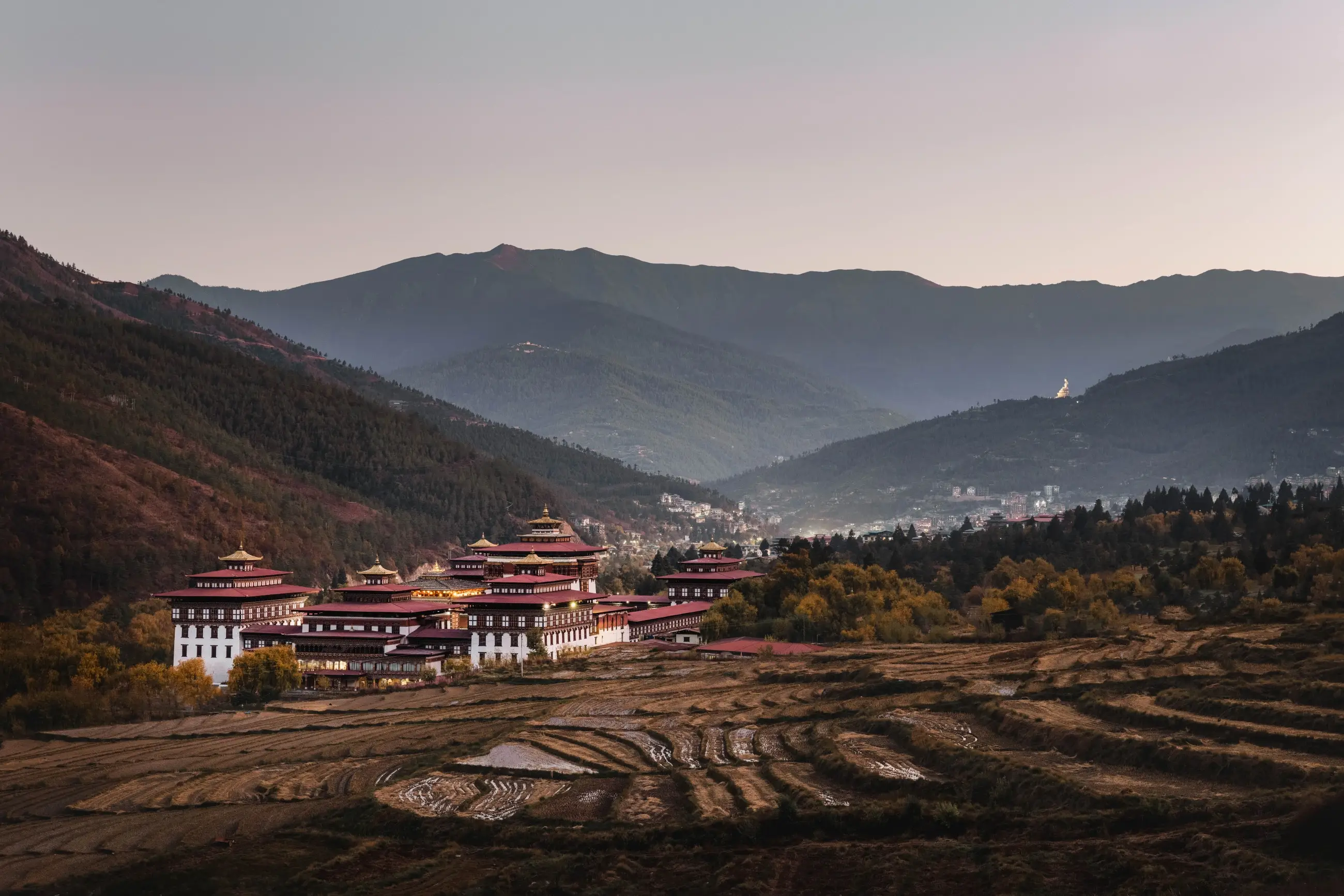
Punakha dzong

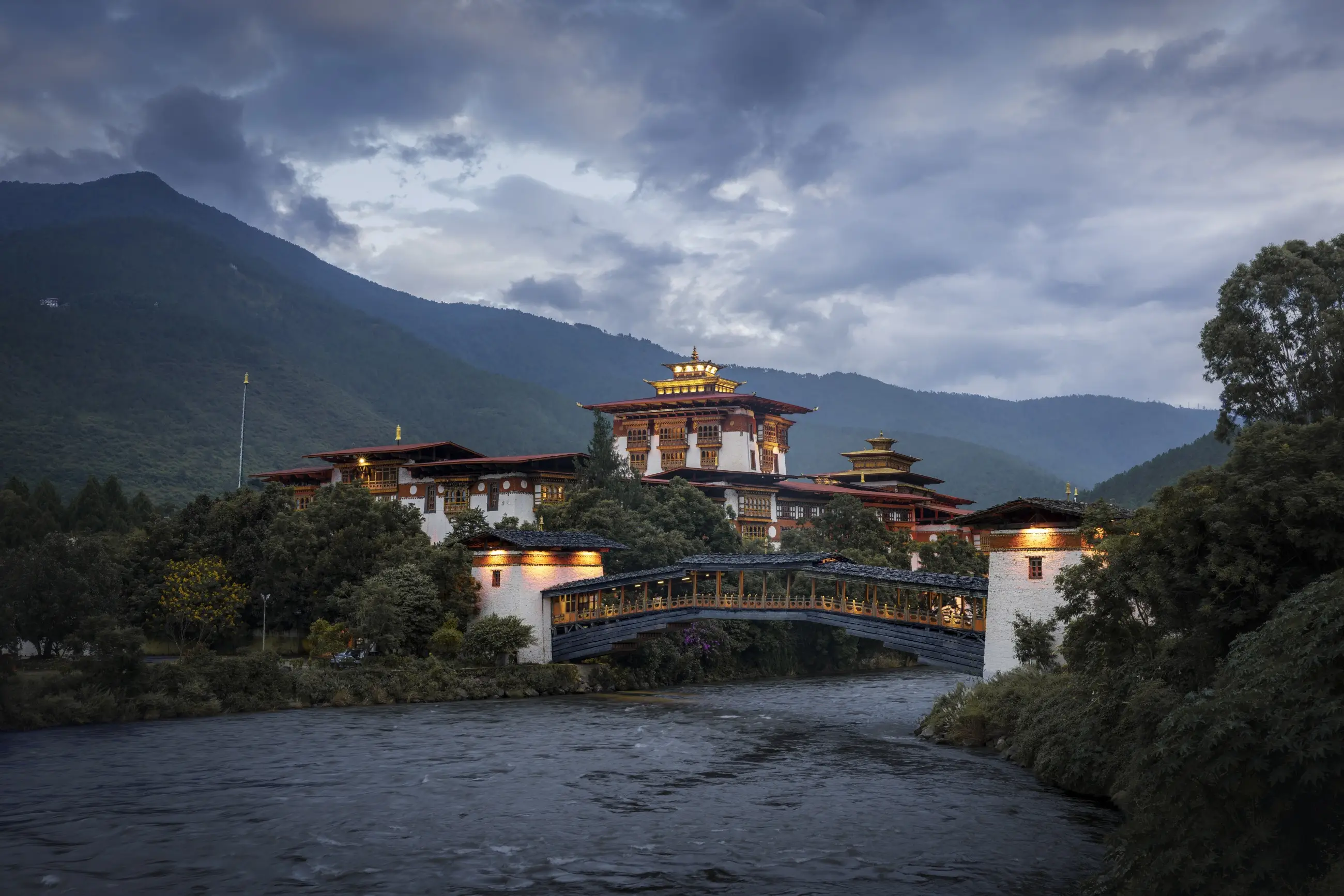
According to legend, Guru Padmasambhava predicted in the 8th century that a man named Namgyal would build a great fortress on a hill shaped like an elephant. In 1637, Zhabdrung Ngawang Namgyal arrived and founded Pungtang Dechen Phodrang, the "palace of great happiness", at the confluence of the Pho Chhu (father) and Mo Chhu (mother) rivers. It served as the seat of the Bhutanese government until 1955. You will cross the wooden bridge over the turquoise Mo Chhu, which meets the murkier Pho Chhu below the fortress walls, and climb the steep staircase once used for defence, as it could be pulled up. In March, purple jacarandas bloom in the courtyards, under which King Jigme Khesar married Jetsun Pema in 2011.

Punakha dzong

According to legend, Guru Padmasambhava predicted in the 8th century that a man named Namgyal would build a great fortress on a hill shaped like an elephant. In 1637, Zhabdrung Ngawang Namgyal arrived and founded Pungtang Dechen Phodrang, the "palace of great happiness", at the confluence of the Pho Chhu (father) and Mo Chhu (mother) rivers. It served as the seat of the Bhutanese government until 1955. You will cross the wooden bridge over the turquoise Mo Chhu, which meets the murkier Pho Chhu below the fortress walls, and climb the steep staircase once used for defence, as it could be pulled up. In March, purple jacarandas bloom in the courtyards, under which King Jigme Khesar married Jetsun Pema in 2011.

Údolí Phobjikha

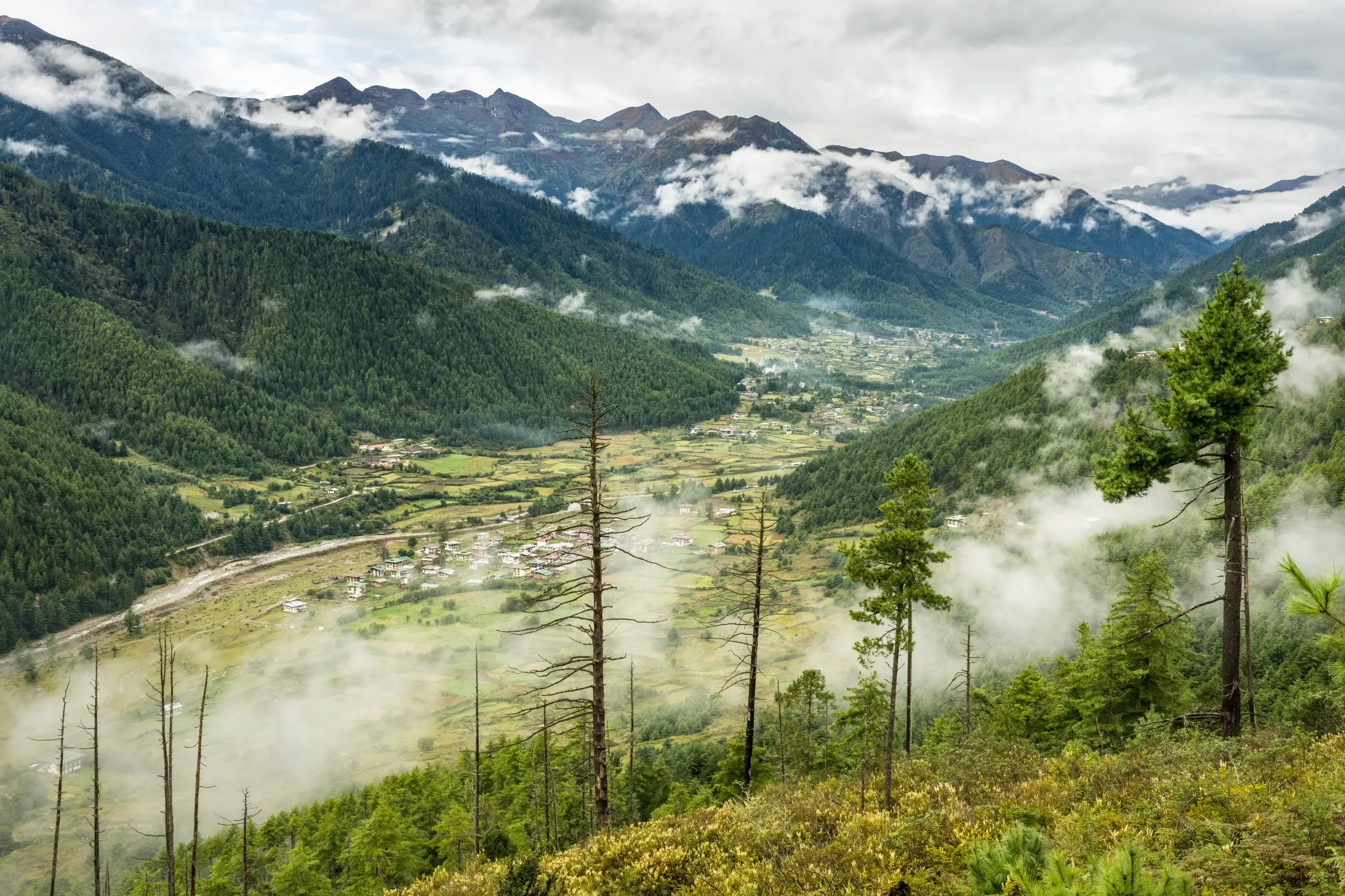
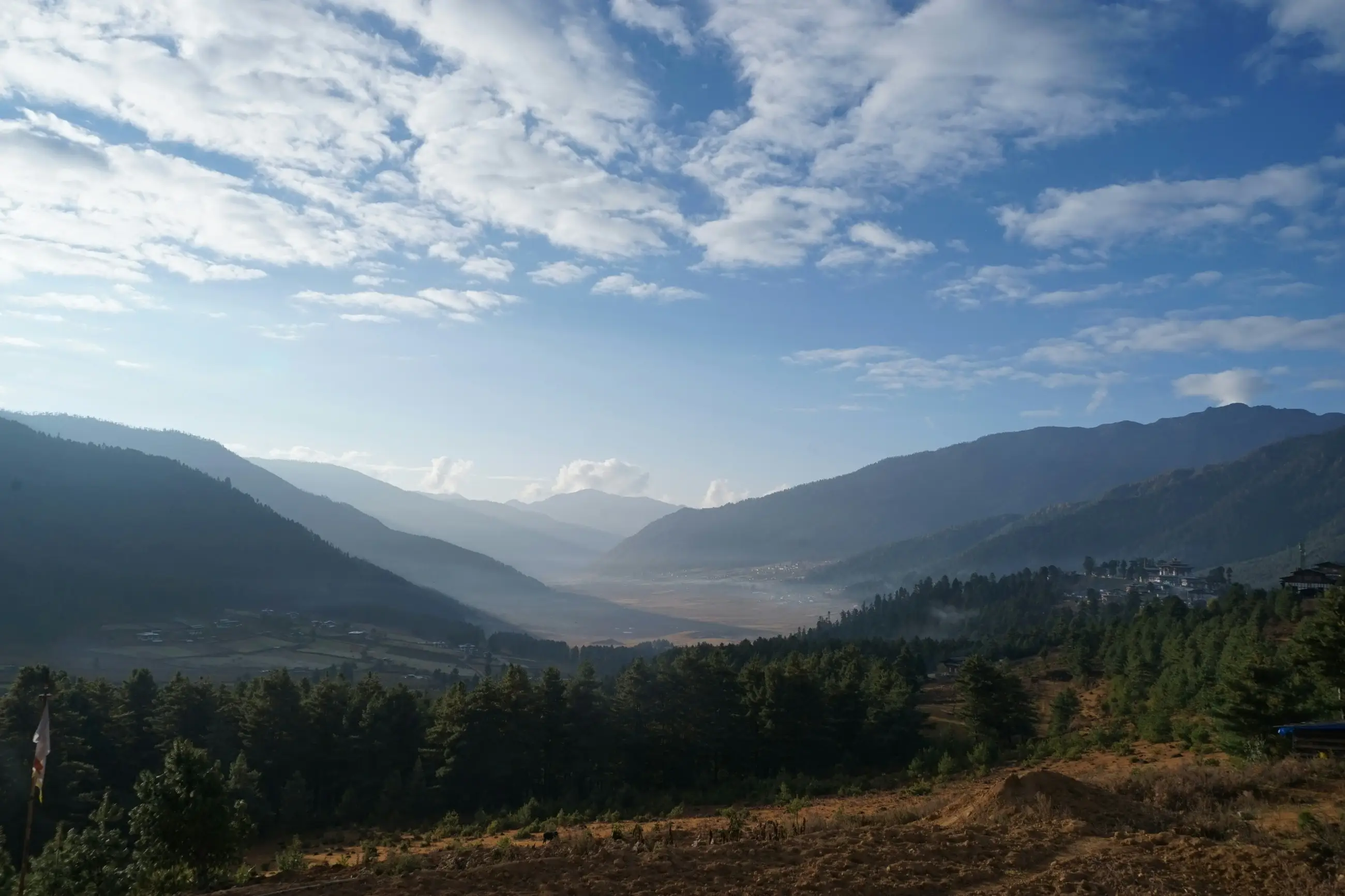
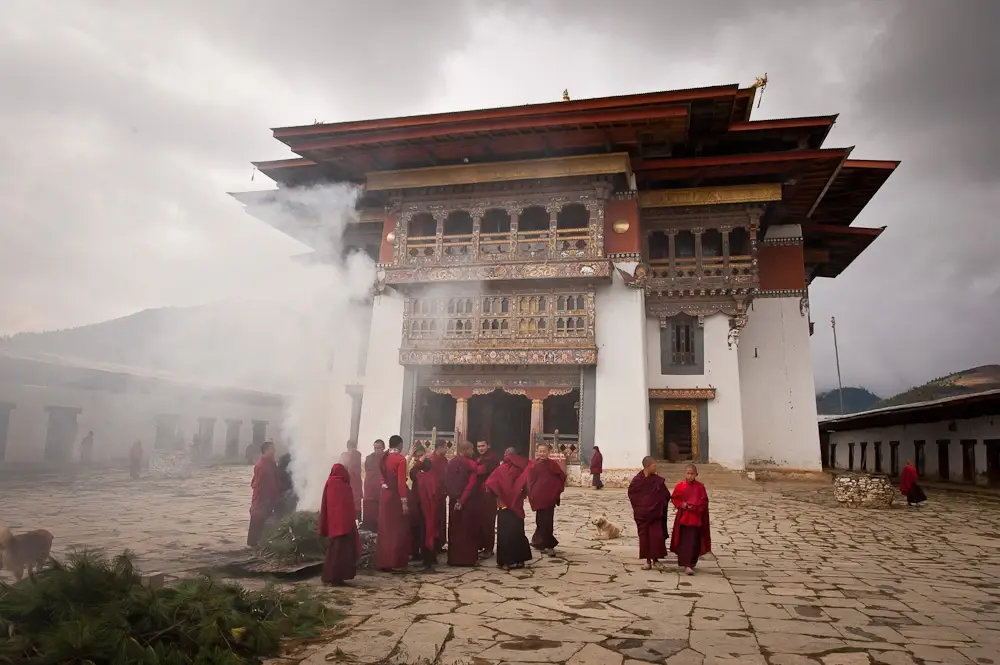
Because of the migratory birds, the Phobjikha Valley had its power lines buried underground. This glacial valley in central Bhutan lies at an altitude of around 3,000 metres and, from November to February, becomes the wintering ground for black-necked cranes (Grus nigricollis) that fly in from the Tibetan plateau. From Gangtey Monastery, founded in the 17th century by the Pema Lingpa lineage, you will descend the Gangtey Nature Trail through potato fields and pine groves to the wetland meadows where the birds feed. Every year on 11 November, the Black-Necked Crane Festival is held in the monastery courtyard, with masked dances. At dusk, the valley fills with their calls as they gather at their wetland roosts.

Údolí Phobjikha

Because of the migratory birds, the Phobjikha Valley had its power lines buried underground. This glacial valley in central Bhutan lies at an altitude of around 3,000 metres and, from November to February, becomes the wintering ground for black-necked cranes (Grus nigricollis) that fly in from the Tibetan plateau. From Gangtey Monastery, founded in the 17th century by the Pema Lingpa lineage, you will descend the Gangtey Nature Trail through potato fields and pine groves to the wetland meadows where the birds feed. Every year on 11 November, the Black-Necked Crane Festival is held in the monastery courtyard, with masked dances. At dusk, the valley fills with their calls as they gather at their wetland roosts.

Taktsang

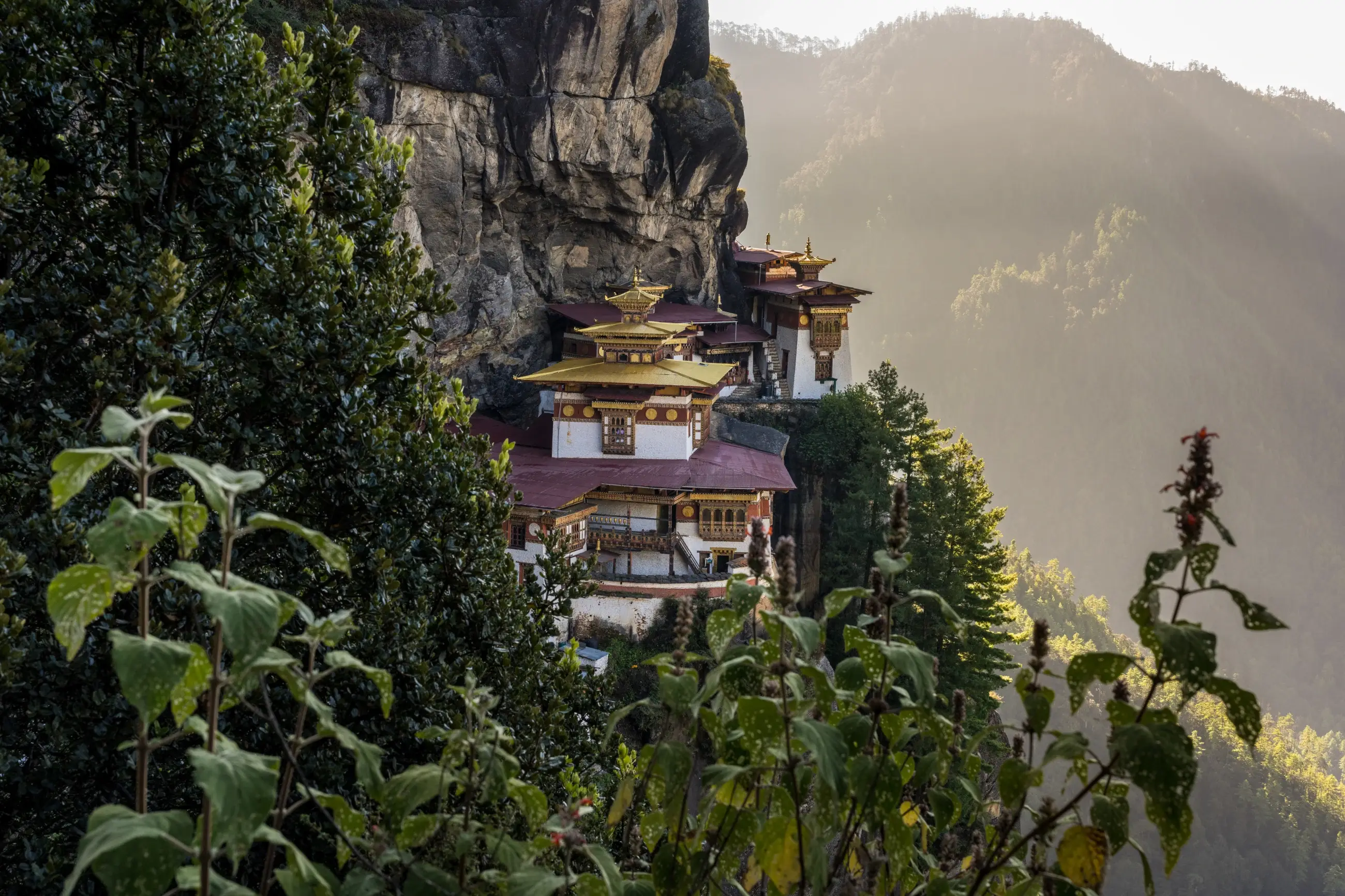
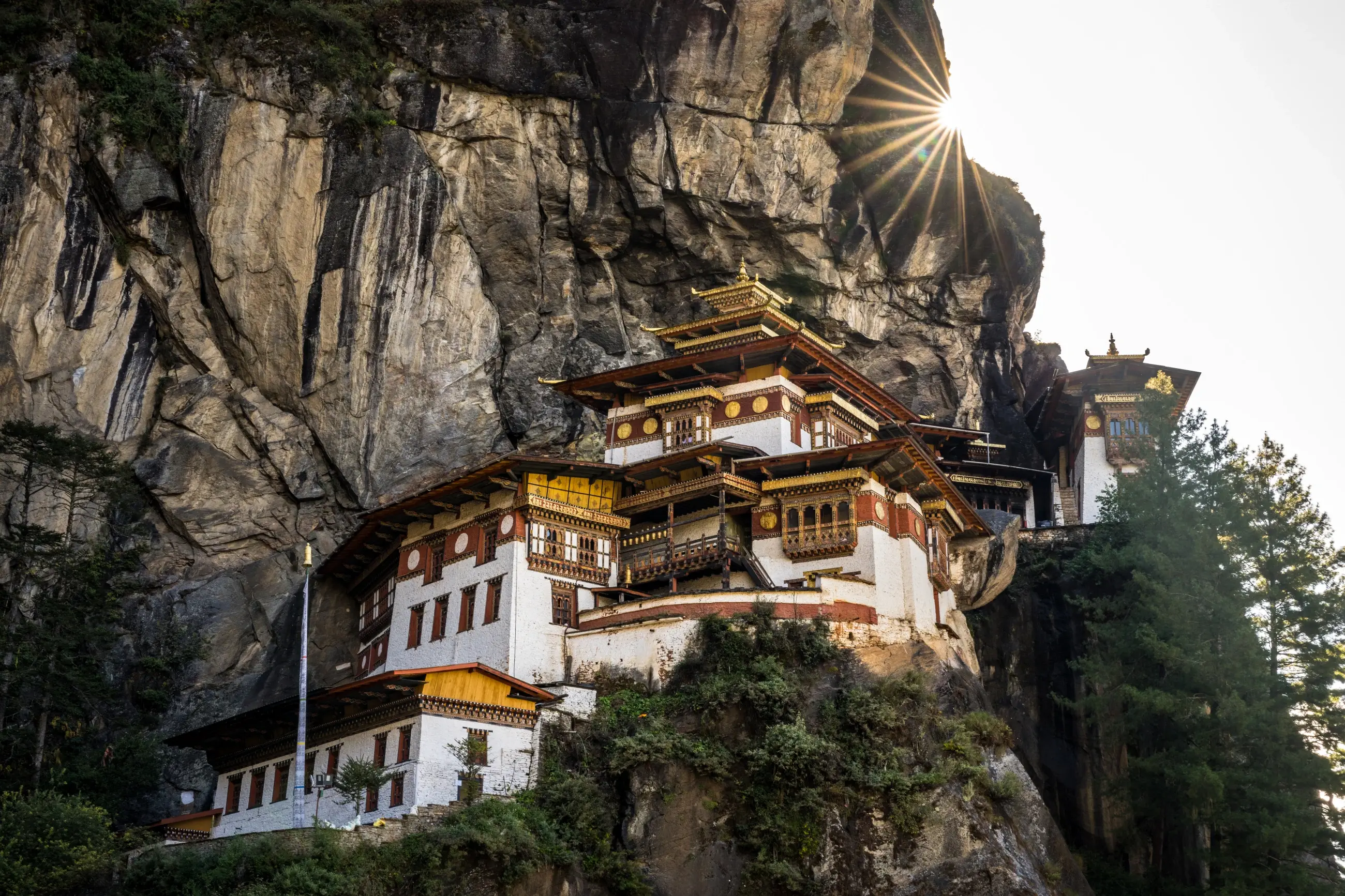
A fire in April 1998 destroyed most of Taktsang. The building standing today is a reconstruction completed in 2005. The monastery clings to a granite cliff face nine hundred metres above the Paro valley, around the cave where, according to tradition, Guru Rinpoche meditated in the 8th century. The name Taktsang means "tiger's nest" in Dzongkha, after the legend of his arrival on the back of a tigress. From Ramthangkha, you will climb through pine forest hung with prayer flags, pass a waterfall, and cover the final stretch on stone steps cut into the rock. From the viewpoint opposite, you will see the whole complex suspended on the cliff. At the entrance to the main shrine, butter lamps burn in front of the meditation cave.

Taktsang

A fire in April 1998 destroyed most of Taktsang. The building standing today is a reconstruction completed in 2005. The monastery clings to a granite cliff face nine hundred metres above the Paro valley, around the cave where, according to tradition, Guru Rinpoche meditated in the 8th century. The name Taktsang means "tiger's nest" in Dzongkha, after the legend of his arrival on the back of a tigress. From Ramthangkha, you will climb through pine forest hung with prayer flags, pass a waterfall, and cover the final stretch on stone steps cut into the rock. From the viewpoint opposite, you will see the whole complex suspended on the cliff. At the entrance to the main shrine, butter lamps burn in front of the meditation cave.

Merak–Sakteng

The area was closed to foreign visitors until 2010. The villages of Merak (3,500 m) and Sakteng (around 3,000 m) lie in eastern Bhutan and are home to the Brokpa, semi-nomadic yak herders whose ancestors, according to oral tradition, came here from the Tshona region of Tibet. Women wear hats made of yak hair with five braided strands that direct rain away from the face, while men wear red cloaks of sheep's wool. You will walk through the pastures of the Sakteng Wildlife Sanctuary, a reserve that Bhutanese authorities list as home to the migoi (Himalayan yeti). For dinner you will be served suju (salted tea with yak butter) and ema datshi (chilli with cheese).

Merak–Sakteng

The area was closed to foreign visitors until 2010. The villages of Merak (3,500 m) and Sakteng (around 3,000 m) lie in eastern Bhutan and are home to the Brokpa, semi-nomadic yak herders whose ancestors, according to oral tradition, came here from the Tshona region of Tibet. Women wear hats made of yak hair with five braided strands that direct rain away from the face, while men wear red cloaks of sheep's wool. You will walk through the pastures of the Sakteng Wildlife Sanctuary, a reserve that Bhutanese authorities list as home to the migoi (Himalayan yeti). For dinner you will be served suju (salted tea with yak butter) and ema datshi (chilli with cheese).


Experiences that make sense

National Dish: Ema Datshi

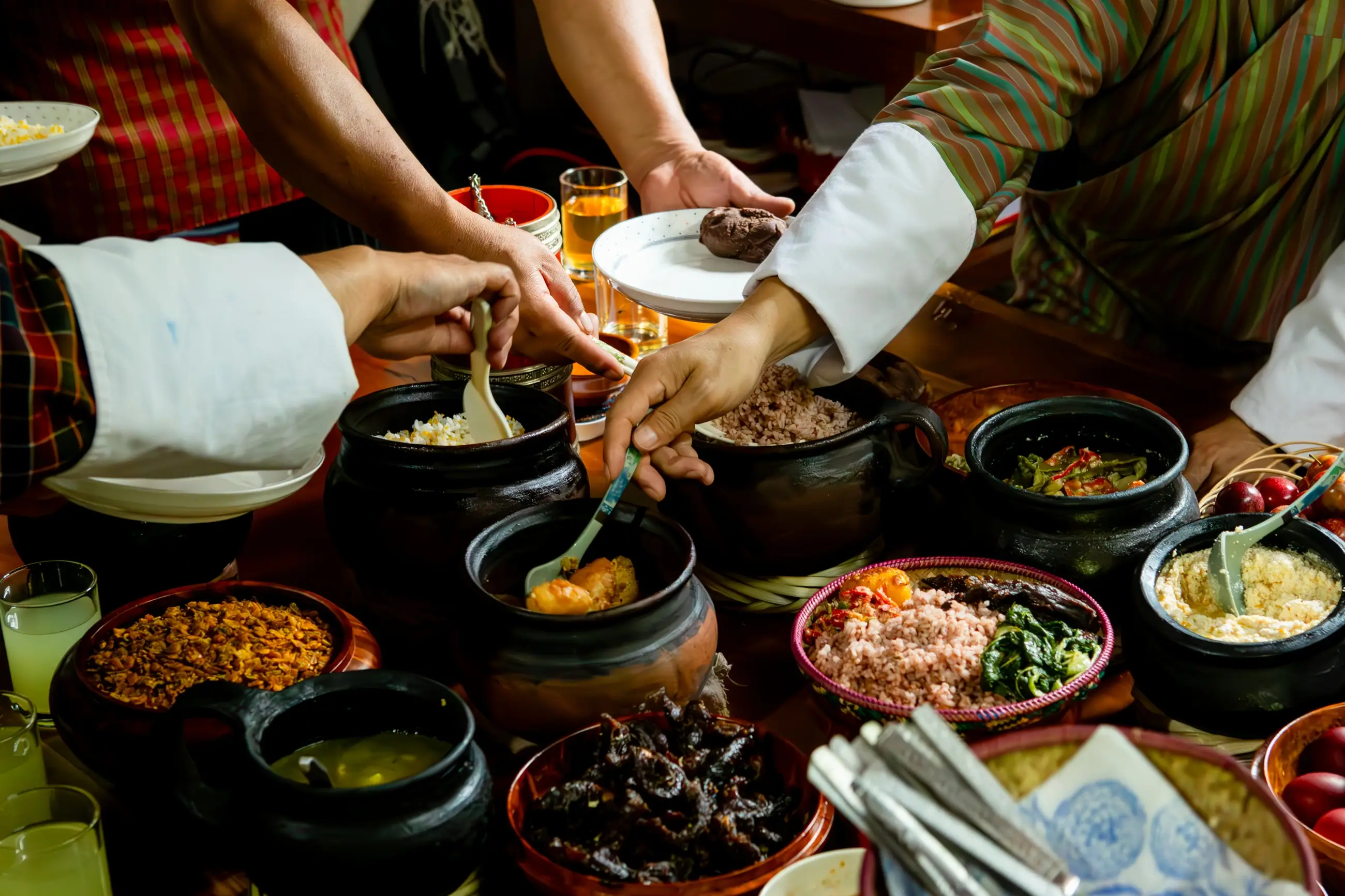
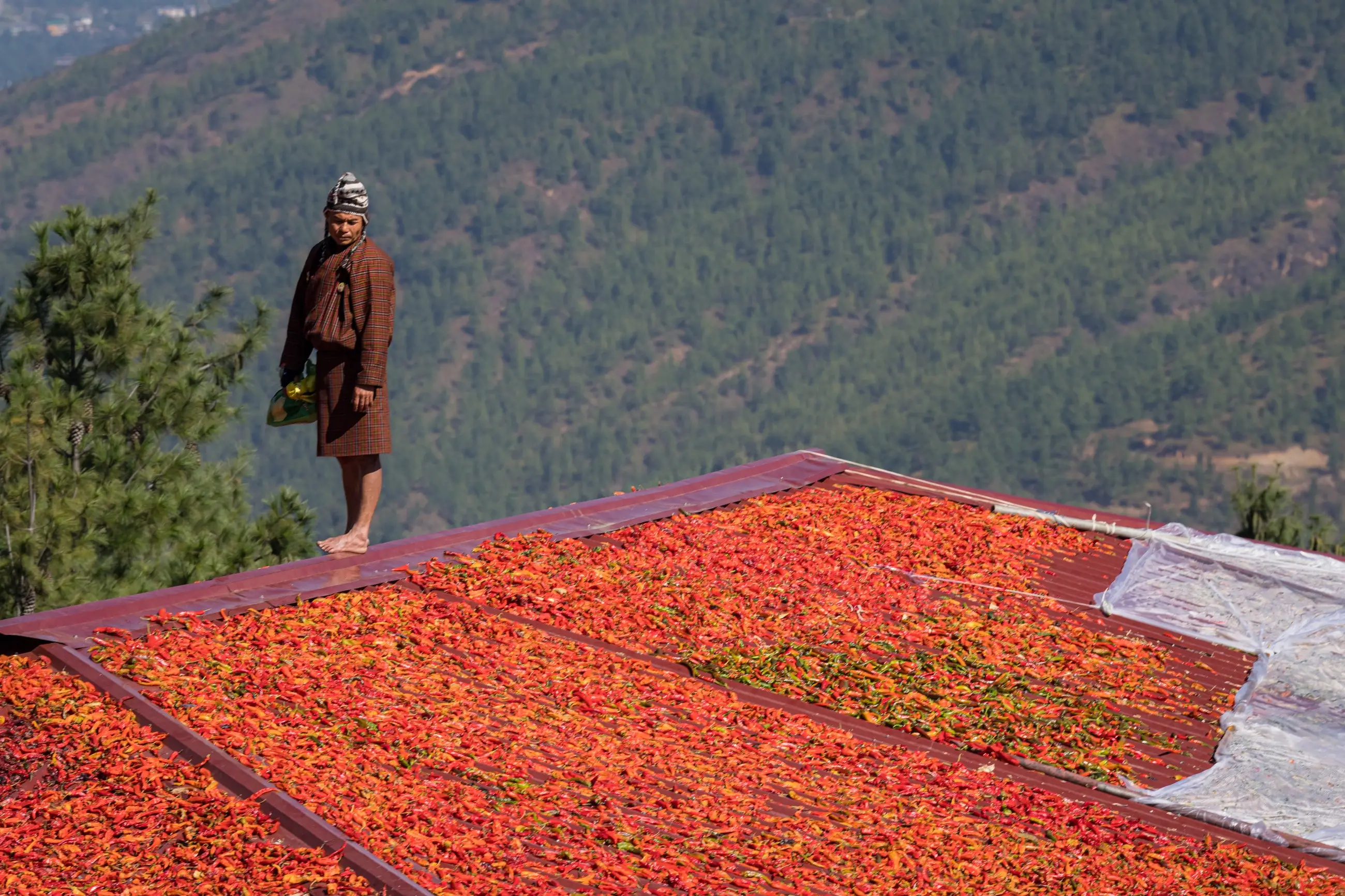
Chilli, without which no Bhutanese meal is complete, only reached local kitchens in the 17th century, arriving from the Americas via India. To this day it is regarded not as a spice but as a vegetable, and together with cheese it forms ema datshi (chilli cheese), the national dish, whose cheese is made from cow's milk, or yak's milk at higher altitudes. On a farm in Paro, you will pick and chop the chillies, cook them with cheese on a bukhari (a wood-burning metal stove) into a thick sauce, and taste how much heat the family usually takes. You will eat the meal with your hosts alongside red rice, just as Bhutanese people do every day. On the shingle roofs of Paro's farms, chillies are dried in autumn, giving ema datshi a drier, smokier flavour.

National Dish: Ema Datshi

Chilli, without which no Bhutanese meal is complete, only reached local kitchens in the 17th century, arriving from the Americas via India. To this day it is regarded not as a spice but as a vegetable, and together with cheese it forms ema datshi (chilli cheese), the national dish, whose cheese is made from cow's milk, or yak's milk at higher altitudes. On a farm in Paro, you will pick and chop the chillies, cook them with cheese on a bukhari (a wood-burning metal stove) into a thick sauce, and taste how much heat the family usually takes. You will eat the meal with your hosts alongside red rice, just as Bhutanese people do every day. On the shingle roofs of Paro's farms, chillies are dried in autumn, giving ema datshi a drier, smokier flavour.

Archery

A Bhutanese archer aims at a target 140 metres away, twice the distance of an Olympic archer, yet uses only a flexible bamboo bow called a zhu. Dha (archery in Dzongkha) has protected Himalayan valleys for centuries; the Bhutanese last used it to repel a Tibetan invasion in 1864–1865. It became the national sport in 1971, the year Bhutan joined the United Nations. Narrow wooden targets called karey stand at both ends of the field. On the field you will try drawing the zhu's string and shooting at the distant target, while players at the other end cheer and tease you. After a hit, they will break into dance with you, and between rounds you will taste ara. Spectators move around right next to the target without restriction, as archery has no referee.

Archery

A Bhutanese archer aims at a target 140 metres away, twice the distance of an Olympic archer, yet uses only a flexible bamboo bow called a zhu. Dha (archery in Dzongkha) has protected Himalayan valleys for centuries; the Bhutanese last used it to repel a Tibetan invasion in 1864–1865. It became the national sport in 1971, the year Bhutan joined the United Nations. Narrow wooden targets called karey stand at both ends of the field. On the field you will try drawing the zhu's string and shooting at the distant target, while players at the other end cheer and tease you. After a hit, they will break into dance with you, and between rounds you will taste ara. Spectators move around right next to the target without restriction, as archery has no referee.

Tshechu: The Masked Cham Dance

Tshechu simply means "tenth day" in Dzongkha, yet on that day entire Himalayan valleys empty out as people head for the dzong courtyard. According to legend, Cham was founded by Guru Rinpoche himself, through a dance that drove away a demon blocking the spread of Buddhism in Bhutan. Dancers in silk costumes and wooden masks portray deities, and their movements are believed to cleanse spectators of bad karma. You will sit in the courtyard among families dressed in gho and kira, watching the dancers to the accompaniment of drums, cymbals and long horns. Between dances, you will be entertained by the atsara (a jester in a colourful mask) who jokes with the crowd. The thongdrol (a giant embroidered cloth depicting Guru Rinpoche) must be rolled up before the first rays of sunlight touch it.

Tshechu: The Masked Cham Dance

Tshechu simply means "tenth day" in Dzongkha, yet on that day entire Himalayan valleys empty out as people head for the dzong courtyard. According to legend, Cham was founded by Guru Rinpoche himself, through a dance that drove away a demon blocking the spread of Buddhism in Bhutan. Dancers in silk costumes and wooden masks portray deities, and their movements are believed to cleanse spectators of bad karma. You will sit in the courtyard among families dressed in gho and kira, watching the dancers to the accompaniment of drums, cymbals and long horns. Between dances, you will be entertained by the atsara (a jester in a colourful mask) who jokes with the crowd. The thongdrol (a giant embroidered cloth depicting Guru Rinpoche) must be rolled up before the first rays of sunlight touch it.


Bhutan Awaits. Shall We Go?

Every journey is different, just as every one of our clients is different. At Meraki, we know that well, which is why we approach every enquiry individually, with a single goal: to meet your expectations down to the last detail.

Plan your trip

Let's plan your dream holiday together!

We would be happy to meet with you to design and fine-tune every detail of your itinerary to suit your wishes, destination or season.

  • Individual tour
  • Group tour

By submitting the form you agree to the processing of your personal data for the purpose of responding to your enquiry. More about GDPR here.