


Laos
Laos – Tailor-Made Trip
Best Time to Visit:
November – February
Accommodation:
Hotels, traditional houses
Main Highlights:
Mekong, coffee and temples
Price level:
€
The Lao call themselves luk khao niao, children of sticky rice, and one meal at the table is enough to see why. The rice is cooked in a conical bamboo basket, comes to the table in a woven basket and is eaten by hand. A small ball is pressed in the palm and used to pick up the other dishes. The sticky variety prevails here, and the harvest is still the shared work of the whole village. But rice needs water, so the monsoon sets the calendar. Before it arrives, around May and June, villages launch handmade bamboo rockets to call the rain, a ceremony older than Buddhism that is still celebrated with a sense of fun. The monsoon that feeds the rice also fills the Mekong, the main artery of the country, and the river overflows its banks in the rainy season. Laos is the only landlocked state in Southeast Asia, so the river takes the role of the sea, with fishing villages on its banks and boats on its surface.




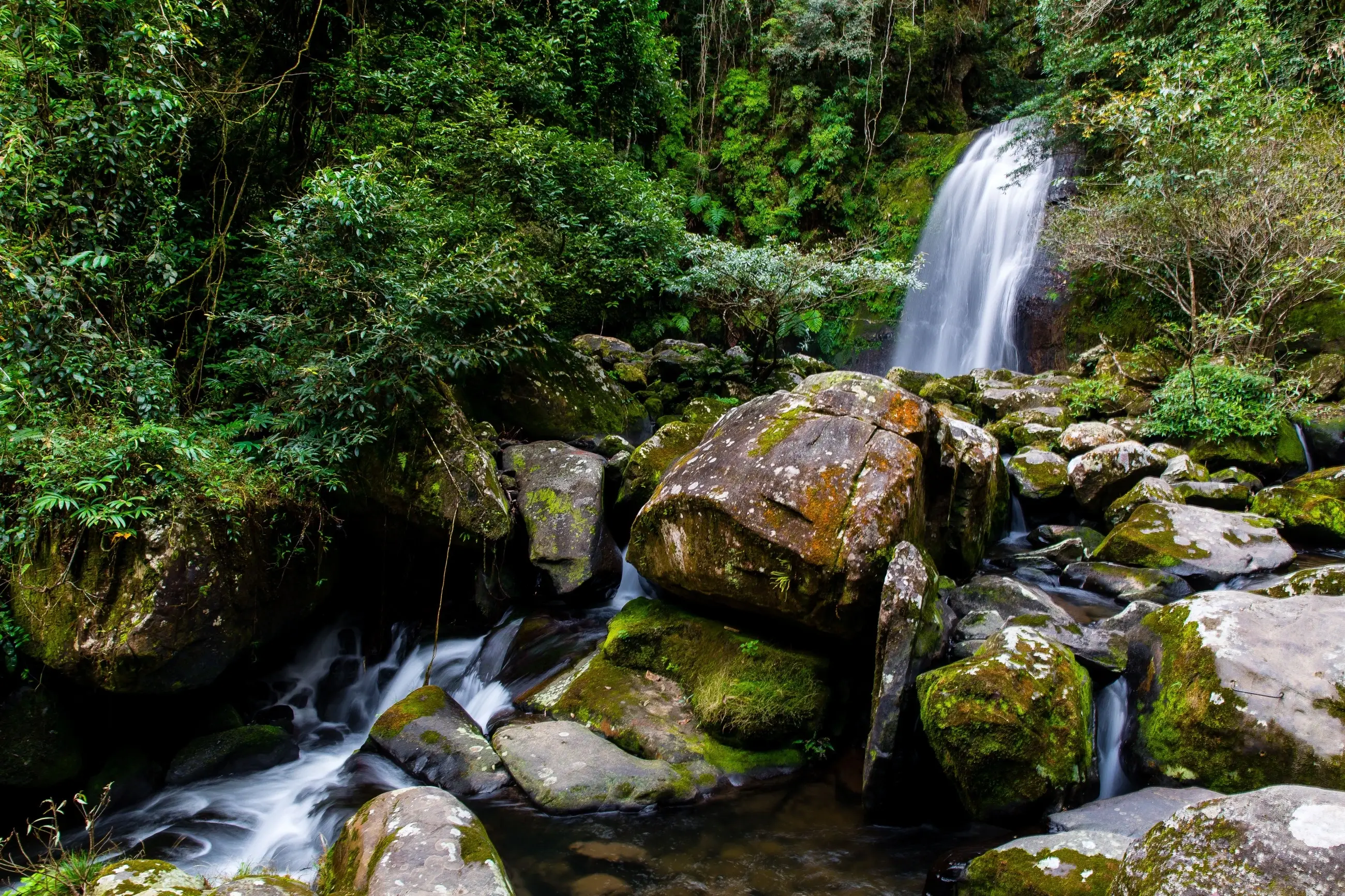
What to See and Do in Laos
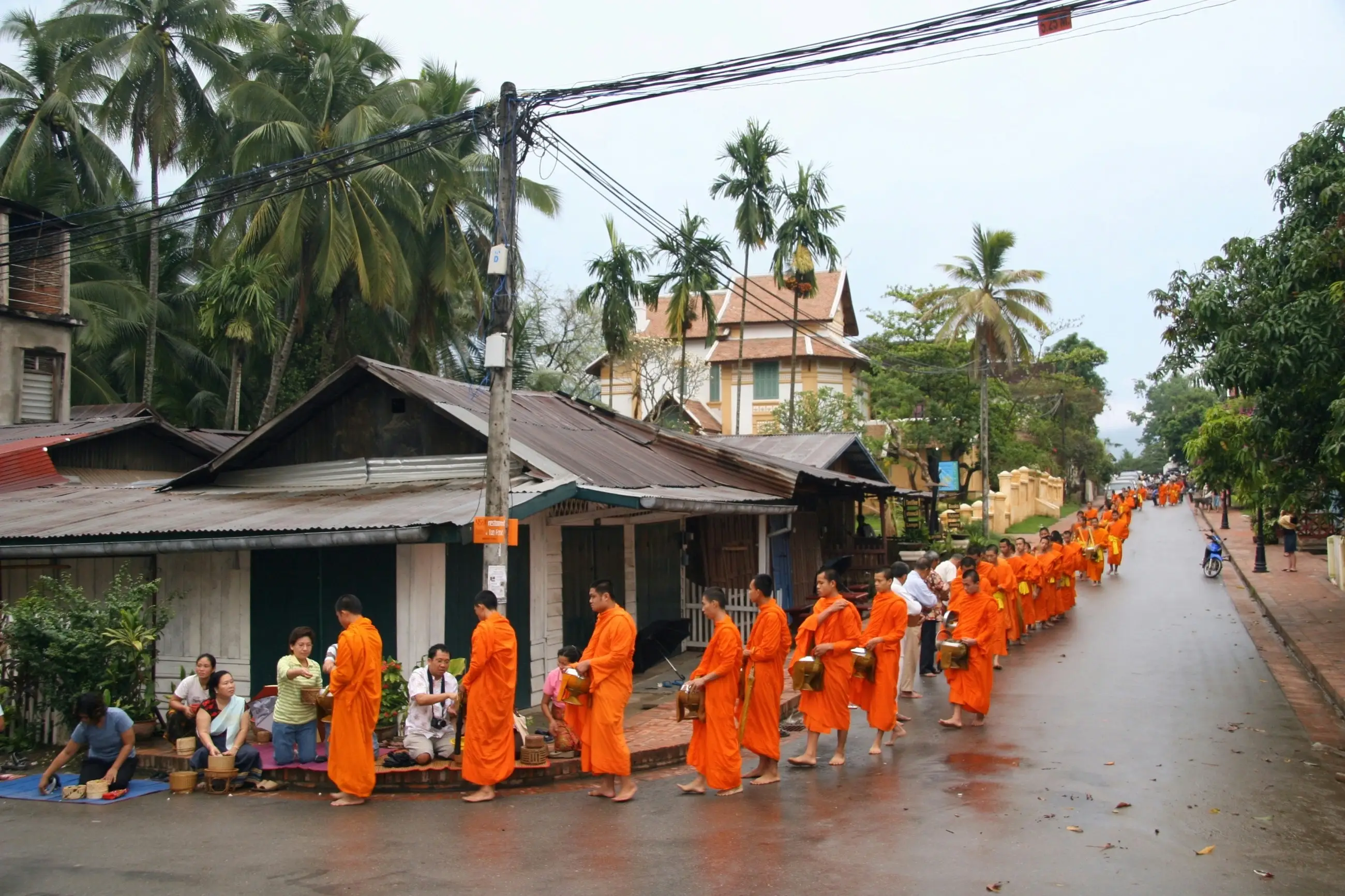
At dawn in Luang Prabang, a UNESCO town since 1995, watch the tak bat procession of monks and swim in the turquoise pools of Kuang Si. Walk through the Plain of Jars with more than 2,100 stone vessels and climb the terraces of the 11th to 13th century Khmer temple of Vat Phou. Cycle around the islands of Don Det and Don Khon near the Khone Phapheng waterfall and on the Bolaven Plateau stop at the twin Tad Fane waterfall, which falls from a height of more than a hundred metres. Try larb, a spiced salad of meat or fish and herbs. Around the November full moon, pilgrims gather at the That Luang stupa in Vientiane.
Places with soul
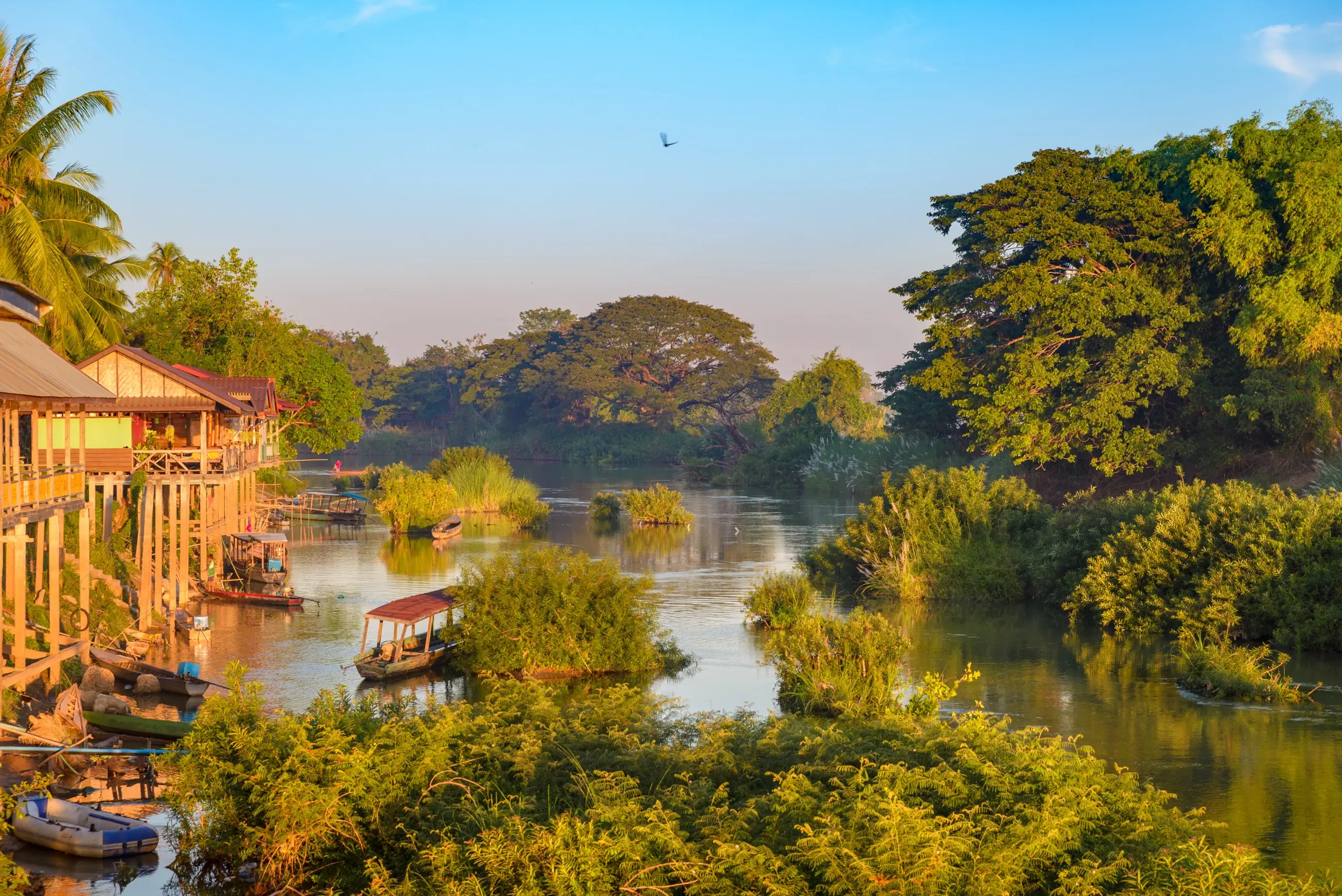
Upper Mekong River, Huay Xai – Pakbeng
Between Huay Xai and Pakbeng, the Mekong flows through hilly country where you will not see a road for hours, and the river remains the route by which rice and supplies are brought to the villages. From the deck you will see cliffs above the river, fishermen on sandy banks, water buffalo in the shallows, settlements reachable only by water and, in the dry season, women panning for gold in the sand. The six to eight hour journey ends in Pakbeng, a small town at the mouth of the Nam Beng stream, which used to be a trading stop on the route of goods from China and where the boats now stay overnight because they do not sail after dark. In the evening, people sit in a restaurant above the river. This is how you get to know northern Laos from the river, along which goods and people are still transported today.
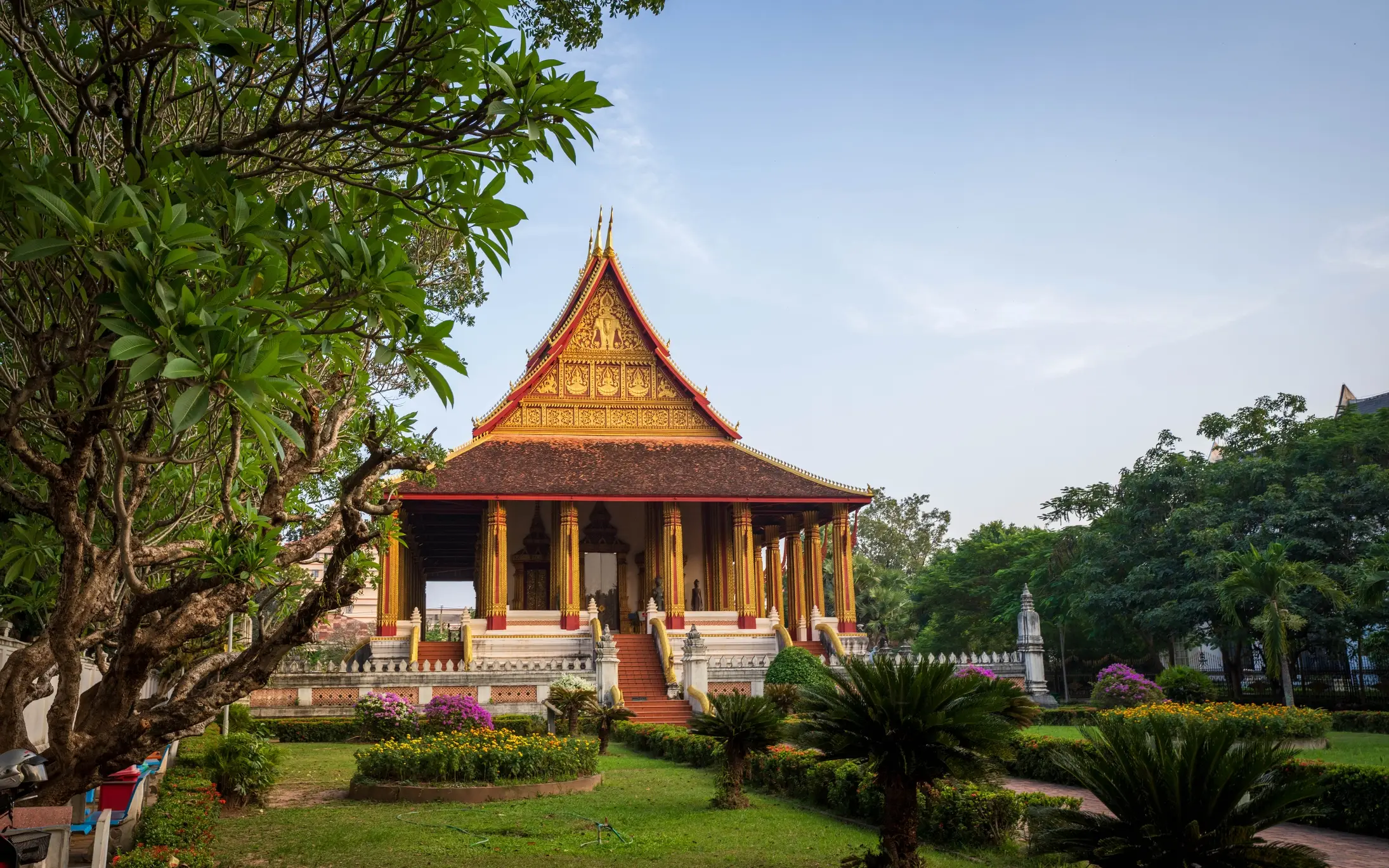
Luang Prabang
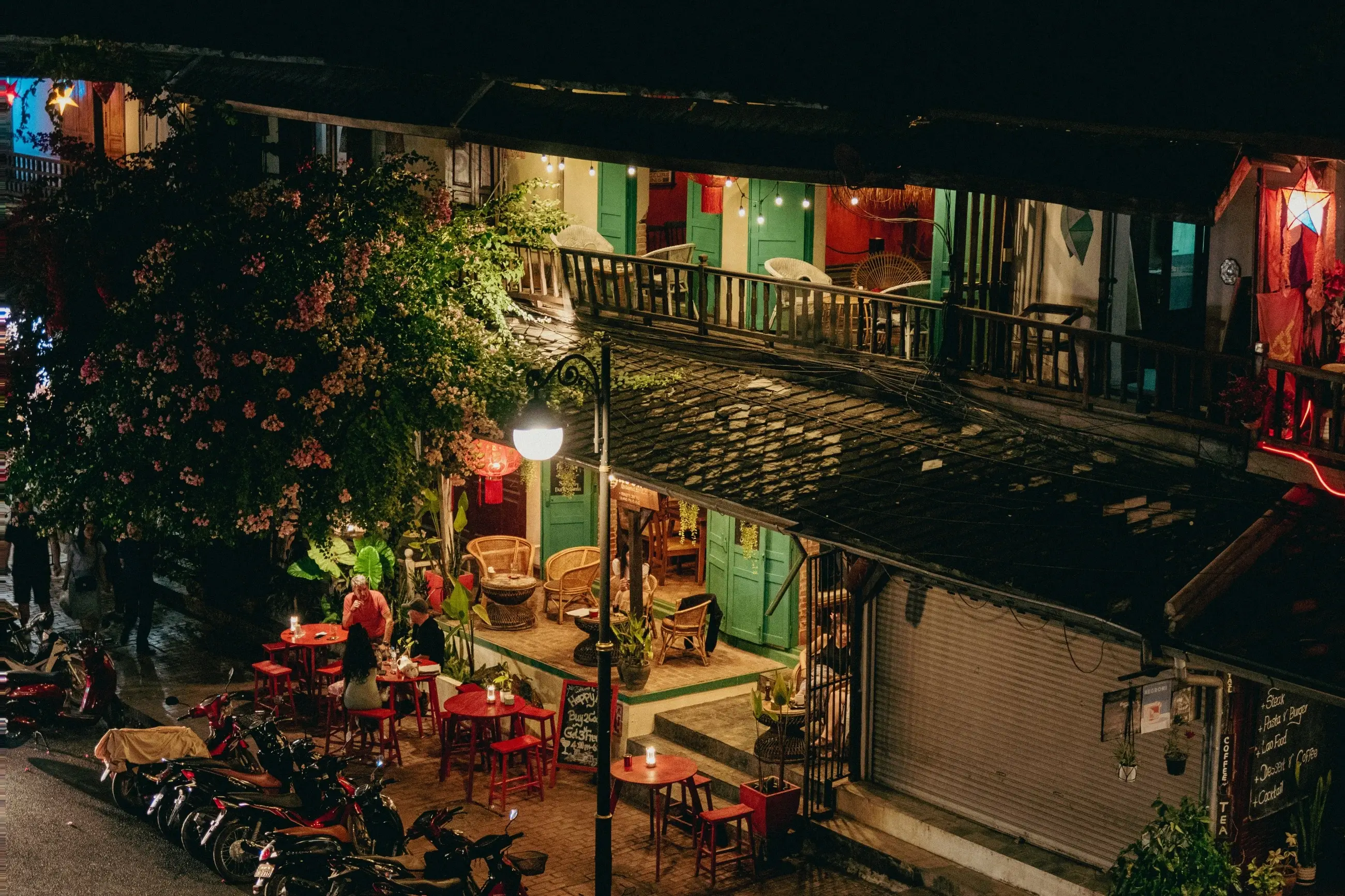
Luang Prabang lies on a peninsula between the Mekong and the Nam Khan River, surrounded by mountains, and has been a UNESCO site since 1995. At dawn, barefoot monks in saffron robes walk quietly through the streets and collect rice from locals who wait for them on their knees by the roadside. Between wooden houses and colonial villas stand gilded Buddhist temples, such as Wat Xieng Thong from the mid-16th century. At sunset, people go up Phou Si hill, from where both rivers can be seen, and you can swim in the turquoise pools of the Kuang Si waterfalls, about 30 kilometres outside the town. This way you combine spiritual Laos with its nature, and most of the sights can be visited on foot.
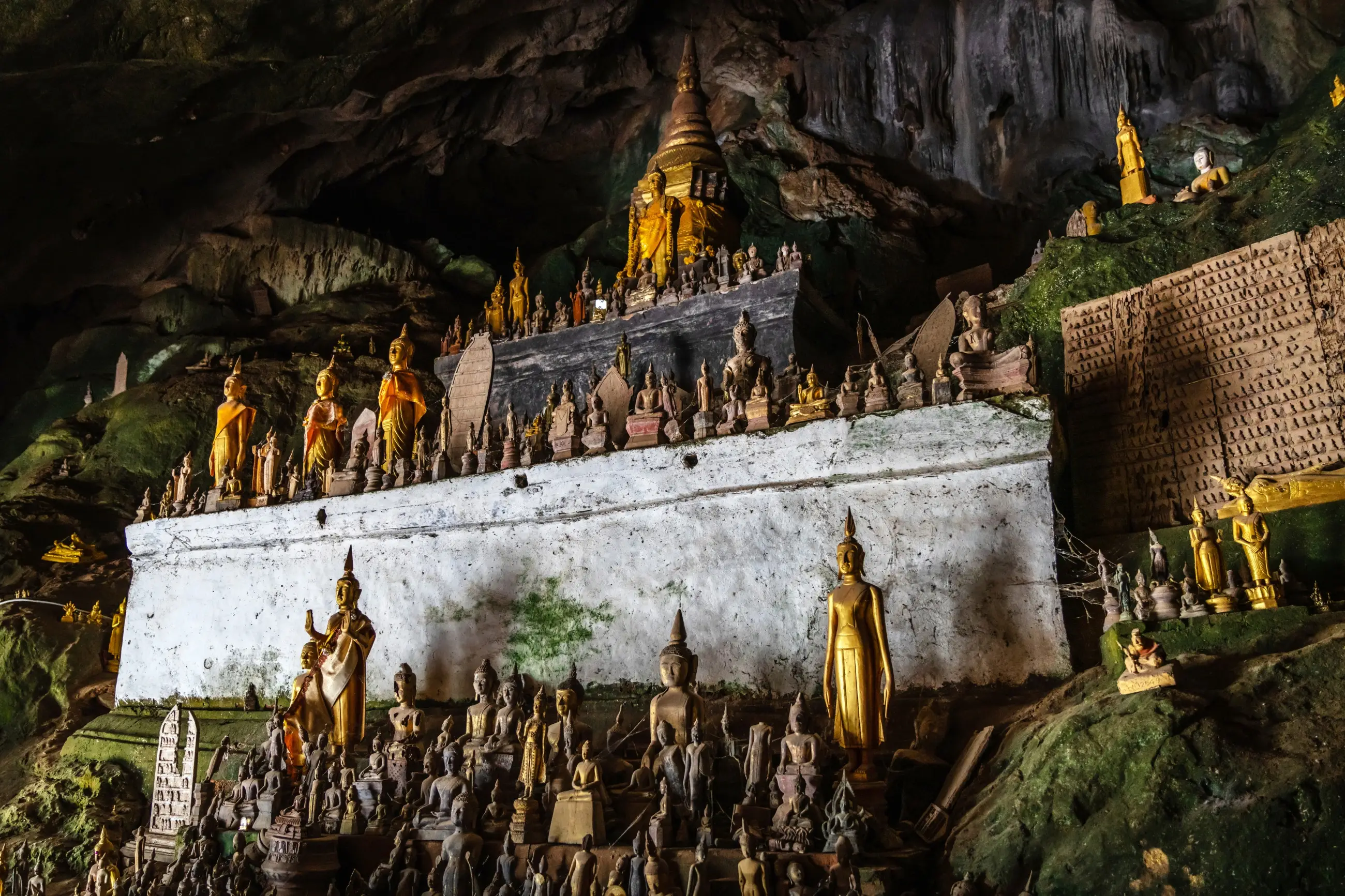
Pak Ou Caves
In a limestone cliff above the Mekong, where the Nam Ou River flows into it, lie two caves crowded with thousands of Buddha statues, brought here by believers over generations. The statues sit, stand and recline, from small figures to life-size ones. From Luang Prabang you sail about two hours upstream to reach them, stopping on the way in the village of Ban Xang Hai, known for its rice spirit. Daylight reaches the lower cave, Tham Ting, while steep stairs lead to the upper cave, Tham Theung, where you will find the statues only in the beam of a torch. During the Lao New Year in April, people come here to wash the statues with water. The trip combines a boat ride on the Mekong with a sacred place that believers still visit today.
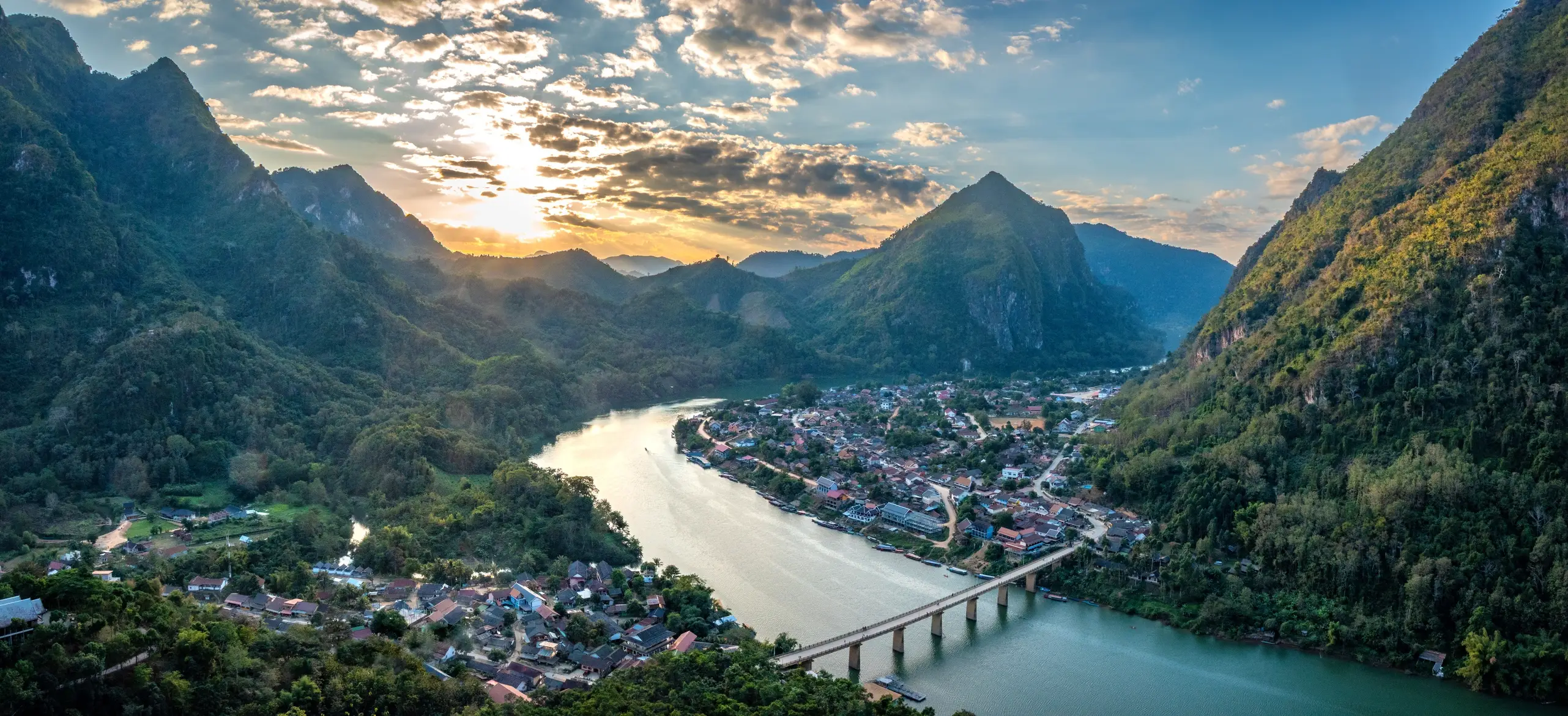
Nong Khiaw and the Nam Ou Valley
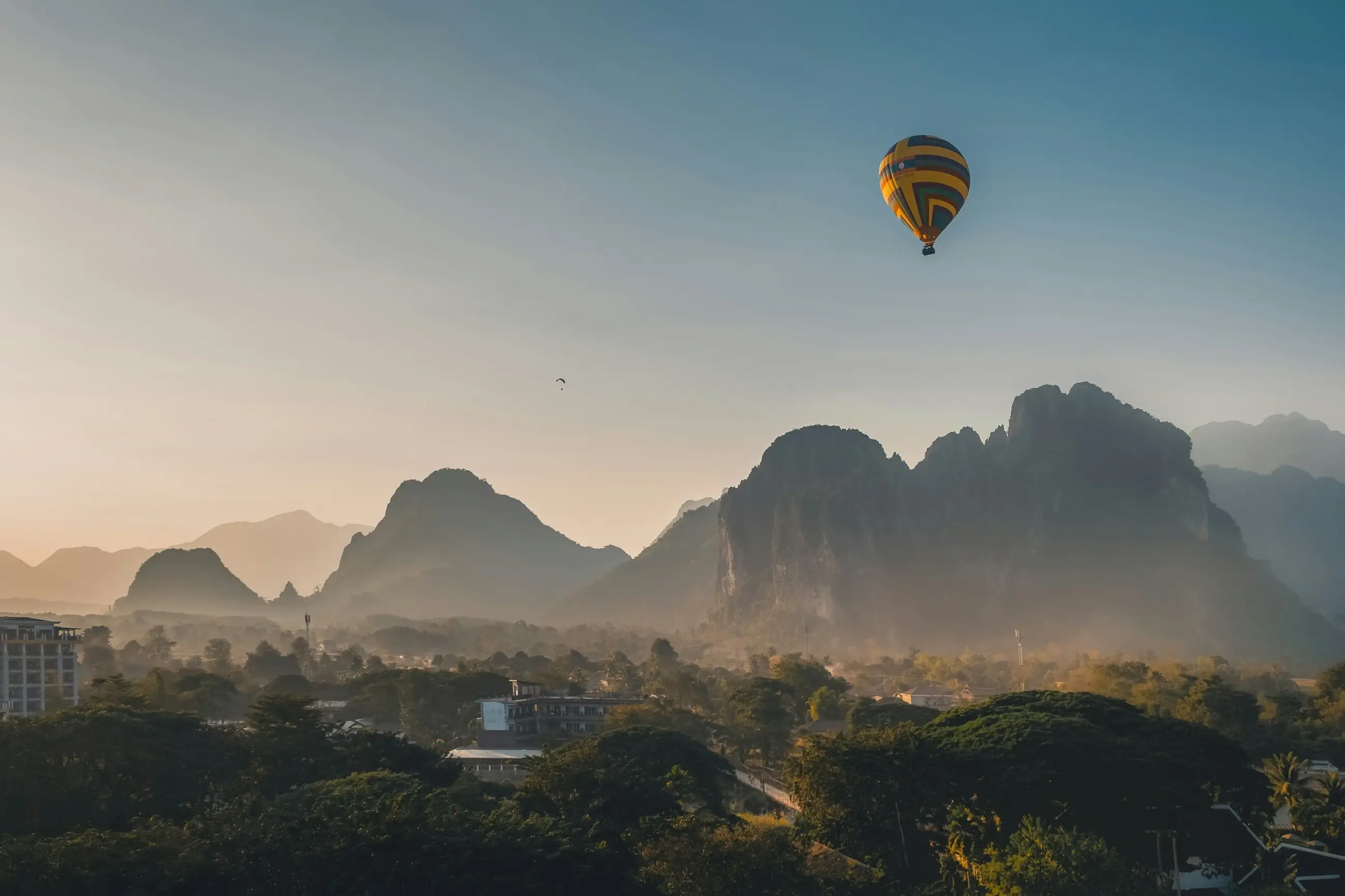
Nong Khiaw lies in a bend of the Nam Ou River, where steep limestone mountains covered in jungle rise from the brown water, and the whole valley can be seen at once from the high bridge. From the Pha Daeng viewpoint, reached by a trail of about an hour and a half, you can see the valley filled with mist at dawn, with the peaks turning golden above it. In the afternoon, you can walk to the Tham Pha Thok caves, where locals hid from bombs during the Indochina War, or take a boat upstream to the village of Muang Ngoi Neua, among rice fields and wooded hills. Trails also lead to waterfalls and to Khmu settlements, known for their bamboo and rattan weaving. In a single day you will see the valley from above, from the river and from inside the mountains, and in the evening you return to the riverbank.
Experiences that make sense
Lao Cooking Class with a Market Tasting
The Lao call themselves "children of sticky rice", and it shows at the table: the rice arrives in a bamboo basket, is torn by hand into small balls and replaces cutlery for everything else. The morning class begins at Phousi Market, the largest in Luang Prabang, which supplies the whole town. Among piles of limes, chilli and vegetables, you will learn to recognise the ingredients used in cooking, and then you head to the kitchen. You will learn how to soak rice, steam it and eat it in the traditional way, prepare jeow, spicy dipping sauces, and laap, a salad of minced meat with herbs. You then eat the result at the table. You take home the taste on which Lao cuisine is built and you will be able to prepare it at home too: a ball of warm rice dipped in jeow.

Two-Day Trek in Nam Ha with an Overnight Stay in a Khmu Household, Luang Namtha
In Nam Ha, the fourth largest protected area in Laos, the trek leads not to a viewpoint but to a village. From Luang Namtha, a tuk-tuk takes you to the edge of the jungle, from where you walk for several hours under old trees to Ban Nalan, a Khmu village above the Nam Ha River. About 300 bird species have been recorded in the forests of the park, so it is worth listening as you walk. You will spend the night in the home of a local family. After arrival, you can gather wild vegetables for dinner with your hosts, and in the morning, over a cup of tea or Lao coffee, try crossbow shooting or rice pounding. On the second day, you walk down past rice fields and other villages back to the valley. In two days you get to know the jungle and the people who live in it, as guests under their roof.

Pi Mai New Year Celebrations
The Lao New Year, Pi Mai, is officially celebrated from 14 to 16 April, but in Luang Prabang, the former royal capital, the celebrations stretch to as many as ten days. Temples bring out their Buddha statues, which people wash with scented water, and on an island in the middle of the Mekong, stupas are built from sand, which the river washes away with the arrival of the rains, and each grain of sand in them represents a bad deed from the past year. A procession with Nang Sangkhan, the queen of the new year, passes along the main street, elephants walk between the temples, and the sacred Phra Bang statue is carried to Wat Mai, where people pour water over it. You celebrate the new year as the Lao do: with cleansing and blessings at the temples and a water fight in the streets.

Laos Awaits. Shall We Go?
Every journey is different, just as every one of our clients is different. At Meraki, we know that well, which is why we approach every enquiry individually, with a single goal: to meet your expectations down to the last detail.
Plan your trip
Let's plan your dream holiday together!
We would be happy to meet with you to design and fine-tune every detail of your itinerary to suit your wishes, destination or season.


