


The Azores
Tailor-Made Trip
Best Time to Visit:
April – October
Accommodation:
Hotels
Main Highlights:
Volcanoes, lagoons and ocean
Price Level:
€€€€
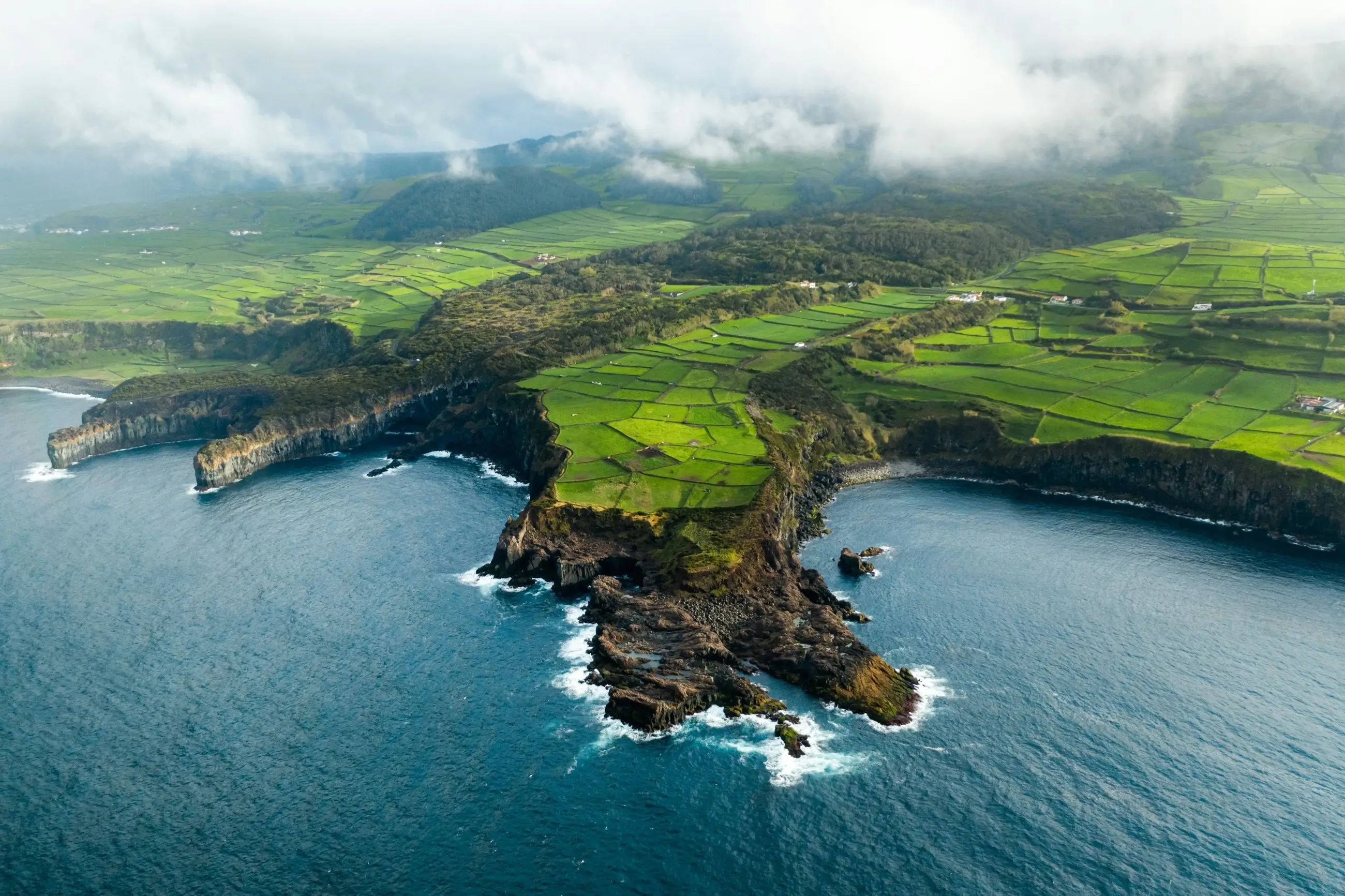
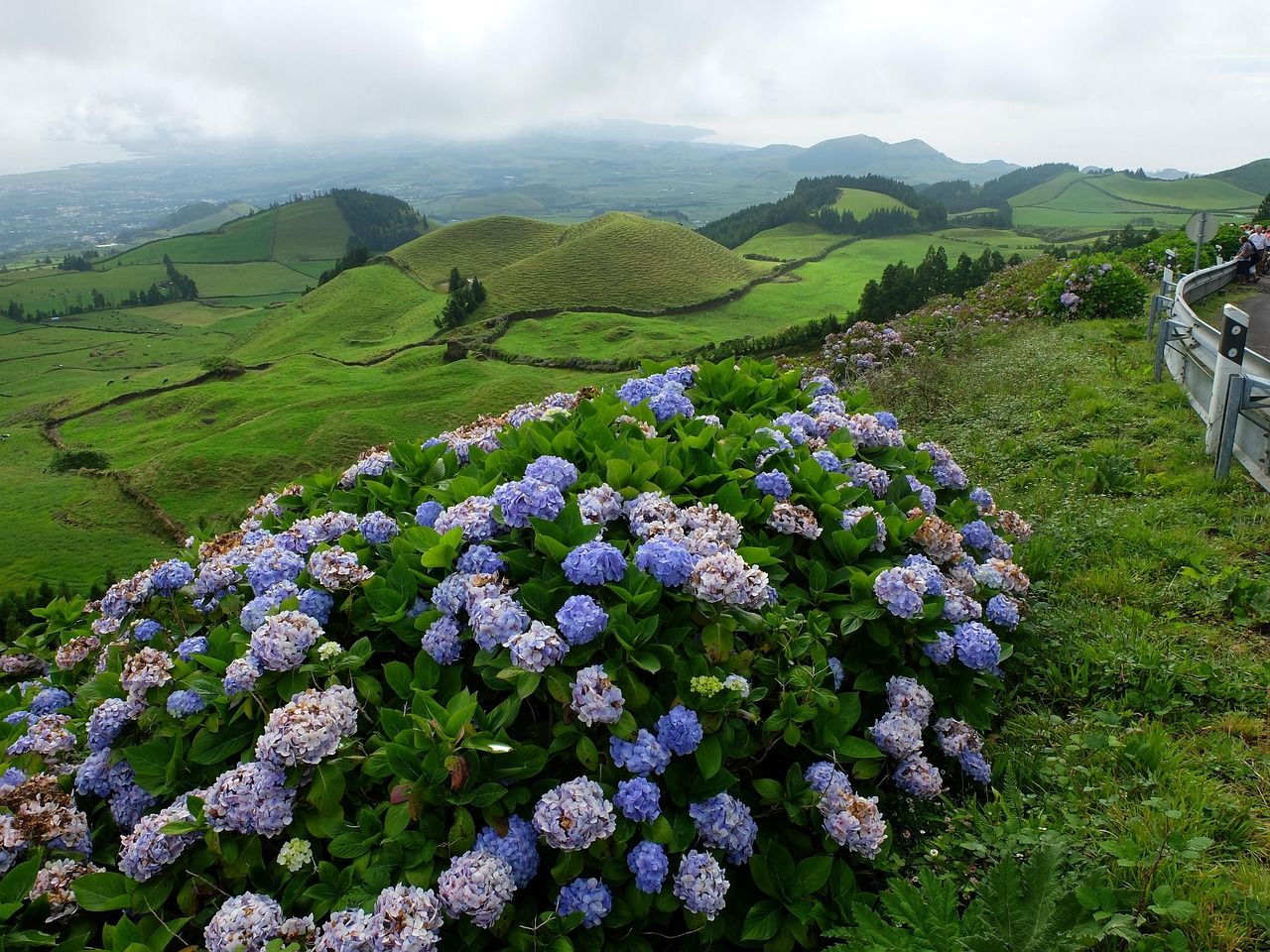
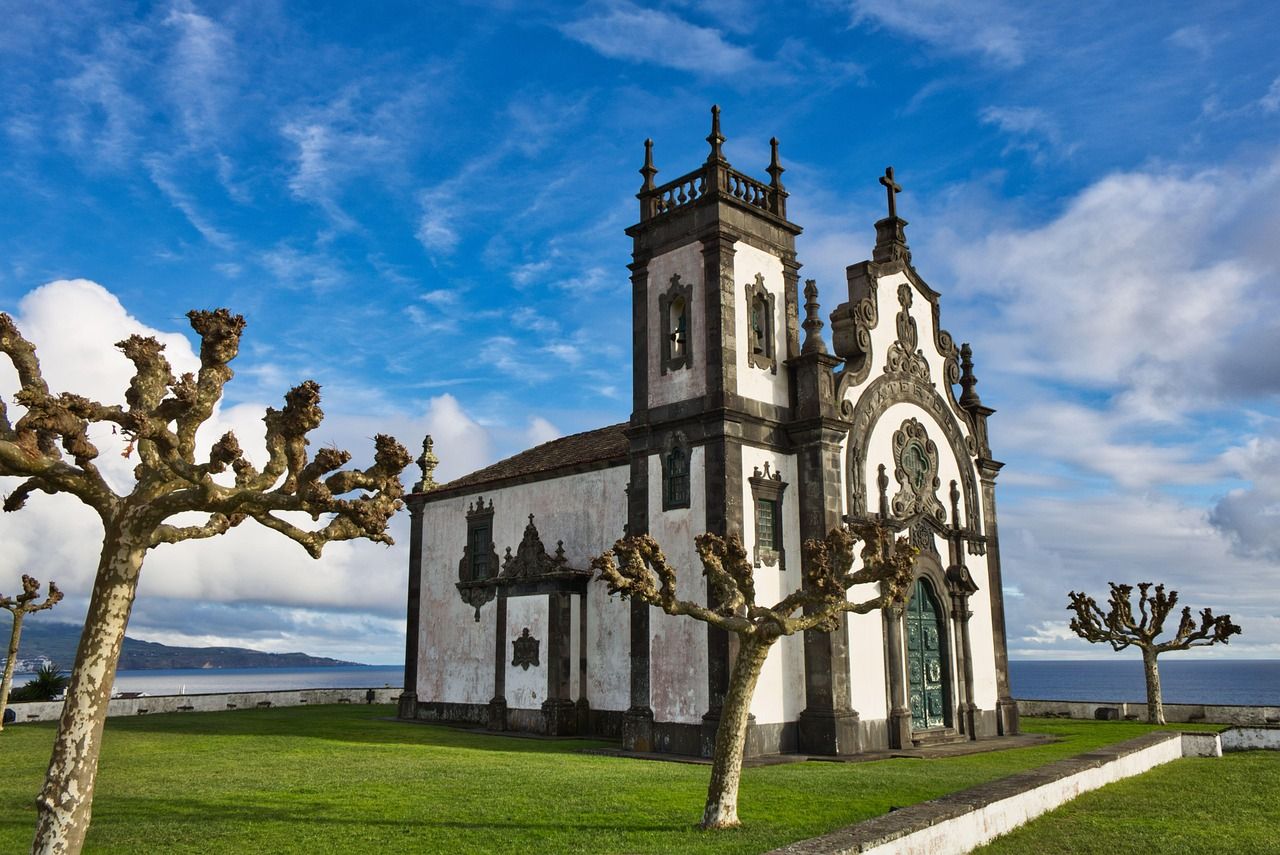
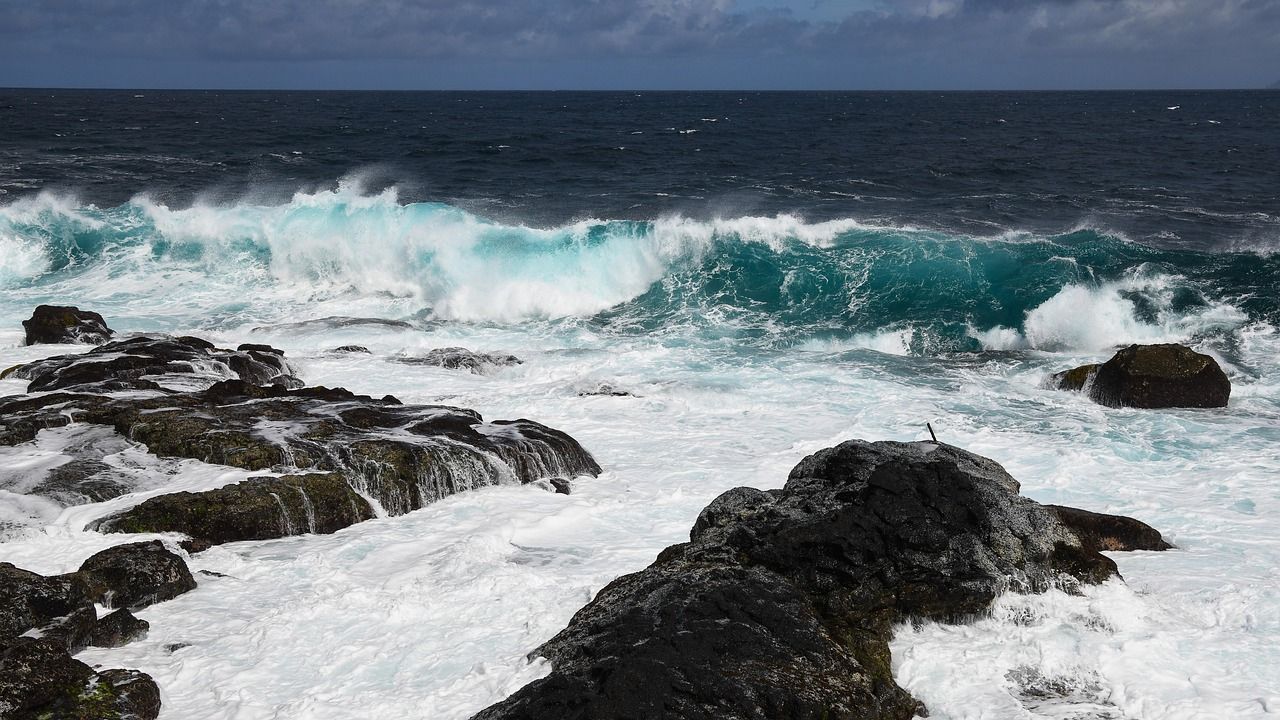
Hydrangeas are not native to the Azores, yet they have become a symbol of the whole archipelago. From June to August they bloom in blue, white and purple, line the roads and form living hedges taller than a person, dividing the pastures where black-and-white cows graze. Green slopes rise from volcanic soil, as all nine islands are the tops of volcanoes on the boundary of three tectonic plates. Flowering here has a fixed rhythm: azaleas arrive in March and April, followed by camellias and, in summer, hydrangeas. After Easter the Holy Spirit festivals begin, centred on colourful little chapels called impérios. The islands lie in three groups, each separated by more than 160 kilometres of ocean, and the western group, about 1 400 kilometres from the mainland, forms the westernmost part of Europe. More than twenty species of whales and dolphins have been recorded in the waters around the islands.


What to See and Do in the Azores
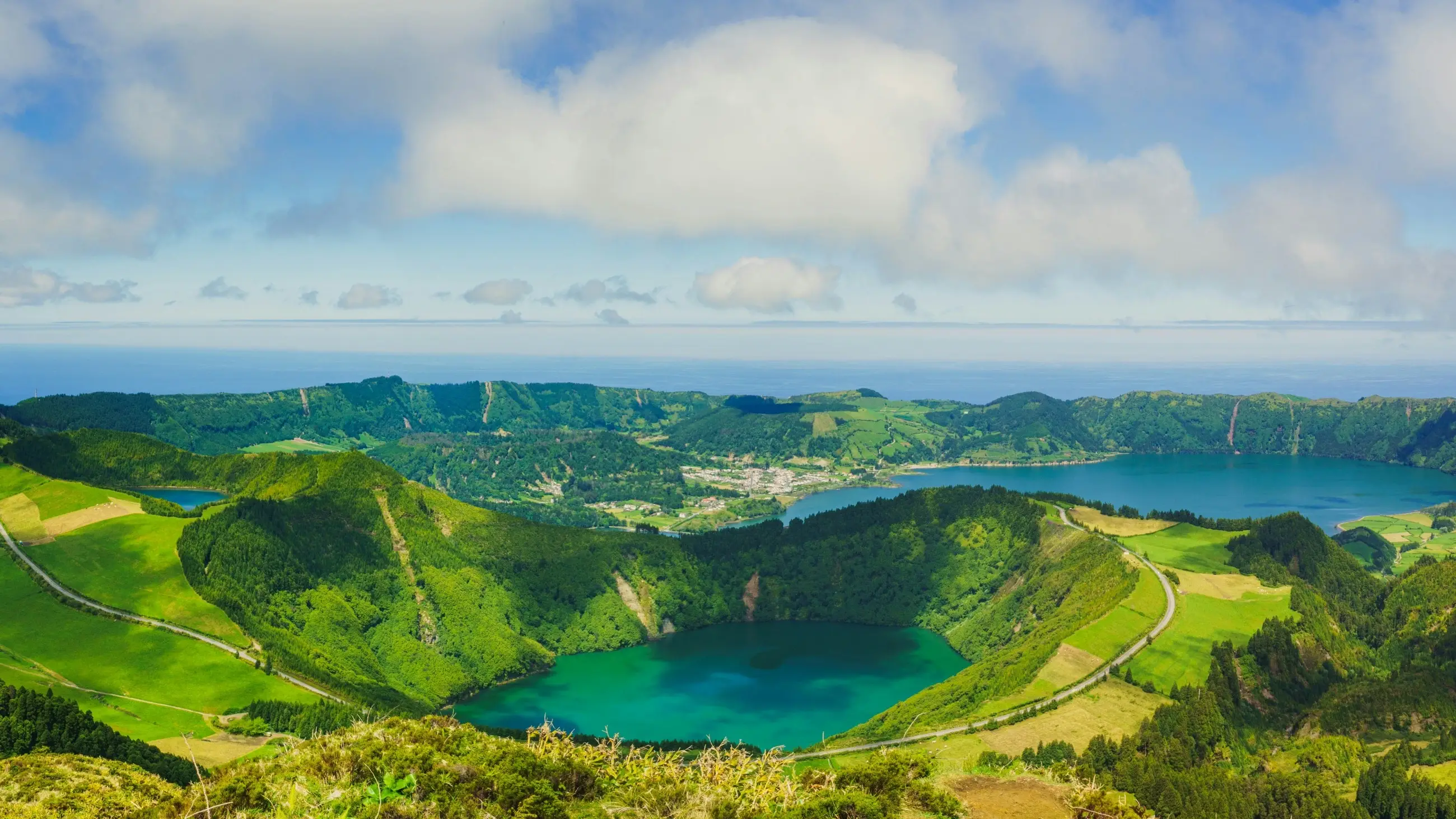
Walk down from the Vista do Rei viewpoint to the pair of Sete Cidades lakes, one blue and one green. In Furnas, try cozido, which cooks for about six hours in soil heated by the volcano, and visit the tea plantation at Gorreana, founded in 1883 and the oldest in Europe. Climb Mount Pico, at 2351 metres the highest point in Portugal, and sail out from the island to see sperm whales. Descend 90 metres into the volcanic shaft of Algar do Carvão and walk through Angra do Heroísmo, a UNESCO-listed town since 1983. The eruption of 1957 to 1958 is commemorated on Faial by the Capelinhos volcano and its lighthouse, now a museum.
Places with soul
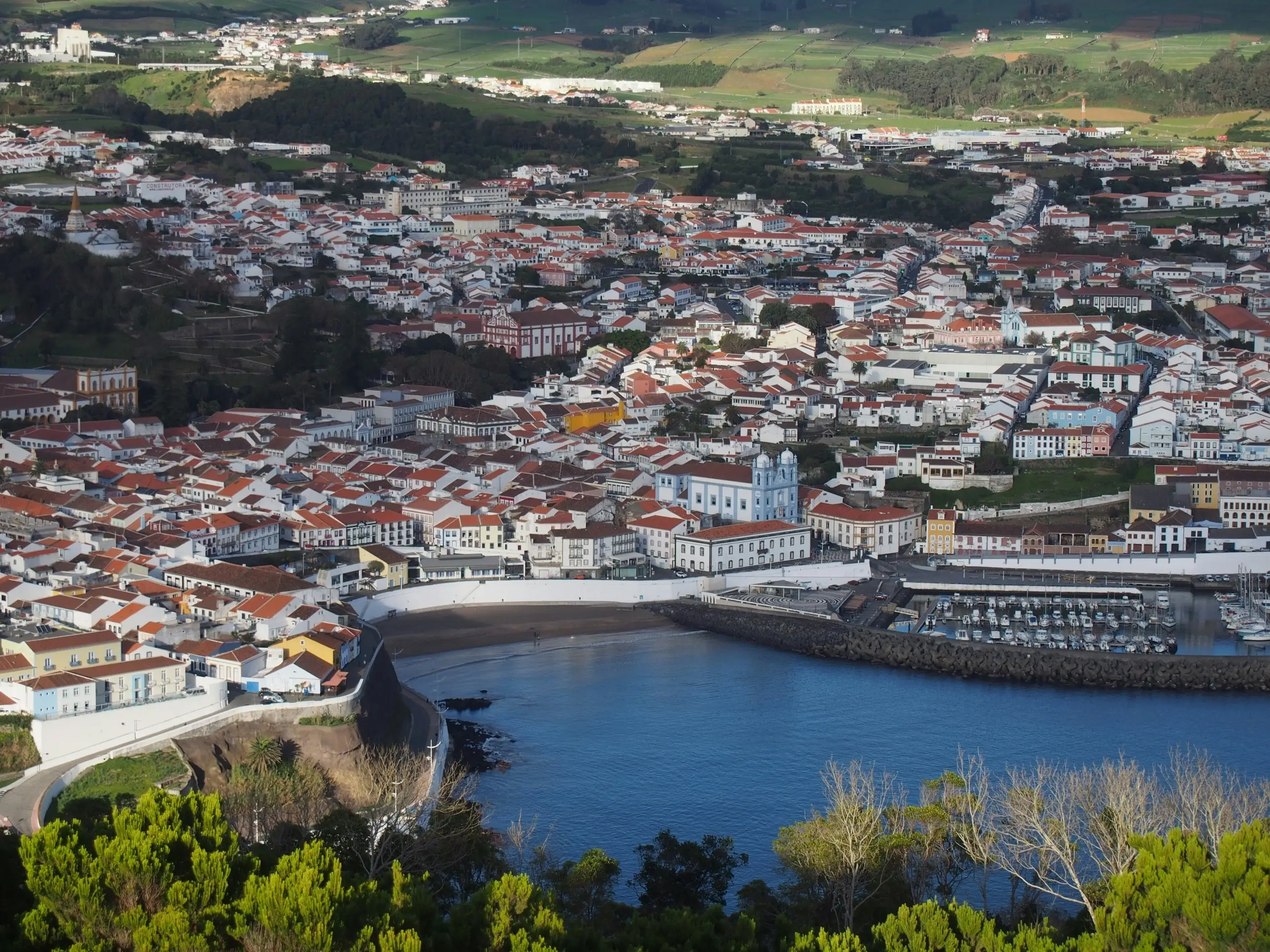
Angra do Heroísmo
Angra do Heroísmo lies on the south coast of Terceira island and has been a UNESCO site since 1983, because during the Age of Discovery it served as a port on the route between Europe and America. Through the historic centre you will walk to the bay, above which rises Monte Brasil, an extinct volcano with a 16th-century fortress, and on clear days you can see the sea and the islands of São Jorge and Pico from it. In June the Sanjoaninas festival is held for ten days in honour of Saint John, the largest festival in the archipelago, and the streets fill with parades, music, bull-on-a-rope games and stalls selling grilled specialities. From a single town you can get to know both the volcanic Azores and their history, and you can see it all on foot.
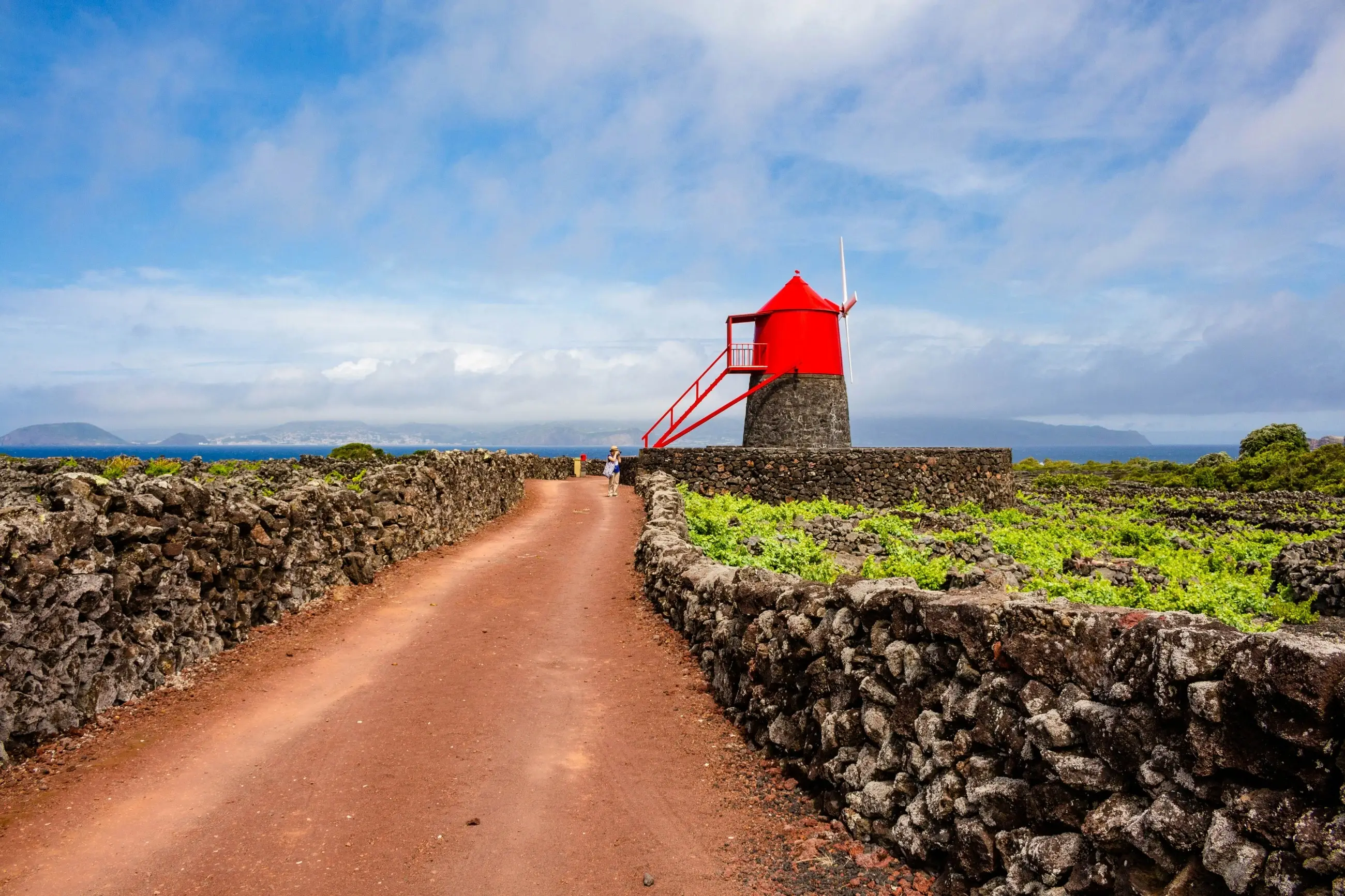
Pico Vineyard Landscape
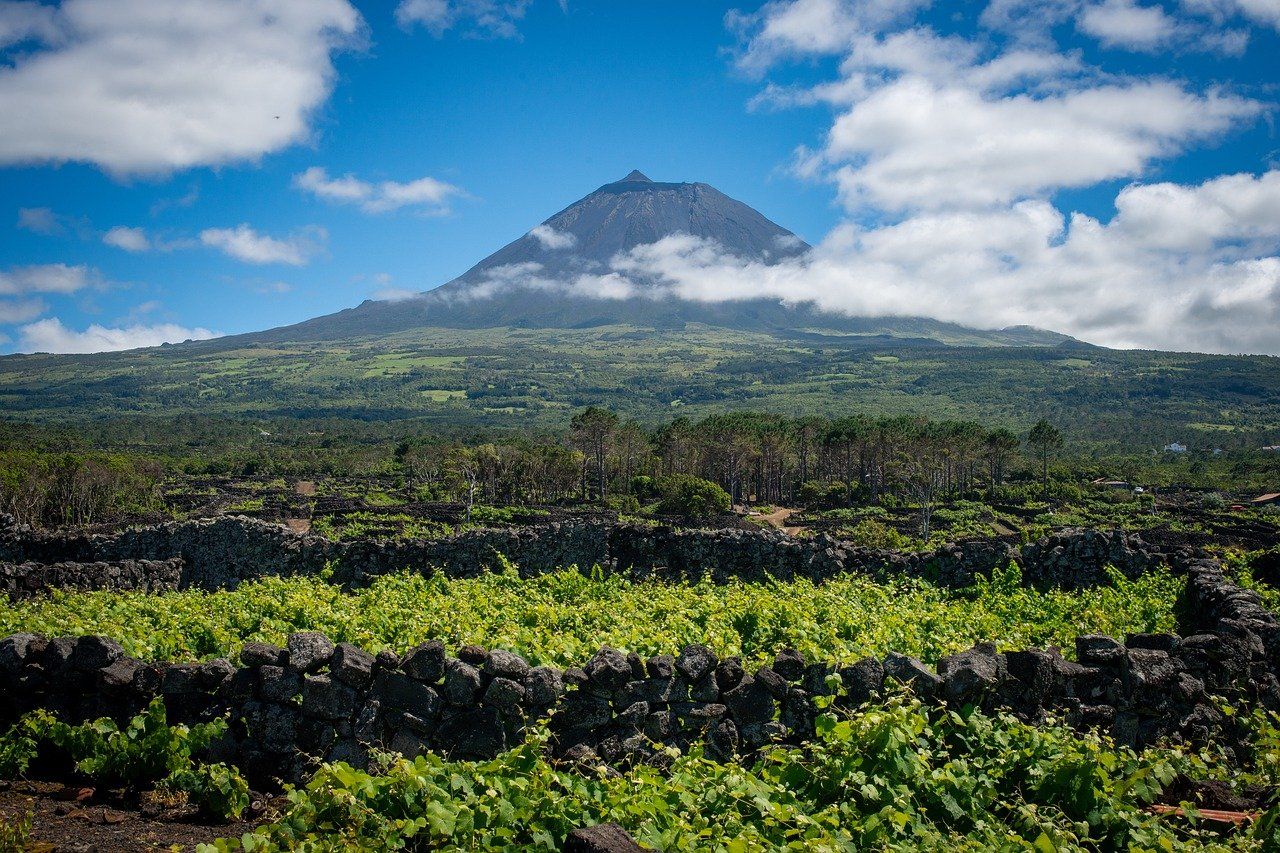
The vineyards on Pico do not look like vineyards: on a black lava field stand thousands of small rectangular enclosures (currais) built from basalt stones laid without mortar, which protect the vines from wind and seawater. There is little soil here, and yet wine has been grown since the 15th century, and since 2004 the landscape has been inscribed on the UNESCO list. You will walk between the walls towards the coast with the Pico volcano (2351 m) standing above you, and in Criação Velha you will taste white wines from the local varieties Arinto dos Açores, Verdelho and Terrantez do Pico. In Madalena you will visit the wine museum in a former Carmelite convent. You will see a landscape that people created by hand from lava, in a place where there was almost no soil.
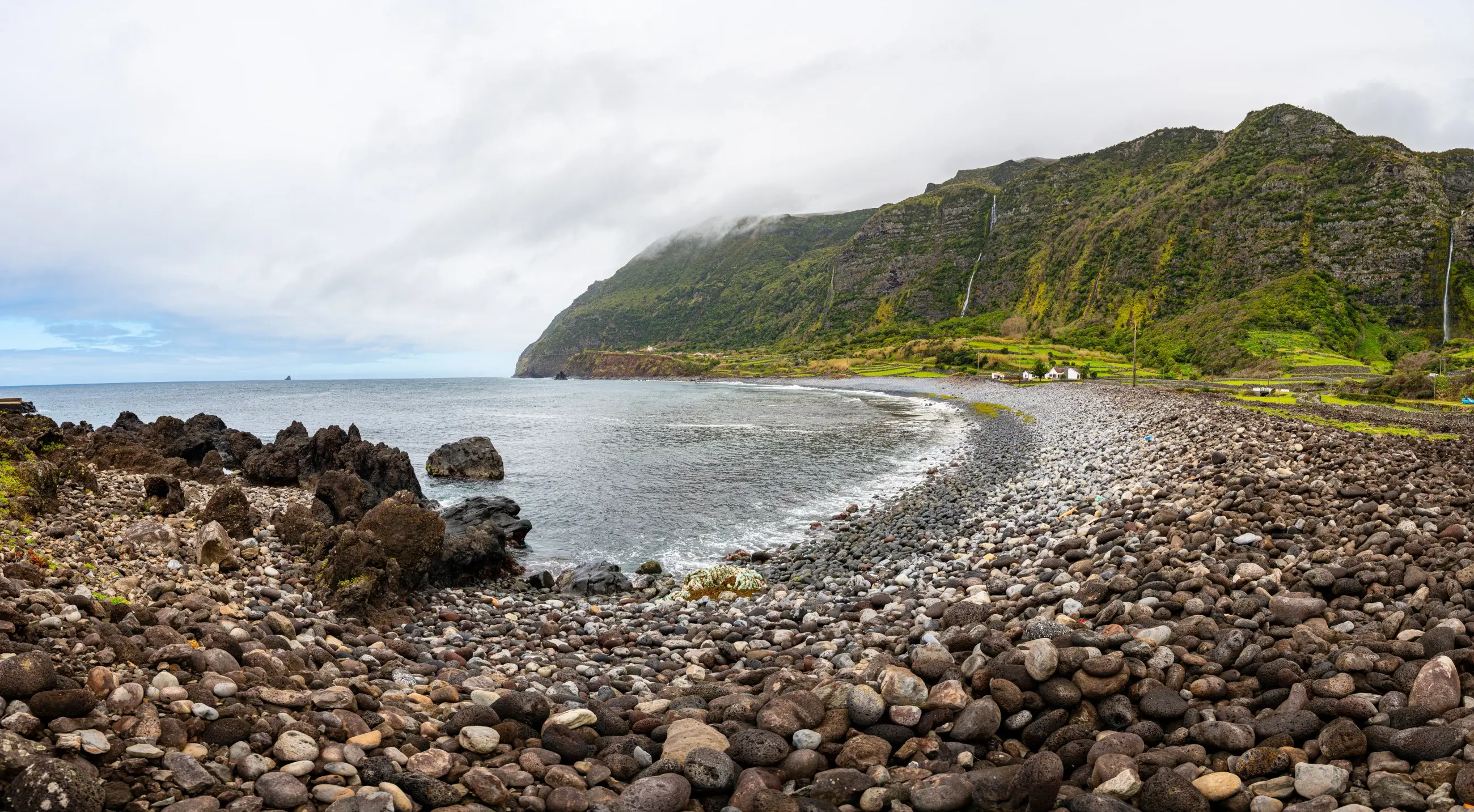
Fajã Grande and Western Flores
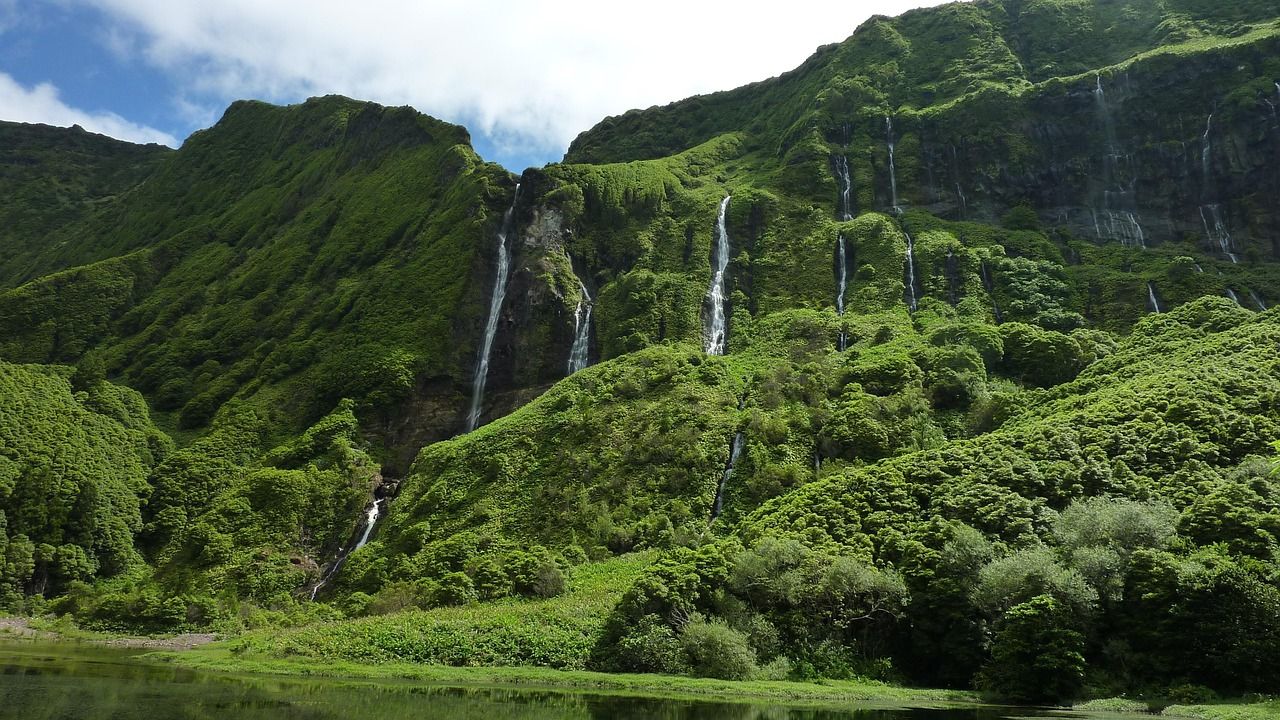
Fajã Grande is the westernmost village in Europe. It stands on a narrow strip of flat land below a wall of green cliffs, and fewer than two hundred people live in it. From the coast you can see the rocky islet of Ilhéu de Monchique, the westernmost point of Europe, and waterfalls drop from the cliffs above the village, almost twenty of them between Fajã Grande and neighbouring Fajãzinha. On foot you will reach Poço do Bacalhau, a 90-metre waterfall that ends in a pool where you can swim in summer, and a trail leads to Poço da Ribeira do Ferreiro, where waterfalls merge into a single lagoon. On an island that has been a UNESCO biosphere reserve since 2009, you will experience a place where the mainland ends and beyond it there is only the Atlantic.
Furnas, São Miguel
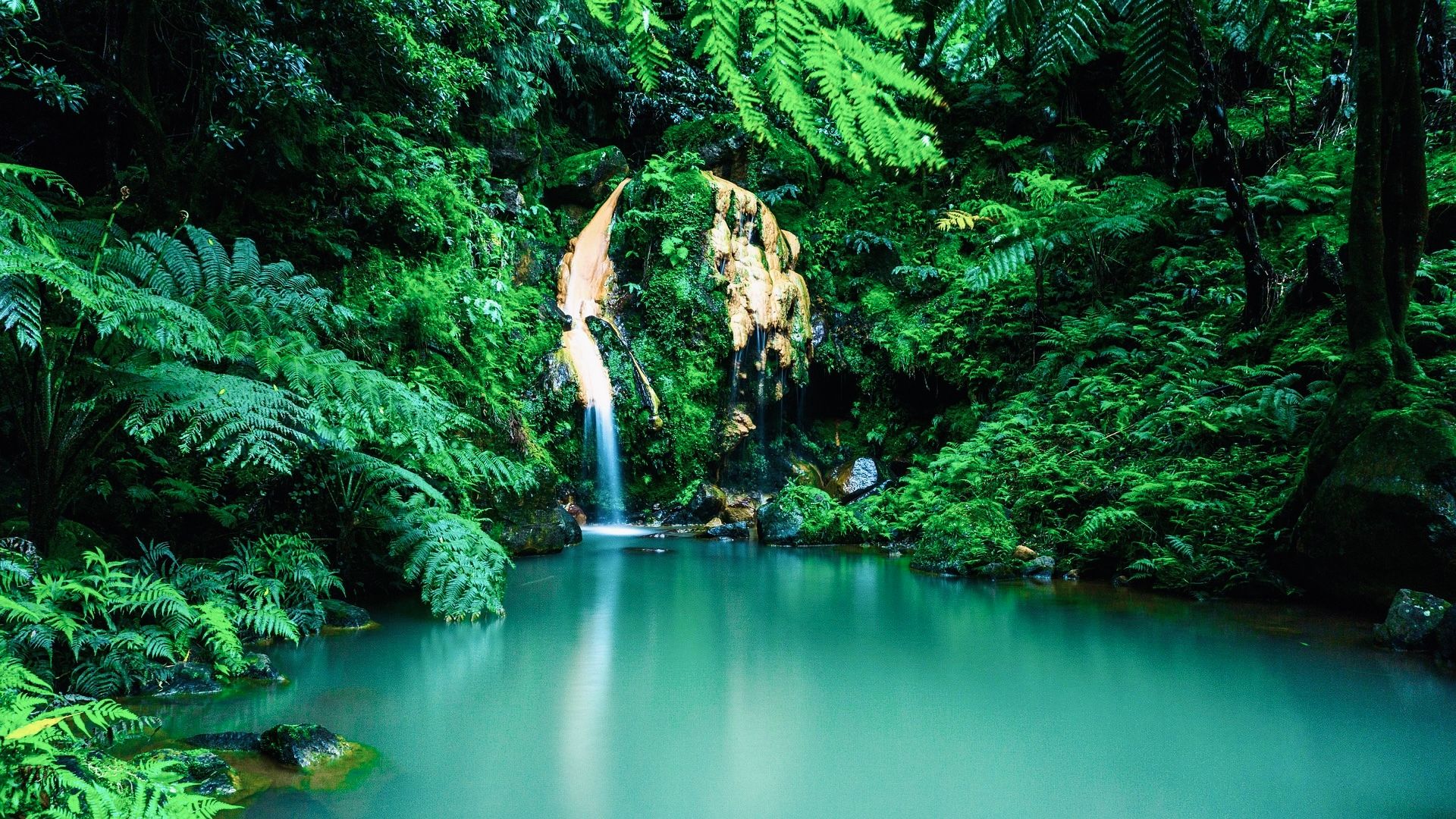
The village of Furnas lies inside the caldera of an active volcano, and around the lake steam rises from cracks in the ground. Locals use the heat of the ground for cooking: pots with meat and vegetables are buried in hot soil towards morning, and after about six hours they become cozido das Furnas, which restaurants serve for lunch. In Terra Nostra park, among centuries-old trees, you will bathe in a pool of orange, iron-rich water, which has been in use since 1770 and whose water is 35 to 40 °C. In the evening you can visit the Poça da Dona Beija pools, where the water temperature ranges between 25 and 39 °C. From a single valley you will take away a lunch cooked by a volcano and a bath in warm water under the open sky.
Experiences that make sense
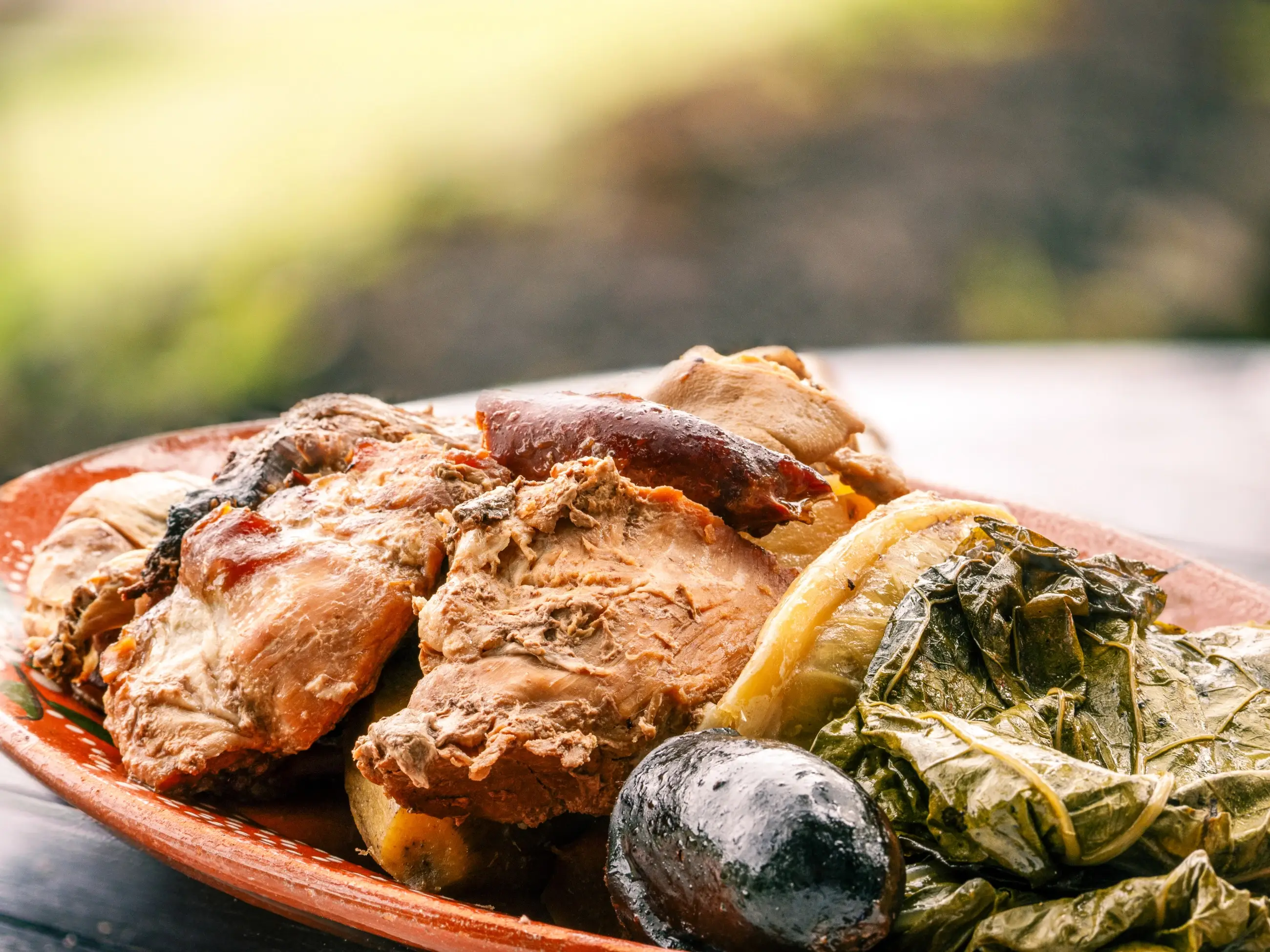
Cozido das Furnas
Cozido das Furnas is not cooked on a stove but in the ground: at dawn a pot with meat and vegetables is buried in hot soil by Lagoa das Furnas lake on São Miguel island, and steam from underground vents cooks it for six to eight hours. Around midday you will see locals pulling pots on ropes out of steam-covered holes in the ground, and then you will taste the cozido in one of the restaurants in the village of Furnas. On the plate you will find beef, pork, chicken, sausages, cabbage, sweet potatoes and potatoes, all soft and well cooked. One portion is enough for two people. Before the meal you can walk around the lake, where the ground bubbles and hisses by the hot springs. You will get to know a dish that, in the Azores, is cooked by the volcano itself instead of by gas.
Climbing Pico
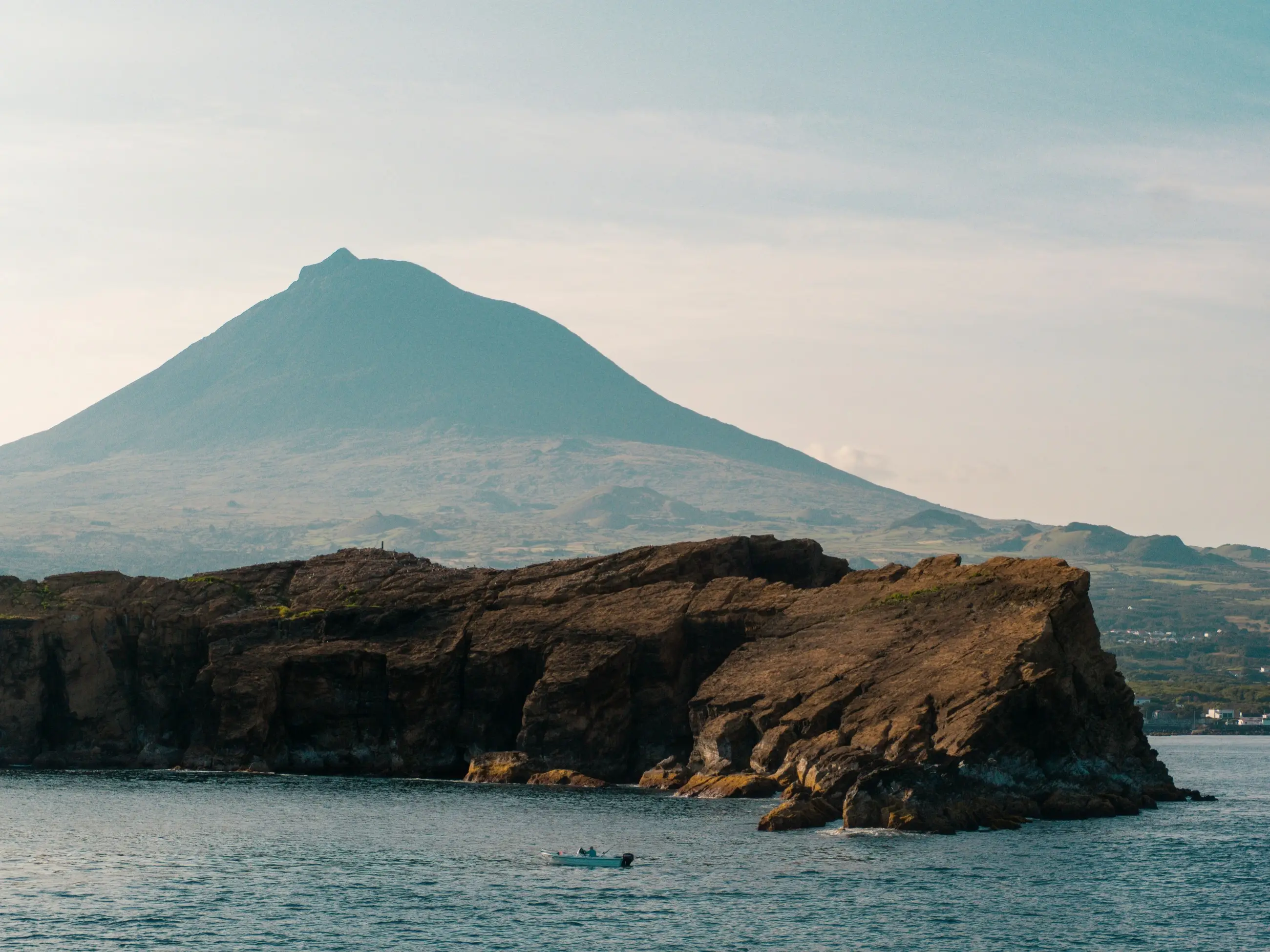
Pico is the highest mountain in Portugal, a volcano 2351 metres high that rises straight out of the Atlantic and can be seen from the islands of Faial and São Jorge. The trail starts at the Casa da Montanha visitor centre and leads over solidified lava and scree with an elevation gain of about 1100 metres, and the whole round trip takes about seven hours. The last section heads to Piquinho, a small cone inside the crater, and from the summit, in clear weather, views open up over the neighbouring islands. Those who set off at night can see the sunrise over the ocean if the sky is clear. After the descent, the island of Pico awaits you with its vineyards on black lava, inscribed on the UNESCO list. You will reach the highest point in Portugal under your own power.
Whale and Dolphin Watching with a Marine Biologist
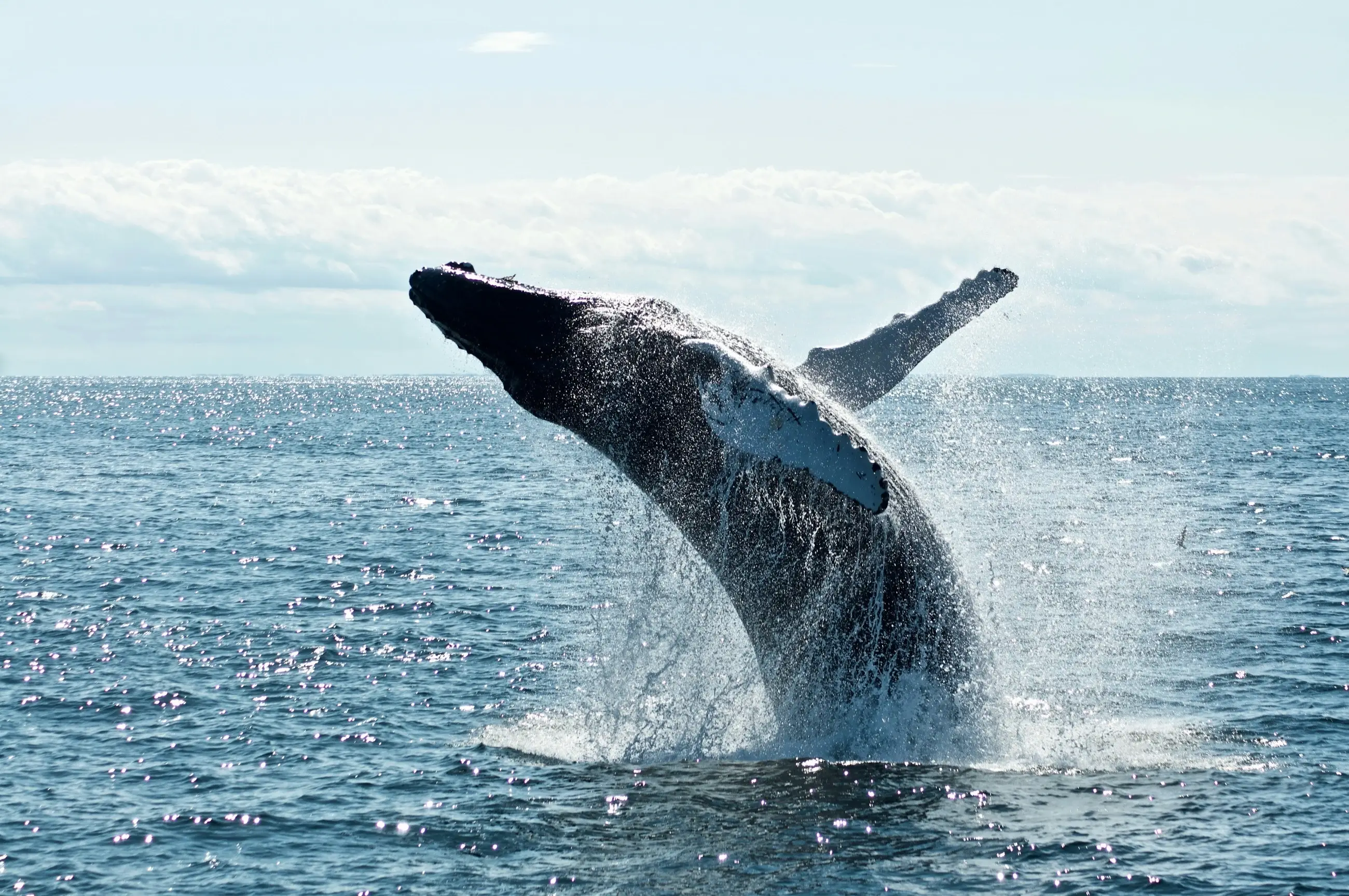
The last sperm whale in the Azores was killed in 1987 off Pico island, and from the same coast boats now set out that only observe the animals. On board you will be accompanied by a marine biologist, who will explain what the animals are doing and identify the species. Sperm whales and several species of dolphins can be seen here all year round, and in spring blue whales and other rorquals are added. Spotters in former whaling lookouts guide the boats to the animals by radio, and under local rules the boats may not approach closer than 50 metres and may stay with one animal for no more than half an hour. From the deck you will see spouts, backs and the tail fluke of a sperm whale before it dives. You will see how whaling became whale watching.
The Azores Await. Shall We Go?
Every journey is different, just as every one of our clients is different. At Meraki, we know that well, which is why we approach every enquiry individually, with a single goal: to meet your expectations down to the last detail.
Plan your trip
Let's plan your dream holiday together!
We would be happy to meet with you to design and fine-tune every detail of your itinerary to suit your wishes, destination or season.


