


Faroe Islands
Tailor-made trip
Best Time to Visit:
MAY – SEP
Accommodation:
Hotels and traditional houses
Main Highlights:
Nature and trekking
Price level:
€€€€€
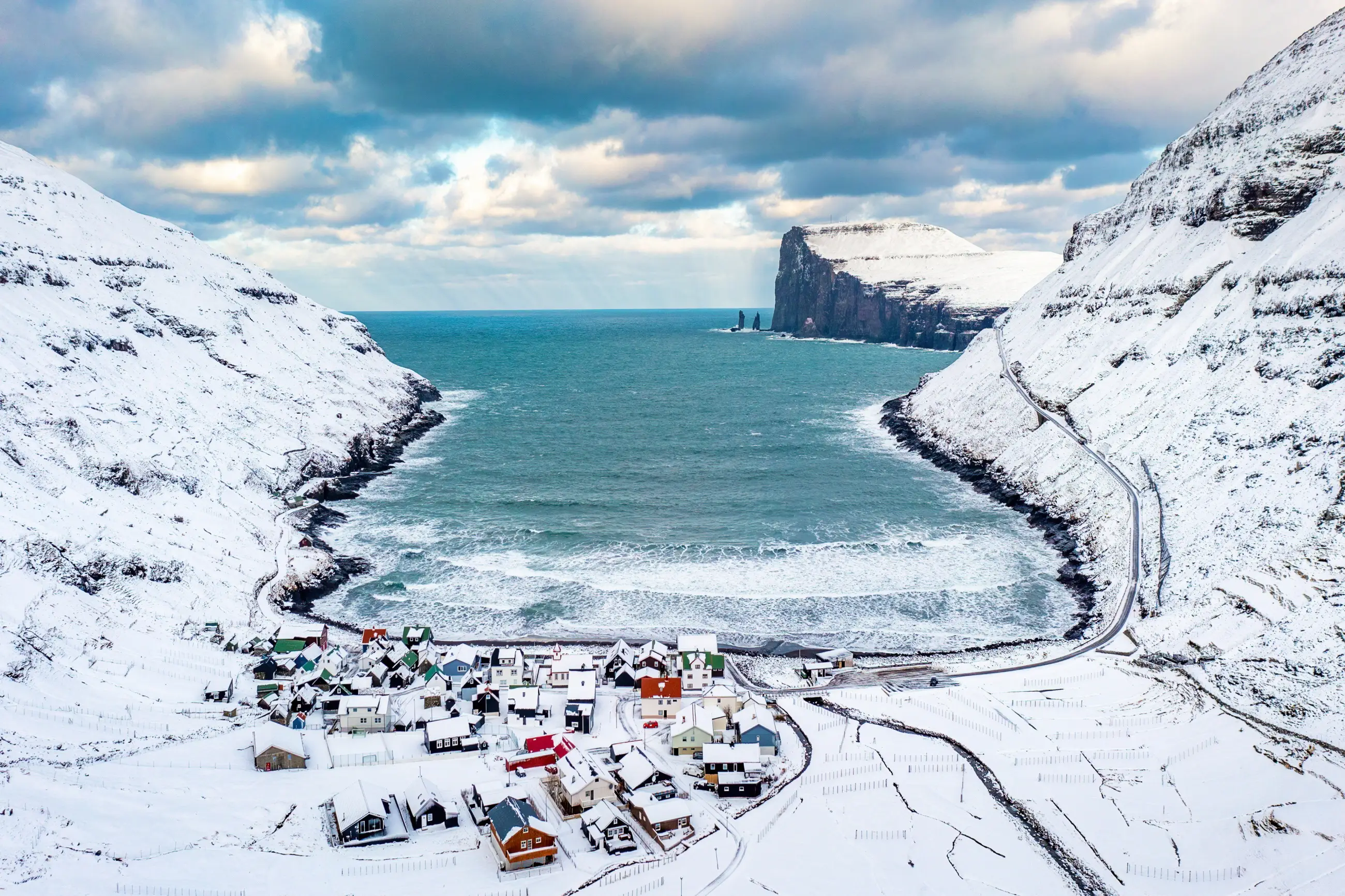
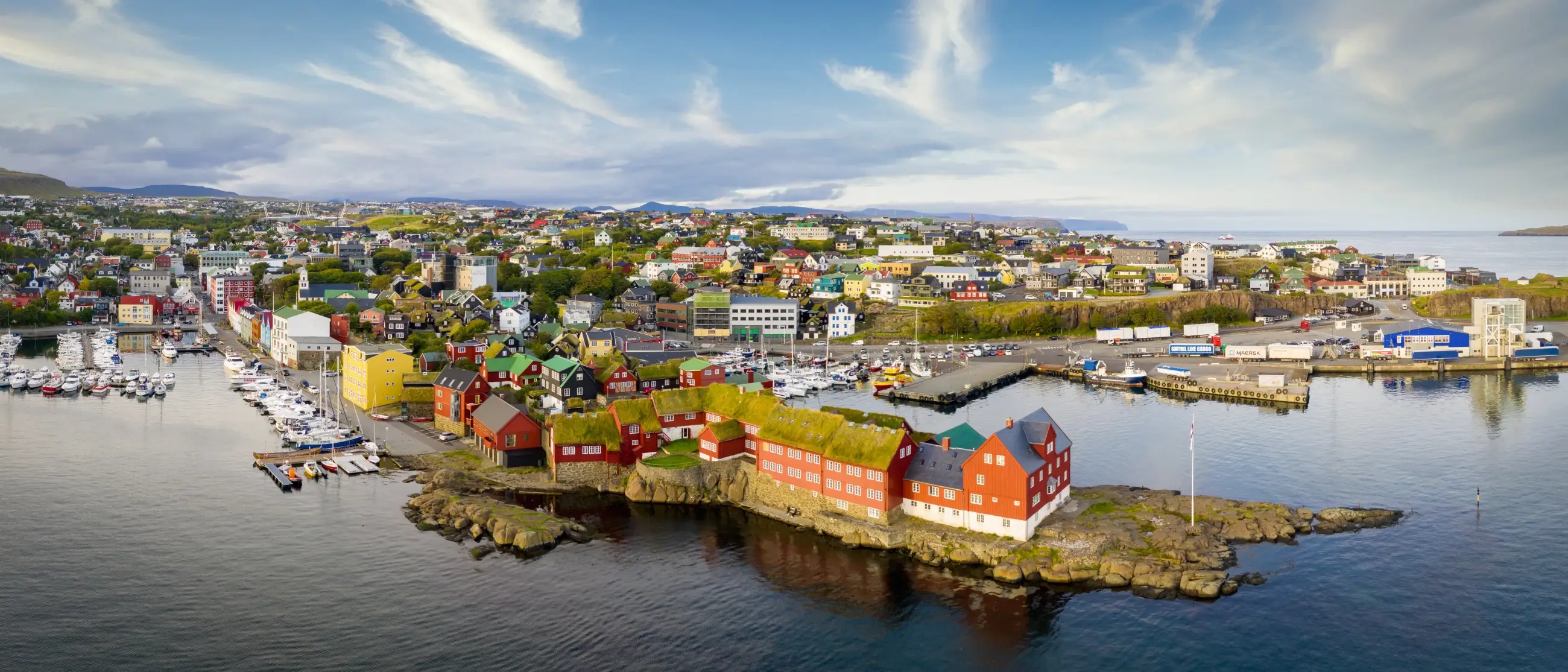
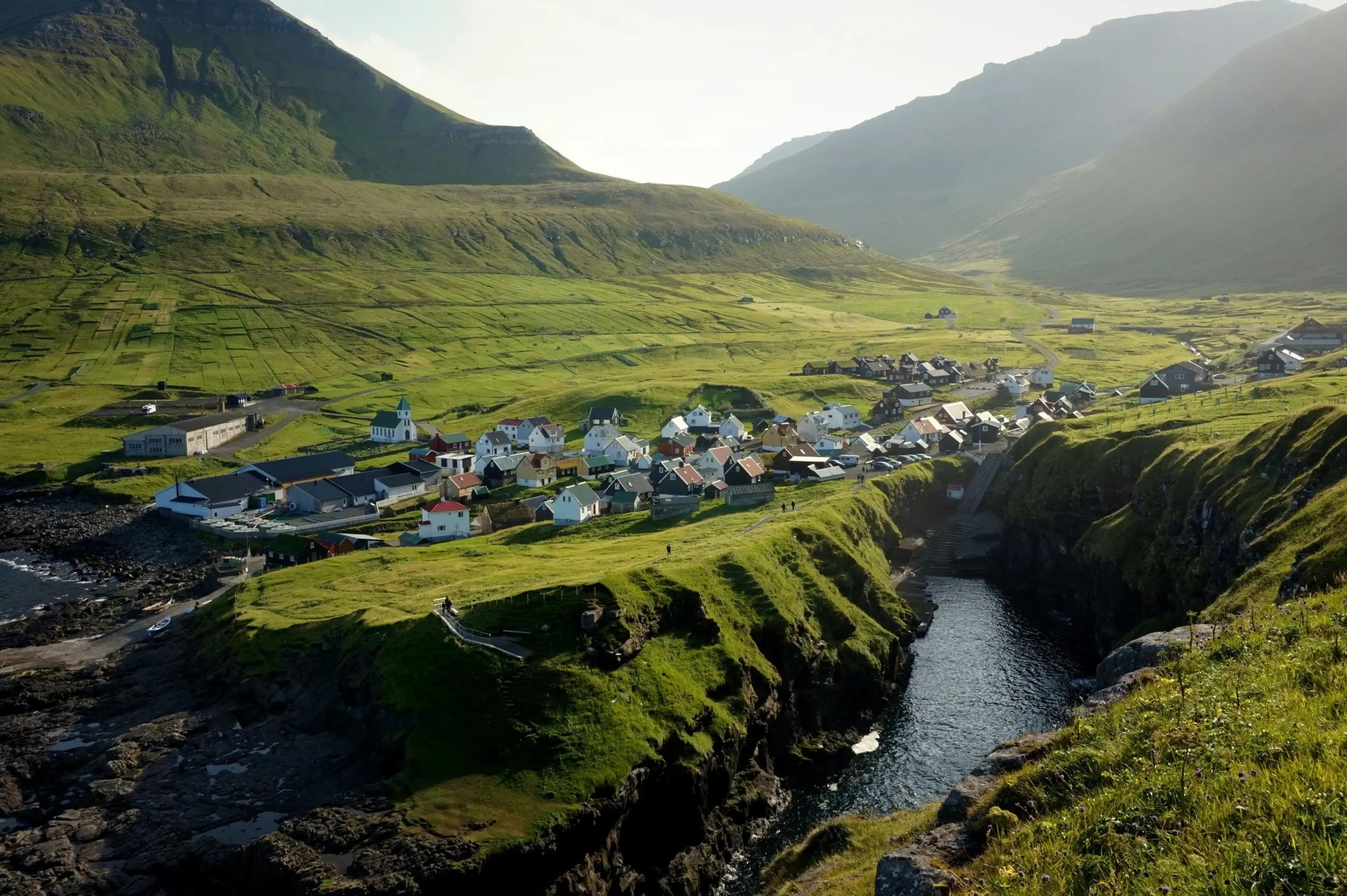
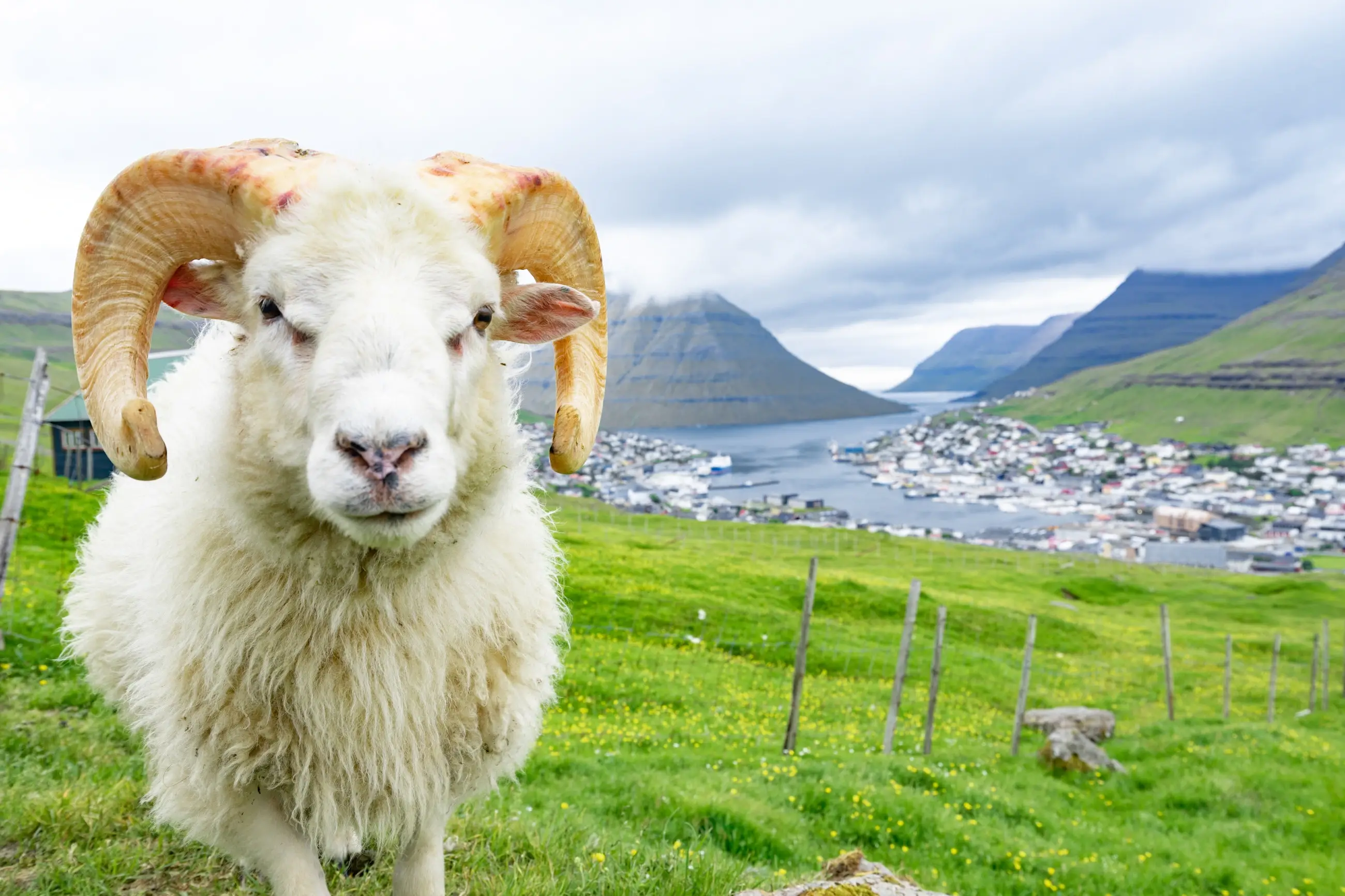
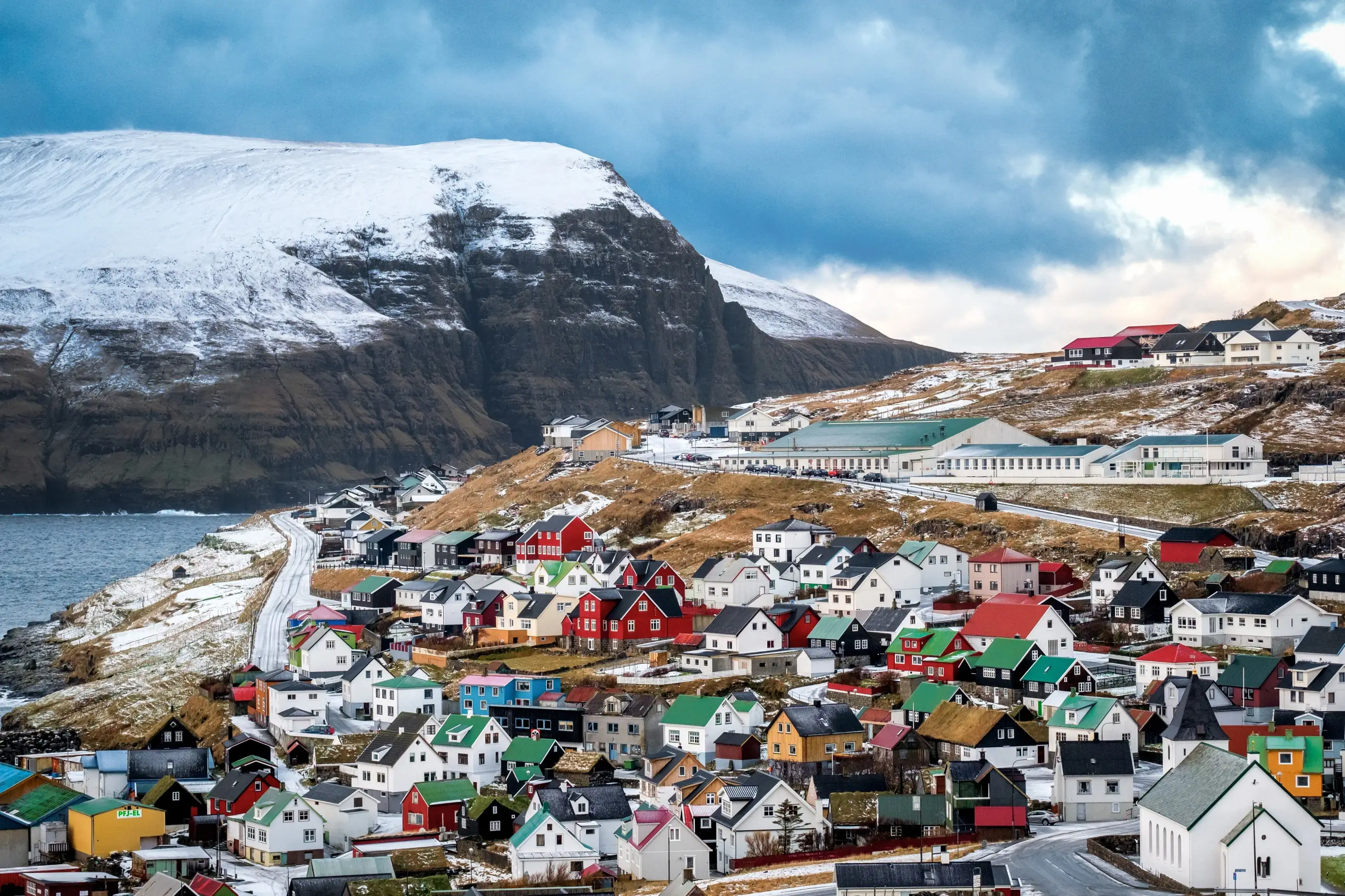
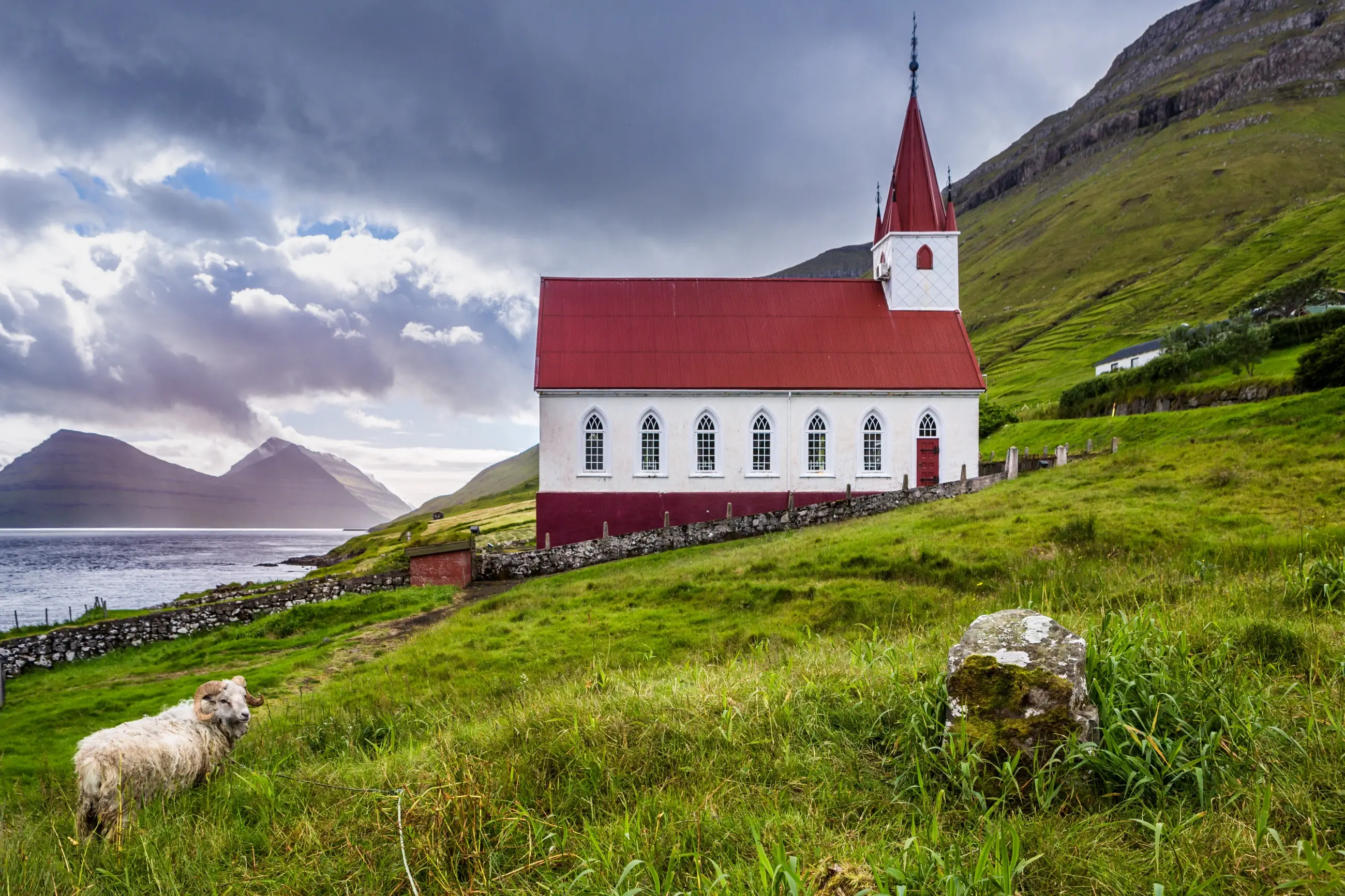
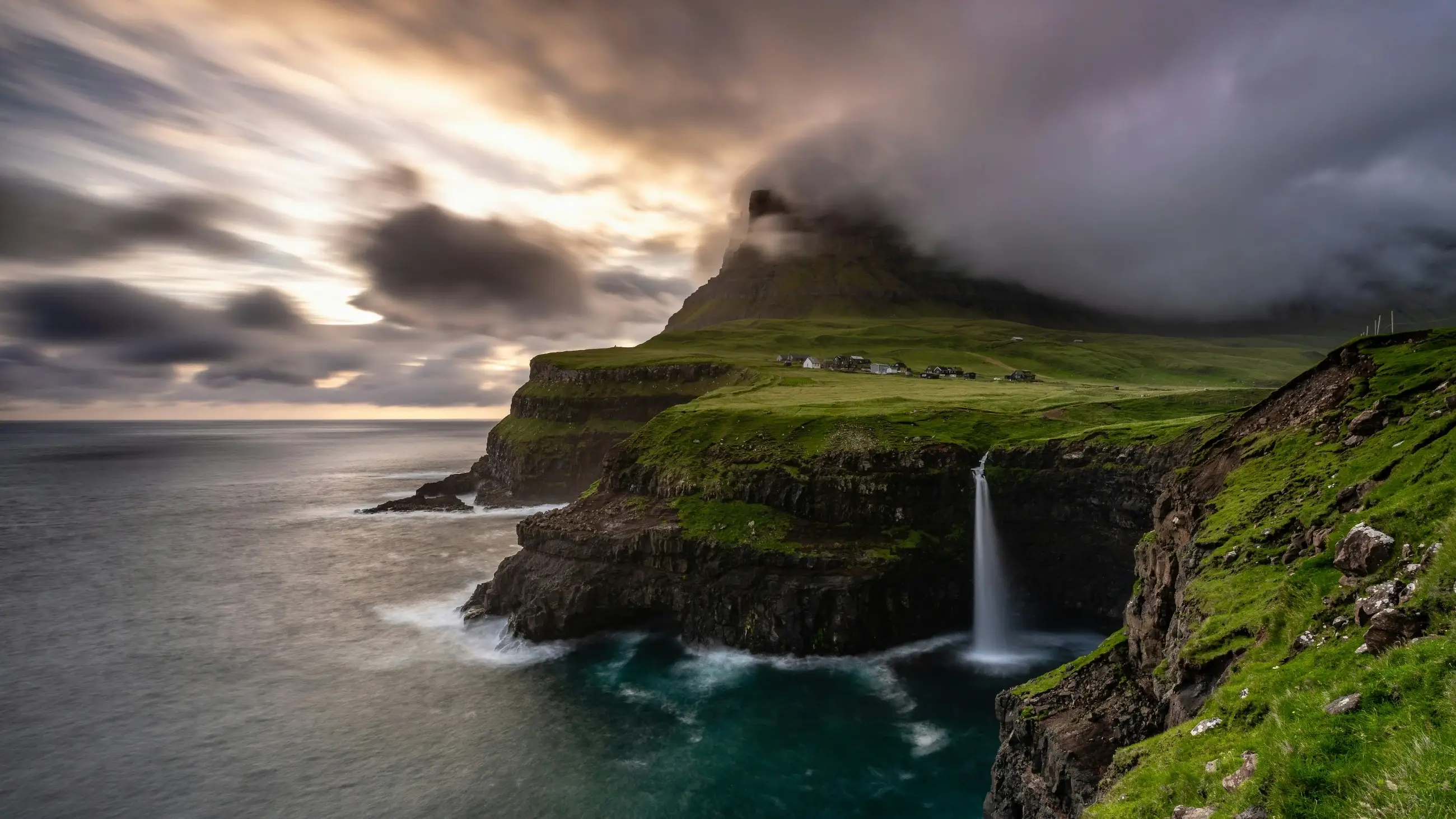
Sun, rain and fog can take turns here within a single walk. Locals call it four seasons of weather in one day. The terrain only adds to this: the archipelago of eighteen islands connected by tunnels and ferries rises from the Vestmanna cliffs, past the deep fjord Funningsfjørður, to the summit of Slættaratindur on Eysturoy. The capital, Tórshavn, on the island of Streymoy, is one of the smallest capitals in the world. Further west lies the village of Gásadalur, which until recently could be reached only by a mountain path, and from where the Múlafossur waterfall drops straight into the Atlantic. Sheep graze on the grass roofs of houses in the village of Saksun, and they outnumber people on the islands, while from spring to summer thousands of puffins nest on the island of Mykines. Set off on a trek across the heath, sail to the bird colonies by boat and at the end of the day try a slice of ræst kjøt, traditionally fermented meat, with local beer.
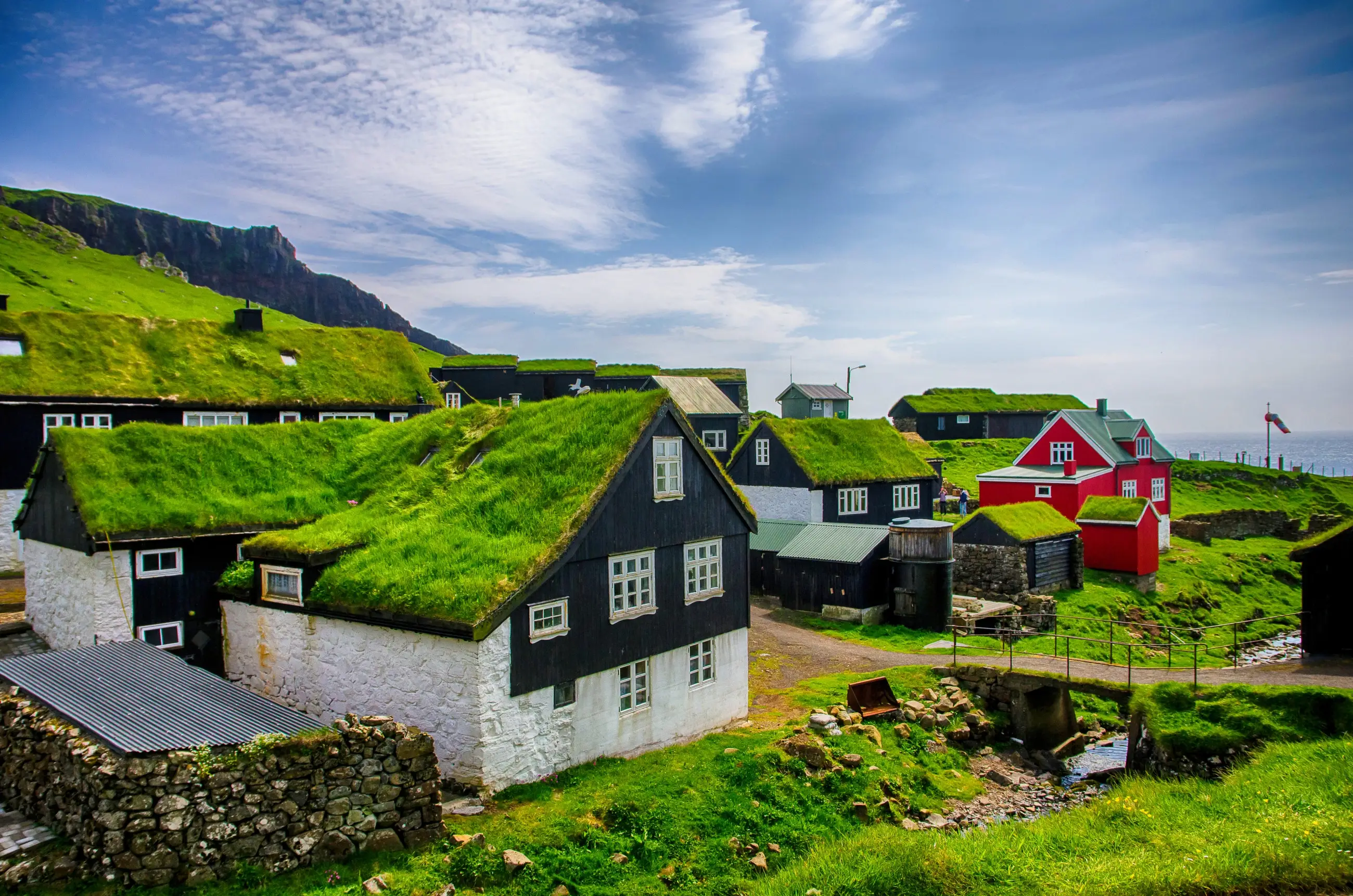
What to See and Do in the Faroe Islands
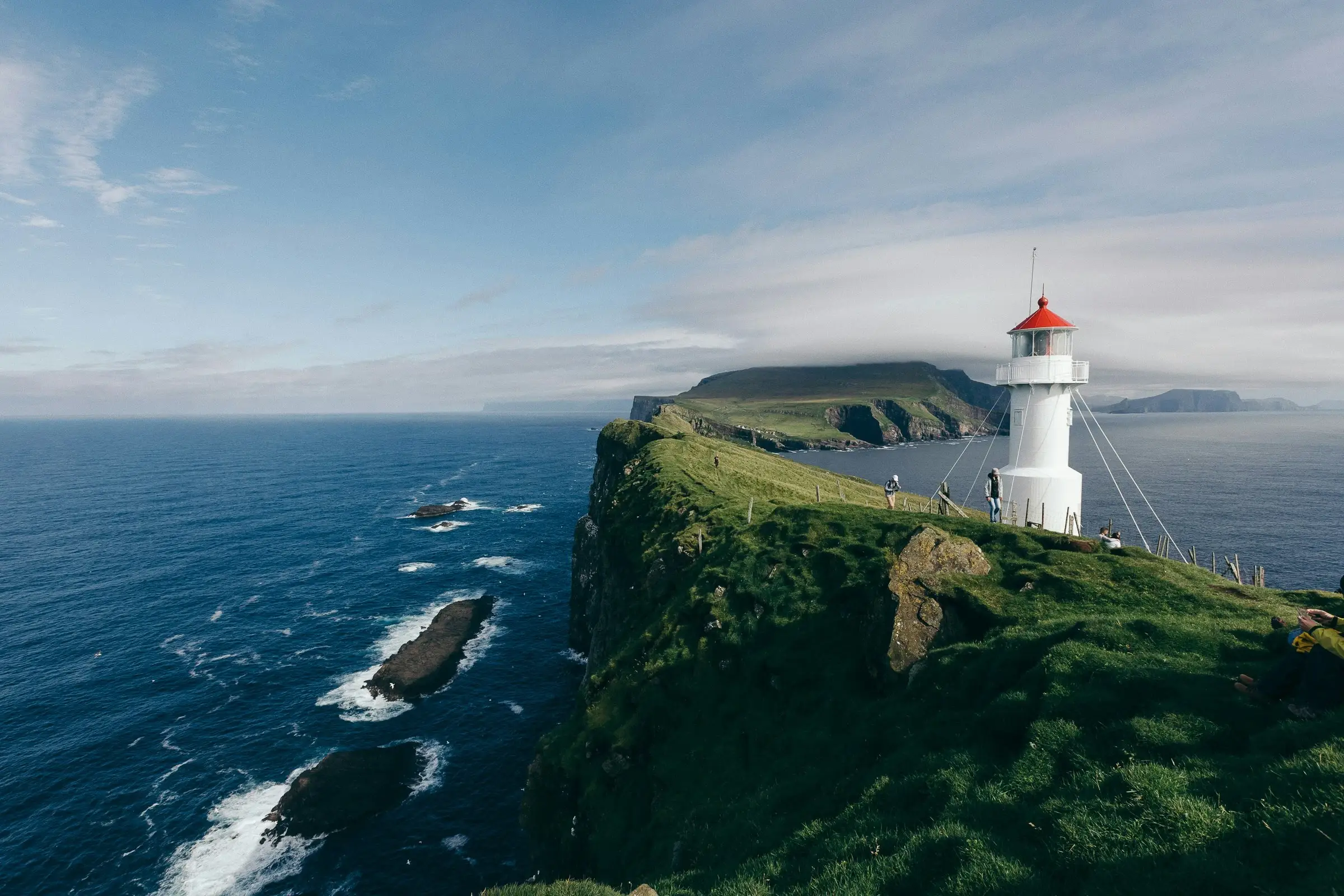
Go to the Múlafossur waterfall in the village of Gásadalur or sail to the bird cliffs of Vestmanna, where thousands of seabirds nest. Visit the island of Mykines with its puffin colony or climb to the Kallur lighthouse on Kalsoy, with views of the rock formations Risin og Kellingin. See the ruins of St Magnus Cathedral in Kirkjubøur and walk through the historic quarter of Tinganes in Tórshavn, one of the oldest parliamentary sites in the world. Climb the summit of Slættaratindur on Eysturoy or taste skerpikjøt, lamb dried by the wind according to a centuries-old tradition.
Places with soul
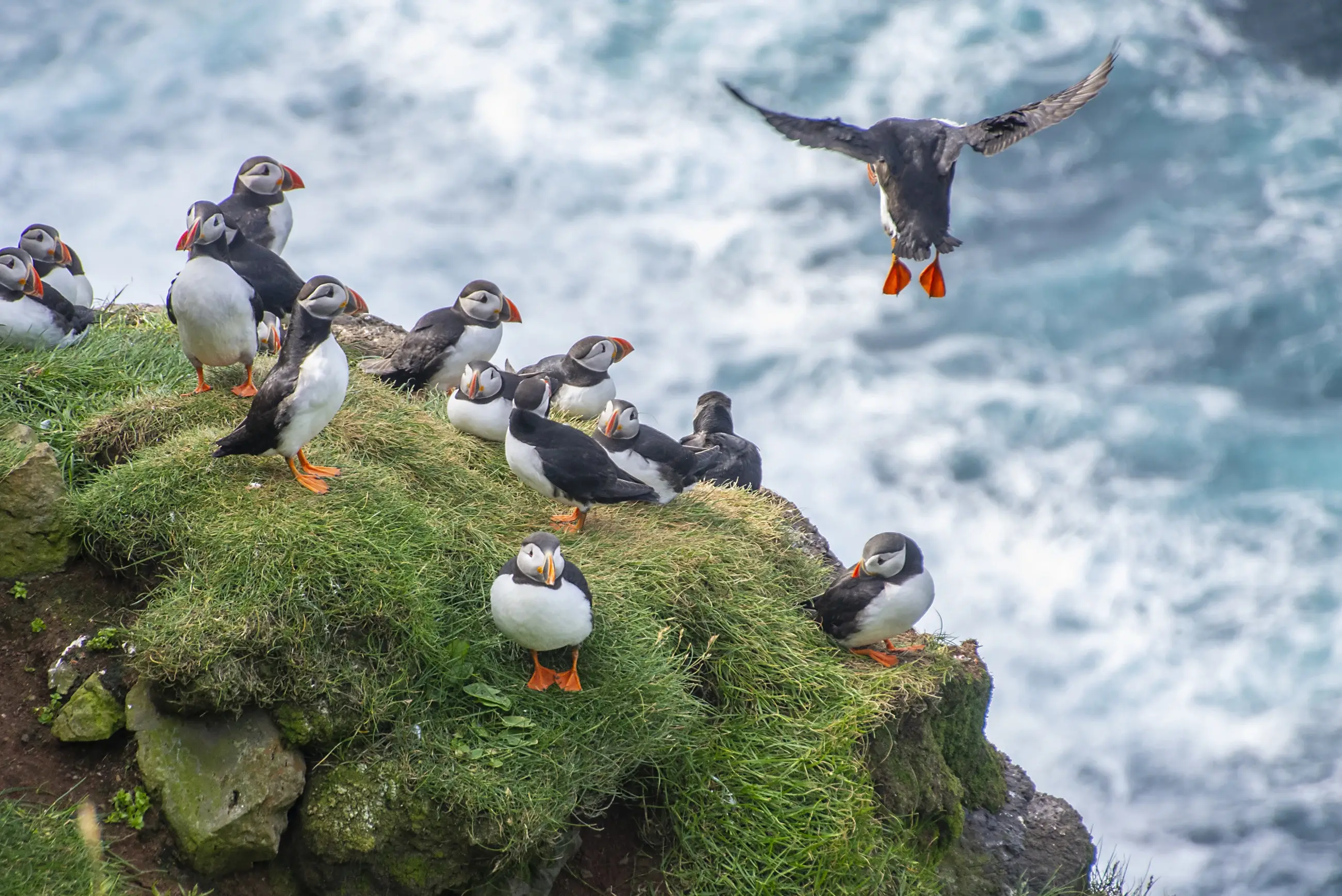
Mykines
On the islet of Mykineshólmur, up to twenty-five people once lived by the lighthouse, whose operation was automated only in 1970. Until then, children were taught at home in winter, and the lighthouse keepers observed the northern lights for the University of Copenhagen. Mykines is the westernmost island of the whole archipelago and can be reached only by ferry from Sørvágur on the island of Vágar. Nine permanent residents live there today, and it is home to the only colony of northern gannets in the Faroe Islands, roughly two thousand pairs. You will cross a forty-metre footbridge over the Hólmagjógv canyon to the lighthouse from 1909, and along the way you will see thousands of puffins nesting right in the grass along the path. Of the forty or so houses in the village, only six are inhabited all year round.
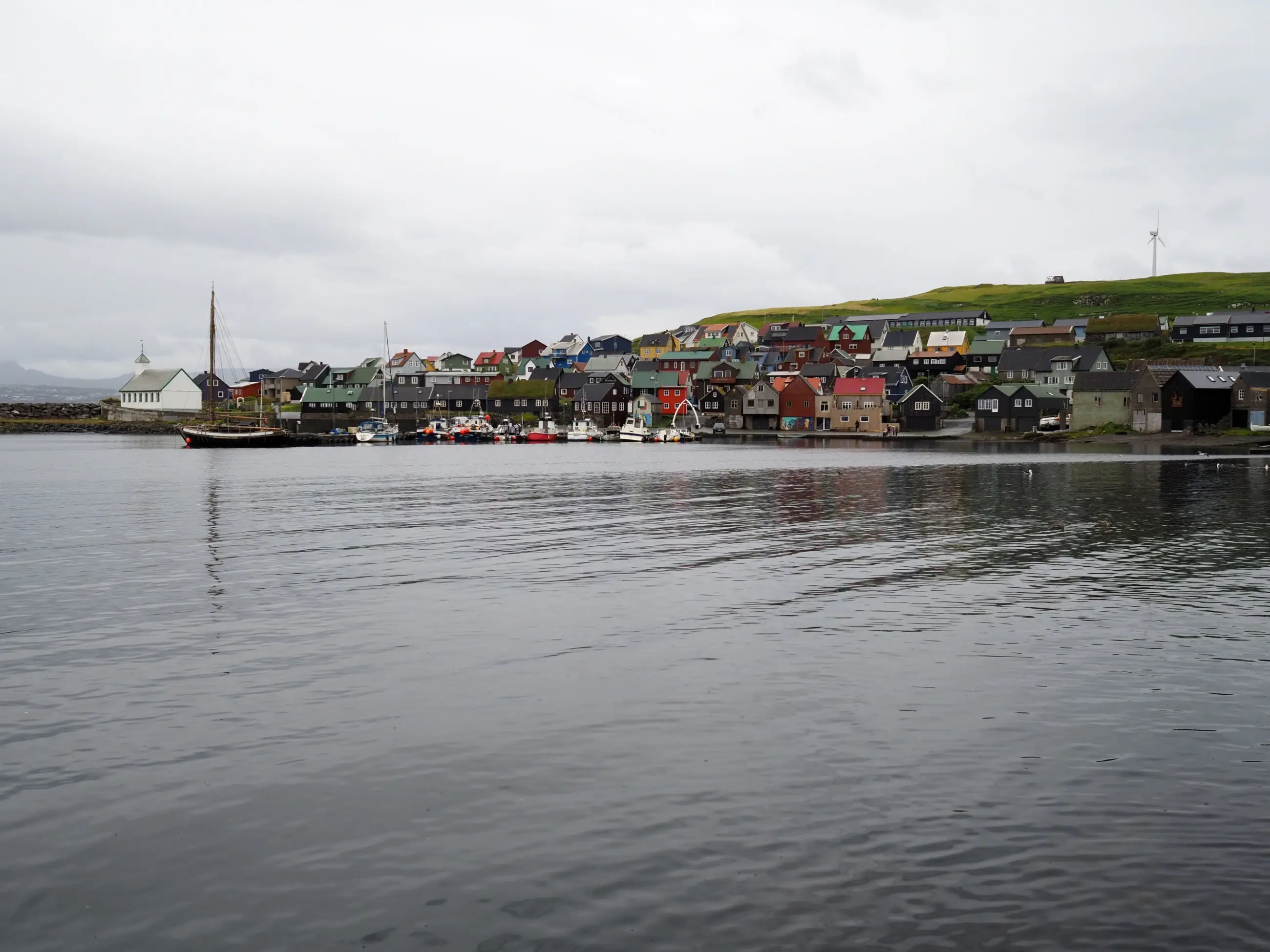
Nólsoy
At Urðin in the south-east of Nólsoy nests the largest colony of European storm petrels in the world, an estimated 200 to 250 thousand birds, which make a buzzing sound at dusk. The island lies east of Tórshavn, which you can reach by ferry in twenty minutes, and around two hundred and thirty people live there, in a village divided by an isthmus into two peninsulas. You will set off on a footpath to a remote lighthouse, one of the most powerful in the Faroe Islands. The round trip takes five hours. On the way you will also see a puffin colony and sheep pens lining the route. The European storm petrel, a bird barely fifteen centimetres long, has been ringed here by local ornithologists since the 1980s, and they know its nesting burrows one by one.
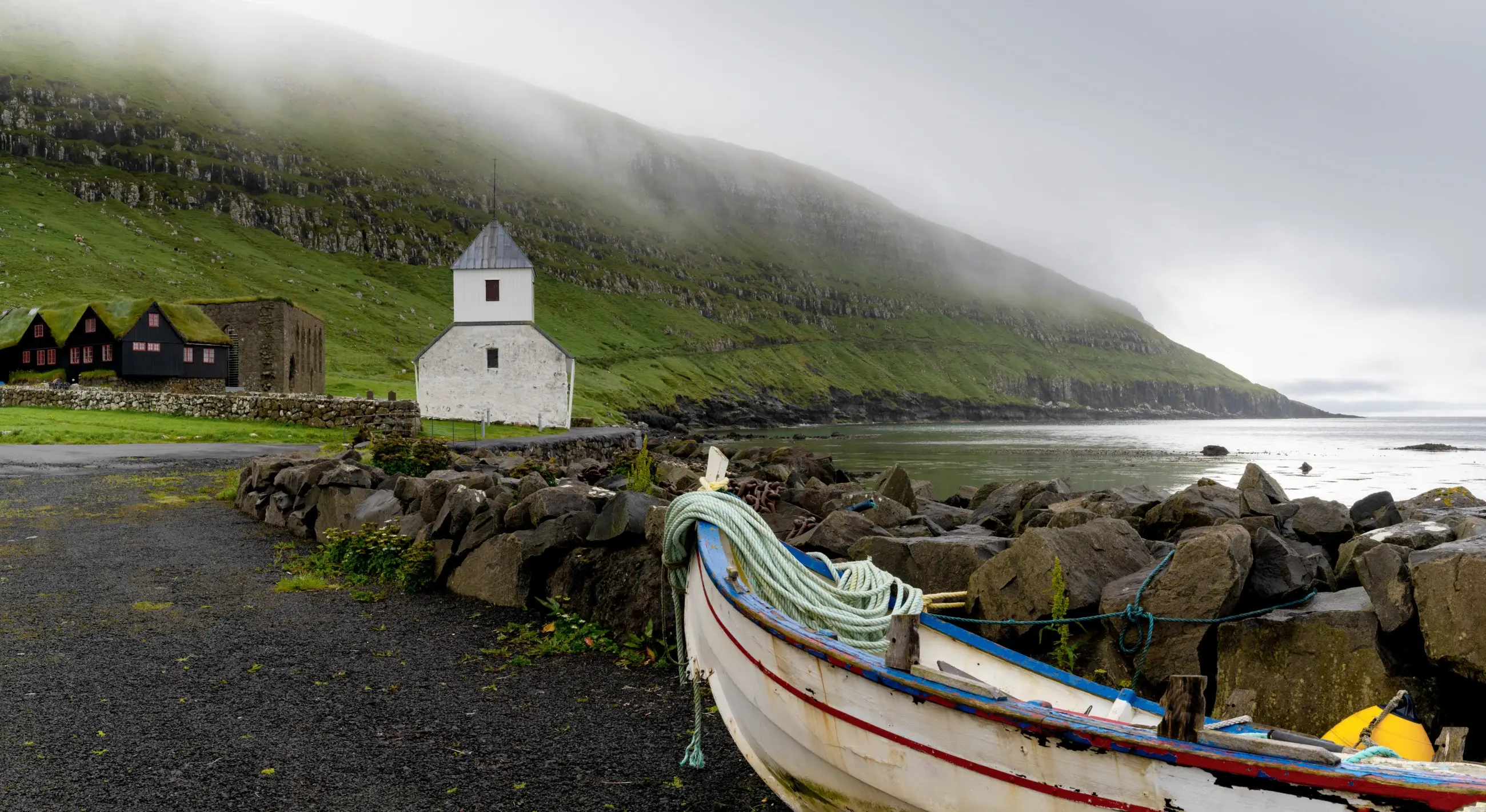
Kirkjubøur
Roykstovan, a seven-hundred-year-old wooden farmhouse in Kirkjubøur, has been inhabited by seventeen generations of the same family and is among the oldest inhabited wooden houses in the world. In the Middle Ages, the village on the island of Streymoy was the seat of the Faroese bishopric and the cultural centre of the archipelago. Next to the farm you will see the ruins of St Magnus Cathedral, whose construction Bishop Erlendur began around 1300 and never finished, and St Olaf's Church from the twelfth century, the oldest church still in use on the islands. You will walk along grassy lanes between houses with turf roofs and visit a small museum next to the old bishop's farm. Locals still call the ruins simply Múrurin, meaning 'the Wall'.

Experiences that make sense
Kayaking Along the Cliffs
While tour boats rumble past the Vestmanna cliffs with loud engines, a kayak glides beneath the same basalt walls in silence, and seals often come within reach of the paddle. The cliffs stretch for five kilometres along the west coast of Streymoy, reach up to 700 metres in places and are among the highest sea cliffs in Europe. You will set off from the sheltered bay in Vestmanna, where the water stays calm even on days when the open ocean remains rough. You will paddle past nesting puffins and razorbills, whose cries echo off the rocks. The local guide chooses the route according to the current weather, because the Faroese wind can change direction faster than you can leave the harbour.

Faroese Wool Knitting Workshop
The white sweater with a pattern of black flakes, worn by detective Sarah Lund in the series The Killing, was designed by the Faroese company Gudrun & Gudrun from Tórshavn, based on a centuries-old pattern of fishing sweaters. When other brands tried to copy it, a court ruled that the pattern cannot be protected by copyright, because a local woman produced a photo of her daughter in the same sweater from the 1960s. Faroese wool comes from the local hardy breed of sheep shown on the islands' coat of arms, and every village had its own pattern, passed down from mother to daughter. In the workshop you will learn traditional knitting in the round on needles from local knitters and find out how the village patterns differ. You will take home your own unfinished sample, still on the needles.

Hike to the Summit of Slættaratindur
Around the summer solstice, on 21 June, Faroese people climb to the summit of Slættaratindur at night, dance in a circle and sing traditional songs, while the sun sets below the horizon only briefly and rises again straight away. Slættaratindur is 880 metres high and is the highest mountain in the Faroe Islands. The name means 'flat summit', although only the very top of the mountain is actually flat, lying between the villages of Eiði, Gjógv and Funningur on the island of Eysturoy. You will set off from the car park in the Eiðisskarð saddle. The summit is just under two kilometres away, with an elevation gain of about 470 metres, and you can complete the route in one to two hours. Along the way you will see grazing sheep, and in clear weather you will see all eighteen main islands of the archipelago from the summit.

Premium accommodation


Hotel Føroyar
Hotel Føroyar stands on a hill above Tórshavn, and the surroundings include the Vidarlundin í Havn park and the Faroese Art Museum (Listasavn Føroya). The complex has 200 rooms with quality bed linen, a work desk and a smart TV. The Ruts restaurant offers an ocean view and serves dinners. The complex includes a spa with body scrubs, wraps and massages, a 24-hour gym, a business centre and a bar. Free parking, an electric vehicle charging station and an airport transfer for an extra charge are available. The hotel holds the Nordic Swan Ecolabel certification. Animals other than assistance dogs are not admitted.
The Faroe Islands Await. Shall We Go?
Every journey is different, just as every one of our clients is different. At Meraki, we know that well, which is why we approach every enquiry individually, with a single goal: to meet your expectations down to the last detail.
Plan your trip
Let's plan your dream holiday together!
We would be happy to meet with you to design and fine-tune every detail of your itinerary to suit your wishes, destination or season.


